Target Keywords: coffee grinder manufacturer; coffee grinder supplier; coffee grinder OEM; burr coffee grinder private label; coffee grinder parts names; coffee grinder flat burr platform; coffee grinder conical burr platform
Direct answer: Select a burr grinder by first fixing the user, duty cycle, grind-use range, power-market variant, and service promise. Then compare suppliers on their control of the burr set, motor and gearbox, adjustment system, food-contact materials, documented change control, verification plan, and after-sales parts—not simply on a sample’s appearance. A flat or conical burr choice is a configuration decision to validate against the brand’s own acceptance criteria; it is not a universal quality ranking.
A burr platform can give a brand a clear product story, but it also creates tightly coupled engineering decisions. Burr geometry relates to the carrier, adjustment mechanism, motor load, grounds path, hopper, static control, cleaning access, and the spare-parts plan. A sample that feels persuasive at a meeting may still leave material identity, burr-source traceability, voltage variant, calibration instructions, or replacement-part compatibility unresolved.
This guide is intentionally about OEM qualification and burr-platform decisions within the burr-grinder category. It does not re-run the burr-versus-blade product-selection debate. Brands still deciding whether their range needs a burr or blade format can use UZYVO’s separate burr versus blade private-label guide; buyers who have selected burrs should continue here with a controlled sourcing brief.
1. Turn the range brief into a decision boundary
Before sending inquiries, write a one-page boundary that prevents the project from becoming a catalogue comparison. State the intended customer, expected domestic or commercial setting, coffees and brew methods the product is meant to support, expected use pattern, target retail proposition, destination markets, and whether the range needs manual, timed, weight-based, or connected controls. “Premium” is not an engineering requirement; a defined user task is.
A useful sourcing pack has four layers:
| Layer | Buyer decision it supports | Evidence to request or create | Do not assume |
|---|---|---|---|
| Market brief | Who, where, and how the grinder will be used | Brand use case, destination list, claim boundaries | One global electrical or labeling version fits every market |
| Configuration | What is actually being bought | Dated BOM, drawings, approved samples, revision codes | A supplier’s catalogue photo defines the production build |
| Verification | How acceptance will be judged | Test plan, sample records, inspection criteria, issue log | A single sample proves production consistency |
| Lifecycle | How the product will be supported | Exploded view, parts list, service instructions, change-notice method | Wear items will remain interchangeable after redesign |
This boundary also makes an RFQ comparable. Each prospective coffee grinder supplier should respond to the same brief, rather than steering the brand toward whatever platform is already available. Ask each party to identify what is standard, what is optional, what needs engineering review, and which characteristics could change if the motor, burr coating, hopper resin, control board, or country plug changes.
For buyers beginning the engagement, UZYVO’s OEM/ODM overview is a practical route to define whether the work is a catalogue adaptation, a co-developed configuration, or a new development project. The commercial model should match the degree of technical control required.
2. Screen the coffee grinder manufacturer before comparing samples
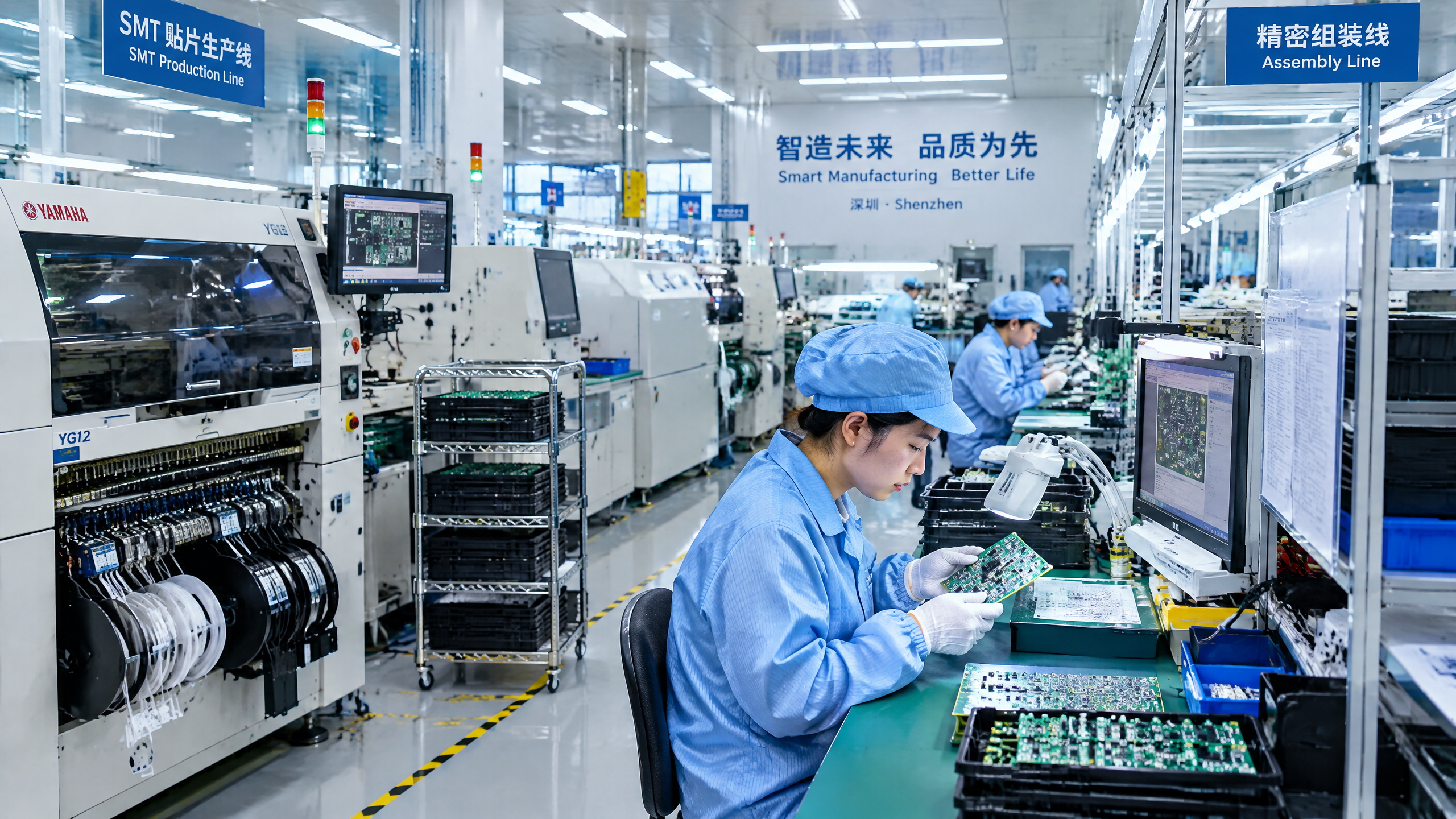
A capable coffee grinder manufacturer is not established by a brochure, a broad product list, or an unverified compliance logo. The buyer needs to see how that organization controls the exact route from approved specification to repeatable output. This is especially important when the OEM integrates purchased burrs, motors, PCBA assemblies, springs, bearings, or molded food-contact components from separate upstream sources.
Start with a structured supplier screen. Request the legal production entity, the site that will assemble the proposed model, the roles of design, quality, procurement, and after-sales teams, and the identities or categories of critical subcontractors where disclosure is appropriate. Ask to see a sample document-control flow: how an engineering change is requested, approved, incorporated into the bill of materials, and communicated to incoming inspection and final assembly. The answer should be specific to the proposed model family, not a generic quality-policy statement.
| Qualification area | Questions a buyer can ask | Stronger evidence than a verbal answer |
|---|---|---|
| Product ownership | Which drawings, tooling, firmware, and test fixtures are controlled by whom? | Revision register, ownership terms, controlled drawing list |
| Critical sourcing | Which burr, motor, gearbox, bearing, and PCBA sources are approved? | Approved-vendor list or controlled source matrix, subject to confidentiality |
| Incoming control | What happens when a critical lot differs from its approved specification? | Incoming-inspection procedure, nonconformance record example |
| Assembly control | Which settings are adjusted or verified at the line? | Work instructions, torque/setting records, station traceability approach |
| Change control | Can materials or components change without written brand approval? | Change-notification clause, deviation and approval workflow |
| Service support | Can the proposed parts be identified and ordered by revision? | Exploded view, service BOM, parts coding convention |
The factory conversation should also distinguish what the supplier can *make* from what it can *evidence*. UZYVO’s factory capabilities page can help frame questions about development, production control, and inspection; the buyer should still validate capability for the final grinder configuration. No capability statement should be read as a guarantee of a particular capacity, lead time, approval, or test result.
3. Map coffee grinder parts names to ownership and risk
A shared parts vocabulary prevents expensive ambiguity. “Burr grinder,” “grinding core,” or “steel mechanism” may describe several different constructions. Put coffee grinder parts names on the drawing pack and link each named component to material, revision, source status, mating parts, incoming controls, and spare-part status. This is more useful than a marketing cutaway because it makes substitution risk visible.
At minimum, map the following assembly groups:
| Assembly group | Typical named parts | Why the buyer should define it |
|---|---|---|
| Bean feed | hopper, hopper lid, shut-off gate, inlet throat | Influences fit, cleaning path, material declaration, and bean flow |
| Grinding set | upper burr, lower burr, burr carrier, burr screws, shims | Determines the approved geometry, mating, alignment approach, and replacement identity |
| Adjustment | collar, stepped ring or thread, detent, spring, index scale, stop | Governs user adjustment, calibration reference, and tolerance stack-up |
| Drive | motor, gear train or direct drive, shaft, coupler, bearing, thermal protection | Connects electrical specification, load path, noise/vibration investigation, and serviceability |
| Grounds path | chute, declumper if present, grounds bin, anti-static feature if present | Affects residue management, cleaning instructions, and food-contact assessment |
| User and safety interface | switch, timer/control board, display, cord set, plug, interlock if present | Drives electrical variant control, labeling, firmware versioning, and market review |
| Enclosure and service | housing, feet, fasteners, brushes, covers, gasket/seal | Determines disassembly pathway, cosmetic criteria, and parts availability |
Do not presume every part touching beans or grounds is automatically subject to the same assessment in every market, or that a resin grade name proves suitability. In the EU, the food-contact framework requires safety and inertness principles, documentation, and traceability; plastics also have specific rules and supporting documentation requirements. [2] In the U.S., a food-contact substance that is a food additive must be authorized for its intended use before marketing. [3] The practical sourcing action is to identify actual materials, colorants, coatings, intended contact conditions, and suppliers, then obtain destination-appropriate evidence reviewed for the final use.
4. Choose a burr architecture through the intended use—not labels
The comparison between a coffee grinder flat burr platform and a coffee grinder conical burr platform should begin with the product’s purpose and validation plan. “Flat” and “conical” describe burr geometry; they do not independently prove grind quality, durability, noise, retention, taste outcome, or suitability for a particular customer. Those outcomes depend on the complete grinding system and the method used to evaluate it.
For a flat-burr concept, ask about the burr diameter and profile, carrier arrangement, axial retention, alignment method, adjustment travel, and how grounds leave the burr chamber. For a conical-burr concept, ask the corresponding questions about inner and outer burr mating, carrier concentricity, adjustment interface, shaft support, and the cleaning/service sequence. Both routes require sample evaluation against the brand’s own defined use cases, using a controlled recipe and a documented method.
| Decision lens | Flat-burr platform questions | Conical-burr platform questions | Evidence to seek for either |
|---|---|---|---|
| Adjustment concept | How do burrs move relative to each other, and what prevents over-travel? | How does the inner/outer relationship adjust, and what locks the setting? | Drawing, stop detail, calibration instruction, sample review |
| Mechanical stack-up | How are parallelism and carrier seating controlled? | How are concentricity, shaft support, and carrier seating controlled? | Critical dimensions, assembly work instruction, inspection approach |
| User interface | Are marks reference points, settings, or only a relative guide? | Are marks reference points, settings, or only a relative guide? | Claim-approved artwork and user-manual language |
| Cleaning and service | Which covers, burrs, or chutes can the user access safely? | Which covers, burrs, or burr pair can the user access safely? | Illustrated cleaning/service procedure and parts map |
| Platform change | What changes if burr size, profile, or carrier changes? | What changes if burr profile, shaft, or outer carrier changes? | Engineering change impact assessment |
Commercial context may alter the standards and use-case analysis. IEC 60335-2-75:2024 covers, among other things, coffee grinders used in areas open to the public and is used with IEC 60335-1; its scope does not automatically cover household-only use. [5] This is an example of why the intended environment, not a product nickname, must guide a qualified review. Ask the selected laboratory or compliance professional which requirements apply to the finished product and destination market.
5. Convert “good grind” into a neutral verification plan
A buyer should not ask a factory to prove that coffee “tastes better.” Instead, define observable characteristics that are relevant to the chosen product proposition and can be measured or judged under a repeatable protocol. The protocol can include the coffee type or agreed reference material, conditioning, adjustment setting, dose, operating sequence, collection method, how retained material is handled, number of repetitions, instruments, acceptance bands if applicable, and who signs the report.
A practical development plan has three stages. First, engineering samples establish whether the platform can achieve the intended adjustment and user flow. Second, pre-production samples check that approved parts and assembly methods produce comparable results. Third, routine shipment inspection checks the selected, feasible characteristics; it is not a substitute for design verification or regulatory assessment.
| Question | Define before testing | Avoid saying |
|---|---|---|
| Grind distribution | Sample preparation, sieves or other method, settings, calculation, repeat count | “Uniform” without a method or acceptance rule |
| Dose/retention observation | Input quantity, collection method, purge rule, cleaning state | A universal low-retention claim from one run |
| Adjustment usability | Starting reference, end stops, user steps, force/feel evaluation method | That numbered positions are identical across products |
| Noise/vibration observation | Room condition, distance, instrument if used, operating state | A published dB or “quiet” claim without substantiation |
| Thermal or endurance behavior | Duty sequence, ambient conditions, exclusions, pass/fail criteria | A lifespan or continuous-use promise absent a validated protocol |
Keep the report’s conclusion conditional: “sample X, build revision Y, evaluated under protocol Z.” Include photographs, dates, sample identifiers, raw readings where used, anomalies, and approved follow-up actions. If a result triggers a product claim, preserve the substantiation file and rerun review when a critical component changes. This protects the brand from taking an informal factory demonstration and turning it into an uncontrolled market statement.
Mid-article CTA: Need help turning a burr concept into a comparable RFQ, parts map, and evidence checklist? Email UZYVO’s OEM team with your destination markets, planned configuration, and target use case.
6. Control the configuration with a released technical pack
A coffee grinder OEM relationship becomes manageable when the released technical pack tells every party what “same product” means. Assemble it before mass production—not after a first shipment—then make it the reference for purchase orders, inspections, artwork approvals, supplier changes, and service-parts replenishment.
The pack should include the approved BOM with manufacturer part numbers or controlled descriptions; revision-controlled mechanical drawings; electrical schematic and PCB/firmware identification where relevant; material and finish specifications; product labels; packaging artwork; user and care instructions; inspection plan; test records; and an issue/change log. For a burr grinder, identify the burr set, carrier, adjustment parts, motor, thermal protection where applicable, cord set, plug, rated input, and food-contact-path components as critical or controlled items.
| Control document | Minimum buyer question | Why it matters |
|---|---|---|
| BOM and AVL | Does each critical item have a revision and approved source/change rule? | Links a physical sample to repeat production |
| Golden sample register | Which sample is approved, where is it kept, and what revision does it represent? | Avoids approving against an untraceable display sample |
| Artwork master | Which labels, warnings, instructions, and marks are approved for each market? | Prevents cross-market packaging or rating-label mix-ups |
| Inspection specification | Which defects/characteristics are checked, by whom, and against what limit? | Gives inspectors a shared acceptance basis |
| Change-control form | Which changes need prior written approval and re-verification? | Keeps substitutions, firmware updates, and material changes visible |
| Service BOM | Which revision of each replacement item fits which finished unit? | Supports repair and avoids incompatible parts |
Build variant management into the pack. A change from a mechanical timer to digital controls, or from a non-connected to a connected model, can alter documentation, test, labeling, and radio review needs. In the United States, the FCC explains that electronic products capable of emitting RF energy may need the applicable equipment-authorization procedure before marketing, import, or use; Wi-Fi and Bluetooth are examples of intentional radiators, while digital logic may engage different Part 15 considerations. [4] A generic prior report is therefore not an automatic answer for a changed end product.
Likewise, do not treat a certificate file as a transferable product passport. The European Commission notes that under the Low Voltage Directive the manufacturer is responsible for conformity assessment, that relevant harmonised-standard references can give a presumption of conformity with safety objectives, and that voluntary certificates are not by themselves a legally recognised means of proving compliance. [1] Review the final configuration, documentation, and applicable route with competent parties for the destination market.
7. Build market access into the design gate
For an EU-targeted electrical configuration within the stated voltage scope, the Low Voltage Directive covers electrical equipment operating between 50 and 1,000 V AC or 75 and 1,500 V DC and includes household appliances. [1] RoHS generally applies restrictions to electrical and electronic equipment unless excluded; the Commission lists ten restricted substances under the directive. [6] These facts do not determine the full obligation set for any individual grinder. EMC, product-safety, waste, packaging, consumer-information, local, and other requirements can be relevant depending on the design and country. Obtain qualified advice and maintain configuration-specific evidence.
Food-contact analysis should be equally configuration-led. Map bean and grounds contact surfaces, identify material grades and additives, describe foreseeable contact and cleaning conditions, and collect supporting documents from the relevant supply chain. For the EU, the framework sets general safety/inertness principles and provides for compliance documentation and traceability; the Commission’s plastic-material rules address composition, use restrictions, migration and declarations of compliance. [2] Because national provisions may apply where no specific EU measure exists, a market-by-market review is prudent rather than an assumption of a single universal document. [2]
| Design gate | Owner | Deliverable before release |
|---|---|---|
| Market and use classification | Brand with qualified adviser | Destination matrix and intended-use statement |
| Electrical/radio route | Engineering and test partner | Final configuration list, applicable assessment plan, evidence status |
| Food-contact route | Materials owner and supplier | Contact-parts matrix, declarations/supporting evidence, use conditions |
| Label/instruction review | Brand regulatory/artwork owner | Market-specific masters tied to model revision |
| Shipment release | Brand and quality owner | Production revision confirmation and document completeness check |
Do not write “certified,” “compliant,” “food safe,” or a market-approval claim into sales material merely because a component supplier supplied a declaration or a preliminary sample was tested. Claims and applicability depend on the final configuration, destination market, supporting evidence, and qualified review.
8. Design the private-label program for service, not only launch
A burr coffee grinder private label program must decide what happens after the carton leaves the factory. The best time to solve a damaged hopper, a worn burr, a broken lid, a missing brush, or a mismatched power variant is while the parts map and supply agreement are still open. A spare-parts plan is also a design input: a part cannot be sensibly supported if it lacks a unique identity, safe replacement pathway, or stable revision relationship.
Create a service matrix that separates consumer-replaceable, technician-replaceable, and factory-only items. It should identify the part number, model/revision compatibility, instructions needed, packaging, labeling, quantity assumptions selected by the buyer, and who approves substitution. A buyer should not promise a spares duration or service turnaround without contracted supply commitments and its own market plan.
| Part category | Example questions | Control to establish |
|---|---|---|
| User-accessible items | Can the hopper, lid, brush, or grounds bin be removed without exposing a hazard? | Clear instruction, compatible part number, packaging and traceability |
| Grinding set | Is replacement permitted, and is recalibration or pairing required? | Service procedure, mating rule, approved replacement source |
| Drive/electrical parts | Who may replace the motor, cord set, PCB, or switch? | Technician/factory pathway, safety and variant control |
| Cosmetic housing parts | Does a color/finish change affect fit or labeling? | Revision and artwork approval before substitution |
| Packed accessories | Which brush, scoop, adapter, or instruction revision belongs in each SKU? | Packing checklist and final-inspection reference |
9. Plan samples, pilot build, and shipment inspection as separate controls
Sampling has different purposes at different stages. Development samples explore the architecture. Approval samples confirm the configuration. Pilot or pre-production builds expose manufacturability and work-instruction gaps. Shipment inspection applies an agreed check to a released product. Combining them into a single “approved sample” step leaves blind spots.
| Stage | Primary question | Useful output |
|---|---|---|
| Engineering sample | Is the proposed architecture viable for the user and market brief? | Issue list, concept decisions, verification protocol |
| Design verification sample | Does the specified configuration meet its defined criteria? | Controlled report tied to revision and test method |
| Pilot/pre-production | Can the approved design be assembled and inspected as intended? | Process issues, updated work instructions, approved golden sample |
| Pre-shipment inspection | Does the sampled lot meet the agreed release criteria? | Inspection report, defect disposition, shipment-release decision |
Set inspection criteria that an inspector can observe: correct model/variant, workmanship, assembly and fit, label/artwork match, function checks defined in the protocol, accessories, carton marking, and packing. Make the limits, sampling method, and response to findings explicit in the quality agreement. Inspection can reveal defects in a sampled lot; it does not establish all safety, food-contact, reliability, or market-access outcomes for the finished product.
Image recommendations
- Purpose / insertion point: After this module’s sample-stage table, to show traceable review rather than a lifestyle promise. Caption: “A revision-controlled burr grinder sample review links the physical unit to drawings, labels, and an issue log.” ALT: “Quality reviewer comparing a burr coffee grinder sample, exploded drawing, and revision checklist.” AI image prompt: “Photorealistic B2B appliance quality review in a bright neutral lab, an unbranded burr coffee grinder beside an exploded technical drawing, calipers, a paper revision checklist and sample tags; no visible brand logos, no test-result claims, landscape editorial image.”
- Purpose / insertion point: In Module 3 beside the parts vocabulary table. Caption: “An exploded-parts view helps buyers define the components and interfaces that must remain controlled.” ALT: “Exploded view of an unbranded burr coffee grinder showing hopper, burrs, carrier, motor, adjustment collar, and grounds bin.” AI image prompt: “Clean technical editorial illustration of an unbranded burr coffee grinder in exploded view, labeled only with generic component callouts: hopper, burr set, carrier, adjustment collar, motor, grounds bin; white background, precise but non-proprietary, no certification badges.”
- Purpose / insertion point: In Module 7 after the market-access table. Caption: “A configuration matrix keeps market, electrical, materials, and document decisions connected.” ALT: “Product manager reviewing a coffee grinder configuration matrix with market and materials columns.” AI image prompt: “Photorealistic procurement meeting, diverse product manager and quality engineer reviewing a laptop configuration matrix and unbranded burr coffee grinder samples, clean office, no visible logos, no compliance marks or claim graphics, wide editorial composition.”
10. Resolve buyer questions before issuing the production order
FAQ: How should we compare a coffee grinder flat burr platform with a coffee grinder conical burr platform?
Compare the complete architecture against the defined use case: adjustment travel and stops, carrier/shaft support, burr sourcing, grounds path, cleaning sequence, service process, motor relationship, and evidence plan. Evaluate approved samples using a documented protocol. Do not reduce the decision to a generic claim that one geometry is inherently better; platform suitability depends on the final design and intended user.
FAQ: What documents should a coffee grinder OEM provide before production?
At minimum, request a revision-controlled BOM and drawings, critical-component/source controls, approved sample register, label and packaging masters, user/care instructions, inspection specification, change-control procedure, service/exploded-parts list, and destination-market evidence status. The exact documentation needed depends on configuration and market. A report or declaration tied to a different variant should be reviewed rather than assumed transferable.
FAQ: Can a pre-shipment inspection replace safety, regulatory, or food-contact review?
No. A pre-shipment inspection is a defined sample-based release check against agreed criteria. It may identify visible, functional, packing, or labeling issues in the sampled lot, but it is not a substitute for configuration-specific design verification, market-access assessment, or supporting food-contact evidence. Keep those workstreams distinct and connect their records to the released revision.
FAQ: What should be treated as a critical change after approval?
Treat changes to the burr set or source, burr carrier, motor, drive train, PCB/firmware, cord/plug, thermal protection, food-contact material or colorant, housing material, label, packaging that affects protection, and service-part compatibility as change-control triggers. The specific list should be agreed in the technical pack. The OEM should notify the brand in writing before implementation so the buyer can determine whether re-verification or artwork/document updates are needed.
FAQ: Are “CE,” “FCC,” or food-contact statements enough to launch globally?
No single label, statement, or report establishes global suitability. The applicable pathway can change with the voltage, electrical architecture, radio features, intended setting, food-contact materials, destination, and responsible economic operator. Use destination-specific, final-configuration review with appropriate qualified support; retain the supporting documentation rather than relying on marketing language.
11. Make the final selection on controllability, then release carefully
The best supplier-platform pairing is the one a brand can describe, verify, and support without filling gaps with assumptions. Score candidates against the approved brief: control of critical parts, clarity of architecture, access to revision evidence, willingness to document changes, ability to supply a service BOM, responsiveness to deviations, and credible route to destination-specific review. Cost remains a commercial input, but it should be compared against the complete controlled configuration rather than a visually similar sample.
Before authorizing production, hold a release meeting around one question: what exact unit is permitted to ship to which market? Confirm the model code, BOM, burr specification, electrical variant, label/artwork, packaging, inspection plan, outstanding actions, evidence status, and escalation owner. If any item is unresolved, record whether production is blocked, limited to a pilot, or permitted only after a defined closure. This is more defensible than an implied approval in email threads.
Closing CTA: Planning a branded burr-grinder range or reviewing an existing OEM brief? Contact UZYVO by email to discuss your planned configuration, destination markets, evidence needs, and service-parts priorities.
References
Put the buyer guide into a practical sourcing path.
Bring this framework into your next product brief.
Share your target market, appliance category, annual volume, and launch window. We will discuss a practical sample, documentation, and production path for the final configuration.
Email info@uzyvo.com