Short answer: Before approving a rechargeable portable blender, require a model-specific evidence pack—not a generic “certificate.” At minimum, it should connect the exact sellable model and revision to: an exposed-blade prevention design and functional test; blade assembly retention and durability evidence; identifiable cells, battery pack and charge-control evidence; a relevant lithium-battery transport test summary; food-contact material declarations and, where appropriate, migration evidence; a controlled instruction/warning file; and a pre-shipment inspection plan. Then confirm that the final colour, cup, blade base, cable, battery, firmware and packaging match the submitted sample and documents. This is procurement guidance, not a legal determination for any market.
Introduction
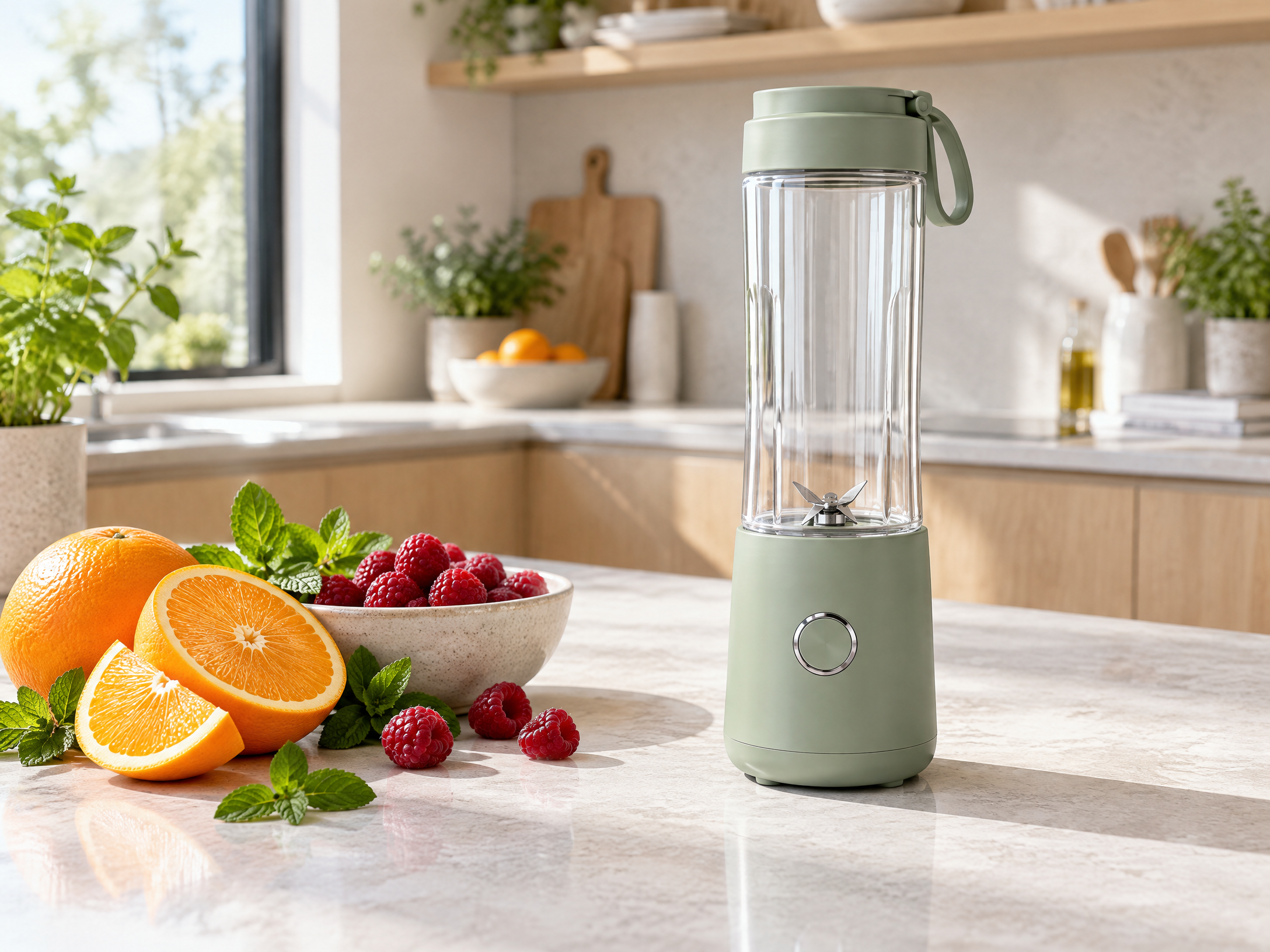
A portable blender is a compact appliance, but it combines several safety-critical interfaces in one item: a detachable drinking vessel, sharp rotating blades, a high-speed motor, rechargeable lithium-ion cells, charging electronics and food-contact parts. For a private-label buyer, the approval question is therefore not simply whether a sample makes a smooth drink. It is whether the specified production configuration reduces foreseeable failures and can be traced to credible evidence before the product is offered to consumers.
Recent regulator and recall records illustrate why the evidence must be specific. The U.S. Consumer Product Safety Commission (CPSC) reported a portable-blender recall involving broken blades as well as overheating or fires; its notice records 329 blade-breakage reports, 17 overheating or fire reports, 49 minor-burn reports and one laceration report. [1] In a separate CPSC recall, a bottle could be removed while the blades remained engaged. [2] The UK Office for Product Safety and Standards’ worked portable-blender risk assessment describes a laboratory finding where blades could be activated with the bottle removed, alongside blade detachment, unsecured internal components and missing instructions. [3]
Those cases do not establish that every portable blender is unsafe, nor do they define a universal acceptance limit. They do show that a buyer should treat interlocking, blade retention, battery integration, charging control and instructions as approval gates rather than marketing features. The checklist below is designed for European and North American importers, founders, distributors, category managers and sourcing teams reviewing an OEM or ODM proposal. It can also inform adjacent rechargeable or food-preparation categories, but the required standards and evidence must be determined for the final product and market.
1. Convert the brief into a safety-critical specification
Start with a controlled product specification, not a marketplace listing. The brief should identify every physical and electronic variant that could affect risk: cup geometry and material, blade-base assembly, motor, cell supplier and cell designation, battery pack configuration, protection board, USB charging port, cable, adaptor if supplied, firmware, colourant, gasket, packaging and user manual. Assign a model number and revision to this bill of materials (BOM). A report for a visually similar blender is not automatically evidence for the proposed configuration.
The specification needs a clear intended-use envelope. State whether the product is intended for cold beverages, soft fruit, protein shakes, crushed ice, or another defined ingredient/load set. Specify any evaluated maximum fill line, maximum continuous run time, duty-cycle rest period, charging input and ambient-use conditions. Do not infer that a portable blender can process hot liquids, frozen blocks, fibrous vegetables or repeated commercial-service loads unless the final design has been evaluated and its instructions support that use.
| Approval field | Buyer should freeze | Why it matters | Evidence to retain |
|---|---|---|---|
| Product identity | Model, hardware revision, photographs, date code and BOM revision | Prevents test reports being borrowed across variants | Signed specification and sample-identification sheet |
| Mechanical system | Blade material/geometry, hub or shaft interface, fasteners, cup/base engagement and gasket | A small geometry or supplier change can alter retention or interlock engagement | Drawings, critical dimensions and change-control list |
| Electrical system | Motor rating, cell designation, pack configuration, BMS/protection PCB, port and input rating | Connects heat, charging and transport documents to the actual build | Schematic excerpt, component list and cell/pack documents |
| User interface | Start sequence, status indicators, fault indication and automatic stop behaviour | Determines foreseeable activation and user response | Functional specification and manual artwork |
| Market configuration | Destination, importer/brand details, languages, supplied power accessories and labelling | Affects legal review, information and logistics preparation | Market launch matrix |
A part that can defeat a safety function is safety critical. Common examples are the cup-interlock feature, blade hub, cell, protection circuit, charging IC, gasket and firmware. Any substitution should trigger buyer review, even if described as “equivalent.”
2. Specify the interlock as a safety function, not a convenience feature
An interlock is the arrangement that prevents hazardous blade rotation when the drinking vessel is absent, insufficiently installed or otherwise not in the safe operating position. It may use a mechanical latch, magnet and sensor, optical detection or a combination. The buyer’s requirement should describe the safe state, the allowed start condition and the fault response. “Magnetic safety switch” alone is too vague to approve.
The UK risk assessment states that a USB-C rechargeable blender without an interlock could be accidentally activated with exposed blades at 18,000 rpm during laboratory testing. [3] The current IEC kitchen-machine standard expressly includes battery-operated blenders in scope and notes requirements where compliance relies on an electronic circuit for an interlock function. [6] That makes the sensor, wiring, software logic and mechanical cup engagement relevant review points—not merely the visible button.
What to require in the design description
Require an interlock logic diagram or test matrix that establishes all of the following for the final model:
| Condition | Required buyer acceptance outcome | Useful observation during sample review |
|---|---|---|
| Cup removed | Motor cannot start or continue rotating; no exposed-blade rotation | Try the normal activation sequence with the cup fully removed |
| Cup partly engaged | Product remains in a safe state until the specified engagement is reached | Rotate, lift and misalign the cup around the engagement point |
| Cup removed during operation | Motor stops within the design’s validated safe behaviour | Observe deliberate removal only with an agreed controlled test method |
| Sensor/control fault simulation | The defined fault condition does not permit unsafe operation | Review laboratory method and engineering failure-mode rationale |
| Normal engagement | Unit starts only after correct assembly and intended user action | Confirm the action is repeatable across several samples |
Do not substitute an informal demonstration for laboratory evaluation. A factory video can show normal operation; it rarely proves resistance to tolerance stack-up, vibration, moisture, sensor drift or wiring damage. Request the applicable test basis, exact configuration, conditions, result, deviations and report date. A report with a different cup, board or blade base is a lead, not final approval evidence.
Check first-off samples in the actual colourway and cup material: pigment, wall thickness or a new mould cavity can affect a magnetic or mechanical trigger. Where software controls the interlock, freeze the firmware version and require written approval for change.
3. Make blade retention a measurable, traceable approval gate
Blade retention is the ability of the blade, hub, shaft and fastening system to remain intact and in the intended position throughout defined use, foreseeable misuse and durability exposure. It is different from checking that blades look straight at final assembly. A blade may appear acceptable yet loosen after torque cycles, vibration, impact, corrosion exposure or repeated contact with ice and fibrous ingredients.
The CPSC’s BlendJet recall stated that blades could break off while in use. [1] The UK worked assessment separately describes blades reported to break and detach into the bottle, creating a foreseeable risk when the user drinks from it. [3] These events are a reason to require a system-level retention plan for the blade assembly rather than a material declaration for the blade alone.
Build the retention plan around the actual joint
Identify the retention method—such as a press fit, threaded hub, welded or riveted joint, pinned shaft or nut—and request an exploded drawing. It should specify materials, critical dimensions, tightening/pressing controls and verification. For torque, press or welding processes, review calibration, error prevention and the retained production record.
| Review layer | Questions for the supplier or lab | Approval signal |
|---|---|---|
| Design | What physically retains the blade under forward/reverse torque and vibration? Is there a secondary retention feature? | Drawing and design-risk rationale identify the load path |
| Validation | Which tests address operating load, repeated cycles, vibration, drop/impact and cleaning exposure? | Model-specific report links method, sample IDs and results to the joint |
| Production | What 100% or sampling control detects wrong blade, incomplete fastening or out-of-range process? | Work instruction, calibrated equipment and retained records are available |
| Field recovery | How are blade-base date codes or lots traceable to component and assembly records? | Product/batch code enables containment if an issue is found |
Agree the test conditions and acceptance criteria with a competent laboratory or qualified engineer before testing. Do not invent a universal pull-force, torque or cycle number; the criterion depends on joint design, intended use and risk assessment. The report should identify configuration, samples, conditioning, load/cycle profile, observations and conclusion.
In a pilot run, complement validation with checks for blade damage/burrs, complete fastening or pressing, cup engagement and abnormal noise. An agreed destructive audit can be useful after a blade supplier, mould, tooling, process or shaft change.
4. Review the battery pack and charging architecture as one system
A rechargeable portable blender should be approved as an integrated electrical and thermal system. The relevant question is not “Does it have a lithium battery?” but “Which identifiable cells, protection features, charging limits, thermal controls, mechanical restraints and instructions are present in this exact unit?” IEC 62133-2 specifies requirements and tests for safe operation of portable sealed secondary lithium cells and batteries under intended use and reasonably foreseeable misuse. [7]
UK regulator testing of one recalled portable blender found cells with low voltage and inadequate fault venting, no thermal protection in the packs, and a charging circuit that did not detect overvoltage conditions and continued charging at currents much higher than rated. [4] A later UK recall for a rechargeable blender cited batteries that may overheat during charging. [5] These notices justify a buyer’s focus on part identity, charge control and internal build quality.
Battery evidence checklist
| Evidence or check | What it should identify | Why procurement should care |
|---|---|---|
| Cell identification | Manufacturer, model/designation, chemistry, nominal voltage, capacity and lot traceability | Confirms the cells fitted are the cells represented in reports |
| Pack/BMS description | Series/parallel configuration, protection functions, temperature sensing if used, connector and PCB revision | Shows how cells are supervised in the appliance |
| Battery safety evidence | Applicable standard/test report or report summary tied to the actual cell/pack design | Supports technical review; does not replace market-specific assessment |
| Charge-control evidence | Input rating, charge termination/control behaviour, fault response and thermal observations | Addresses charger/cable variability and heat risk |
| Internal retention | Photos/drawings of battery, PCB and motor attachment plus inspection points | Reduces risk from vibration, movement and short circuits |
| Transport document | Applicable UN 38.3 lithium-battery test summary aligned to the shipped cell/battery configuration | Supports dangerous-goods logistics preparation |
Inspect the battery label or cell marking before enclosure closure and reconcile it to the BOM and report. Escalate a different cell capacity or protection-board revision. Verify that the pack, PCB and motor are fixed into the base; UK testing identified unsecured components as a possible short-circuit and overheating concern. [3]
For transport, request the current UN 38.3 test summary from the party responsible for the cell/battery design and make sure it matches the configuration actually shipped. U.S. PHMSA states that lithium batteries must undergo design tests under UN Manual of Tests and Criteria subsection 38.3 and provides guidance on the test-summary requirement. [8] This is transport evidence; it is not a product-safety certificate or a substitute for appliance evaluation, packaging instructions or carrier acceptance.
5. Define charging inputs, thermal behaviour and user instructions before artwork
Charging is where a buyer’s specification, supplied accessories, carton copy and user behaviour meet. State the rated input, connector type, supplied cable specification, whether an AC adaptor is supplied, indicator meaning, expected charge sequence, fault indication and clear prohibitions. Do not leave charging language to late-stage graphic design. The UK worked assessment notes that missing instructions could contribute to incorrect cable or adaptor use and potential damage to the battery management system. [3]
Require assessment of plausible abnormal conditions under the applicable test basis: port damage as appropriate, relevant unsuitable power-source scenarios, charge interruption/restart, temperature response, extended connection and operation while charging. Seek evidence that the final design behaves as intended, not a promise that every charging arrangement is risk-free.
Minimum manual and pack-content controls
| Content area | Put it in the controlled manual/pack copy | Verify against |
|---|---|---|
| Preparation | Inspect cup, seal and blade-base assembly; fit the cup completely before starting; follow fill and ingredient limits | Final sample and intended-use evaluation |
| Charging | Exact rated input, compatible supplied accessory information, charging indicator explanation and actions for abnormal heat/damage | Electrical specification and validated behaviour |
| Use limits | Run-time/duty-cycle limits, any approved ingredient exclusions and prohibition on use when damaged | Test plan and product risk assessment |
| Cleaning and storage | Safe disassembly sequence, cleaning method, drying and storage guidance; avoid exposing the user to blades | Physical product and component material limits |
| Traceability | Model, batch/date code location, service/recall contact route and required market information | Packaging artwork and legal-market review |
Mid-article CTA — Turn your concept into an approval-ready specification. Send a target market, expected use case, desired capacity, charging interface and reference sample requirements. UZYVO can discuss an OEM/ODM quotation brief and a document-request checklist; the buyer should still determine applicable requirements and independently verify final evidence for the sellable model.
At sample review, charge and operate units only under a documented safe procedure. Record input source, cable, ambient conditions, indicators, abnormal noise/odour, temperature observations and inconsistent behaviour. A new cell, PCB, input port or firmware invalidates the earlier observation until reviewed.
6. Require food-contact evidence by part, use condition and market
The cup, lid, seal, blade base and any other surface that reasonably contacts the drink are food-contact components. The European Commission explains that food-contact materials include containers, food-processing machinery and kitchenware, and that constituents transferring into food can affect chemical safety, taste, smell or appearance. [9] In the United States, the Food and Drug Administration (FDA) defines a food-contact substance to include processing equipment, food-preparation surfaces and cookware; a food-contact substance that is a food additive must be authorised for its intended use before U.S. marketing. [10]
For an EU program, require suppliers to support the applicable food-contact framework, including Regulation (EC) No 1935/2004 and good manufacturing practice requirements, and determine whether material-specific measures apply. [9] For a U.S. program, request evidence mapped to the material’s intended food-contact use and conditions, rather than accepting a broad “FDA approved” claim. The legal route, document format and testing need depend on the exact material, contact conditions and destination. Obtain qualified regulatory advice where needed.
Ask for a part-level evidence map
| Contact part | Evidence to request | Questions that prevent a weak file |
|---|---|---|
| Cup and lid | Resin identity, supplier declaration, colourant/masterbatch details, food-contact declaration and test evidence where appropriate | Does the declaration cover the exact resin, colour, repeated use and intended food/contact conditions? |
| Seal or gasket | Polymer type, supplier declaration, additive information as available and use-condition support | Does the evidence cover the exact elastomer, pigment and temperature/cleaning exposure? |
| Blade/base interface | Stainless-steel grade or other material declaration; evidence for coatings or overmoulded contact areas | Are all food-wetted metals, plastics, adhesives and coatings identified? |
| Printing/decoration | Confirmation that decoration does not contact food, or food-contact support if it can | Is the decorated surface separated from the beverage? |
| Recycled-content claim | Chain-of-custody and regulatory evidence relevant to intended food contact | Is the claim supported for the actual resin and use, rather than general sustainability marketing? |
Keep a food-contact BOM with part number, supplier, material, colour, contact side, intended use and linked evidence. Distinguish a raw-material statement from finished-article testing. For migration testing, review the laboratory, method, simulants, time/temperature, sample identity and applicability; a clear-cup test may not cover a new colour, gasket or use claim.
7. Use samples to test the production decision, not just the product concept
A sourcing sample should progressively answer different questions. An early appearance sample may be suitable for colour, ergonomics and brand fit. It should not be mistaken for a production-representative safety sample. Require a written sample stage and a sample identity label every time the model changes.
| Sample stage | Main purpose | Buyer review focus | Release decision |
|---|---|---|---|
| Concept/appearance sample | Form factor and brand direction | Grip, cup usability, lid, visual quality and approximate assembly | Proceed only to engineering refinement |
| Engineering sample | Design function and risk review | Interlock logic, blade-base design, charging behaviour, internal construction and draft instructions | Identify corrective actions before validation |
| Validation sample | Evidence-generation configuration | Exact safety-critical components, material set, firmware and reports | Approve or revise the design baseline |
| Pre-production/first-off sample | Production-process confirmation | Tooling parts, colour, assembly controls, packaging and traceability | Authorise production only after discrepancies close |
| Retention sample | Future comparison and complaint investigation | Sealed record of approved configuration | Hold with photos and document index |
Use a worksheet with observable, repeatable checks: cup alignment; the defined cup-absent/incomplete-fit start check; blades, seams and seals; date code; port fit; markings; and manual-to-sample match. Photograph components later hidden inside the base and record anomalies by sample serial number.
Laboratory evidence and sample review work together. The report evaluates defined hazards; review reveals mismatches, such as a different cup supplier, relocated sensor, substituted cable or untranslated warning. Neither alone is sufficient.
8. Build a realistic factory-control and change-management plan
Quality control should translate the approved design into repeatable production. Agree controls that demonstrate the correct components and assembly at safety-critical steps.
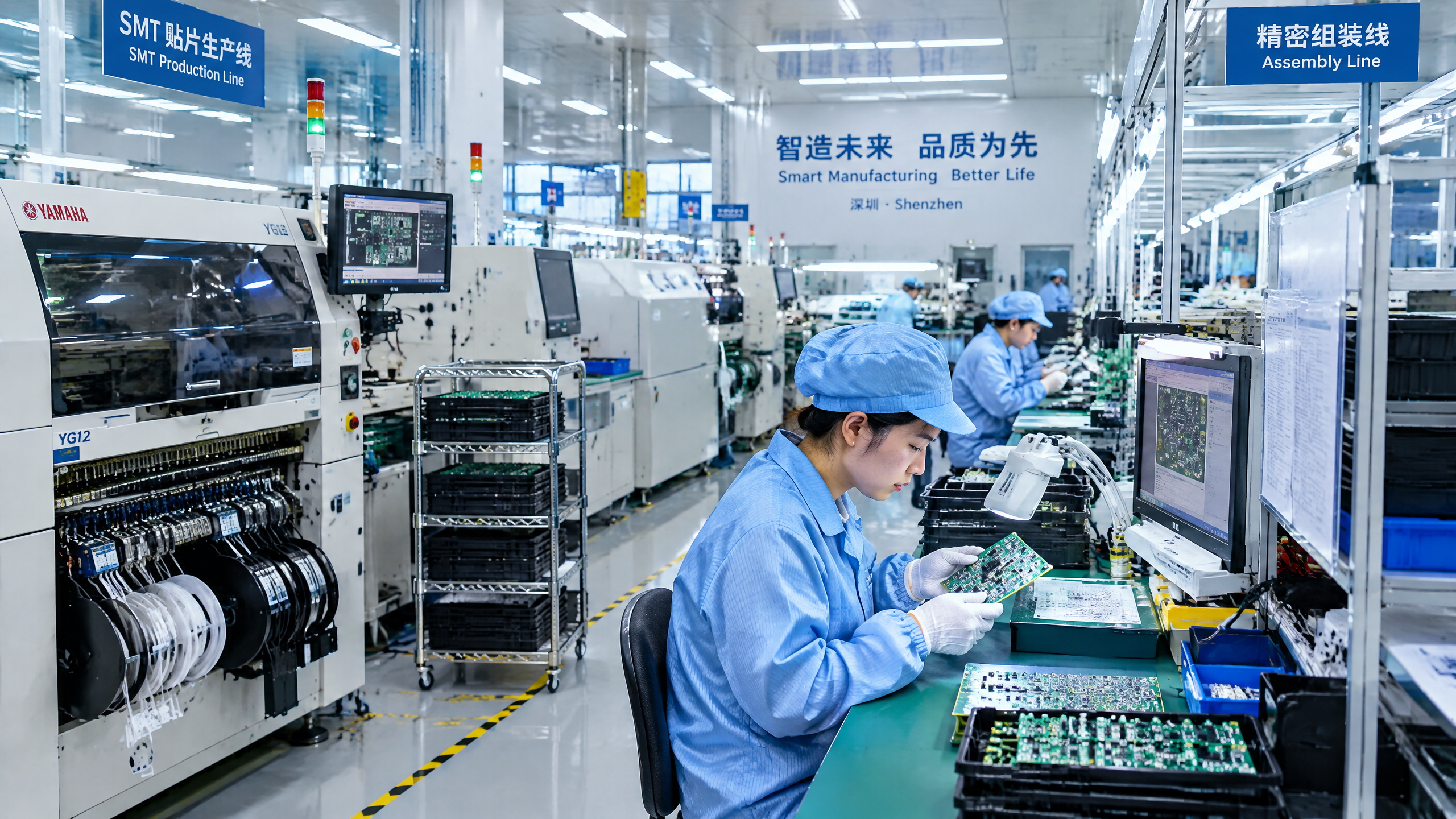
A control plan normally covers incoming critical parts, first-off confirmation, blade/base, interlock and electrical in-process checks, functional testing, finished-goods inspection and lot traceability. Set risk-based sampling in the quality plan. An end-of-line power-on check can detect assembly errors, but cannot prove blade durability or battery fault performance.
Production questions worth asking during a factory review
| Process area | Buyer question | Evidence or observation |
|---|---|---|
| Incoming components | How does the line verify the approved cell, PCB, blade and cup versions? | Part labels, approved-sample board, receiving records and supplier-change notification process |
| Blade assembly | What verifies complete assembly and controlled fastening/pressing/welding? | Work instruction, device settings, calibration/maintenance and reject handling |
| Interlock | Is the actual cup/base safety function tested on every unit or by a justified control method? | Functional-test fixture logic, error response and recorded results where used |
| Charging/electrical | What check confirms correct charge indicator/basic function without overstating battery safety? | Defined end-of-line procedure and traceable test result |
| Traceability | Can the finished date/batch code be traced to production date and safety-critical component lots? | Example traceability exercise from carton to component record |
| Nonconformance | What happens to failed units, rework and mixed parts? | Segregation, reinspection and disposition records |
Write a change-notification clause covering cells, BMS/PCB, charging IC, motor, blade/hub, cup resin/colourant, sensors, gasket, firmware, tooling, cable, manual and carton. Require advance notice, impact, sample availability, retesting rationale and agreed buyer approval. It protects the evidence-to-production connection.
9. Plan shipment inspection, battery logistics and launch readiness
Pre-shipment inspection verifies that goods match the approved baseline; it cannot certify legal compliance or reveal every latent failure. It can catch configuration drift, obvious assembly faults, poor instructions and packing errors.
Give the inspector an agreed sampling plan, golden sample, BOM/revision identifiers, critical-to-quality list, artwork and functional-test instructions before the visit.
| Inspection block | Example shipment checks | Escalate when |
|---|---|---|
| Identity and documents | Model/revision, date/batch code, manual language/version, carton artwork, report index and approved component declarations | SKU, revision or supplied accessory differs from the approval file |
| Mechanical condition | Cup fit, seal presence, blade appearance, base/cup engagement, cosmetic damage and leakage signs | Blade/base or cup-interface inconsistency appears in a sample |
| Functional check | Defined normal start/stop, cup-absent/incorrect-engagement check, indicator check and abnormal noise observation | Exposed-blade activation, intermittent interlock or uncontrolled behaviour occurs |
| Packing | Inner protection, carton count, battery marks/handling documents as applicable, cable inclusion and moisture protection | Packaging conflicts with carrier, destination or approved artwork requirements |
| Traceability | Product and carton code correlation; production-lot sampling | Units cannot be connected to production/component records |
For lithium-battery shipments, provide the applicable UN 38.3 summary and accurate configuration, then confirm classification, packing, marking, documents and carrier requirements for the actual shipment. [8]
Specify complaint ownership, batch-code capture, retained-sample access, shipment-stop authority and corrective-action verification. Serial and SKU identification can be central to corrective action. [1] [5]
10. Limitations, decision caveats and buyer FAQs
Limitations and decision caveats
This checklist does not replace market-specific conformity assessment, legal advice, accredited laboratory scope review, freight classification or insurer requirements. Rules vary by destination, voltage, accessories, radio features, battery configuration, intended user and claims. The EU Low Voltage Directive covers specified 50–1,000 V AC and 75–1,500 V DC ranges; lower-voltage consumer products may fall under general product-safety rules. [11]
Do not treat CE marking as a certificate or legal-compliance guarantee. The European Commission places conformity assessment, evidence, technical documentation and the EU declaration of conformity with the manufacturer; no central EU body grants a CE certificate. [12] Confirm final roles with competent advisers.
A passing sample test concerns that sample and configuration. It does not protect against later substitutions, process drift, unauthorised rework or misuse. Preserve the evidence chain and make change control contractual.
Frequently asked questions
1. Is an interlock required if the blender only starts after a double press?
A multi-press start sequence can reduce accidental activation, but it is not a substitute for a validated design that prevents hazardous exposed-blade operation when the cup is absent or incorrectly fitted. Require the final design and applicable test basis to address both intended use and foreseeable handling.
2. Is a generic test report acceptable for several private-label colours?
Only if the buyer can verify that colour, cup material, component suppliers, geometry, electronics, firmware and other safety-critical differences are covered by a defensible similarity rationale. New pigment, cup mould, sensor position or colourway should be reviewed rather than assumed equivalent.
3. What battery document matters most for freight?
Request the applicable UN 38.3 lithium-battery test summary matched to the battery design being shipped, then confirm shipment-specific requirements with the freight forwarder or carrier. It is important transport evidence, not a blanket product-compliance document. [8]
4. Can a supplier declaration alone prove food-contact suitability?
It may be an important part of the evidence file, but it should identify the exact material and intended conditions of use. Depending on market and material, the buyer may also need material-specific declarations, migration evidence or a qualified regulatory review.
5. Should the buyer approve the charger separately from the blender?
Yes, where an AC adaptor or other charging accessory is supplied. Freeze the adaptor, cable, connector and ratings in the product configuration, and evaluate the appliance-plus-accessory arrangement required for the destination. If no adaptor is supplied, instructions still need to state the permitted input and safe charging information.
6. Does a pre-shipment inspection replace laboratory testing?
No. Inspection confirms order-level identity, workmanship, functionality and packing against an agreed checklist. Laboratory testing evaluates defined hazards under controlled methods. Use both, and link both to the same model and revision.
11. Conclusion: approve the evidence chain, then the purchase order
A strong sourcing decision is not based on one report, a CE-looking logo or a smoothie demonstration. It rests on a frozen configuration; safe cup-absent/mis-engaged behaviour; designed, validated and controlled blade retention; an identifiable secured battery/charging system; food-contact evidence; instructions; traceability; and shipment inspection.
Ask what the exact model does, how it fails safely, which report covers which configuration, how the line detects an error and what happens after a component change. If answers cannot be connected to documents, samples and controls, do not release the project.
Closing CTA — Request a portable blender RFQ/specification review. Share your target countries, sales channel, intended use, capacity, charging configuration, branding requirements and planned launch date. UZYVO can discuss an OEM/ODM development brief and sample roadmap; before purchase, the buyer should confirm final requirements and verify evidence for the exact sellable model.
AI Image Recommendations
1. Portable blender in real-use procurement context
Purpose: Establish the product category and intended mobile-use context without making a consumer-performance claim. Insertion point: After the Introduction. English caption: A rechargeable portable blender prepared for a cold fruit drink in a controlled everyday setting. ALT text: Unbranded rechargeable portable blender with a clear cup, fruit ingredients and charging cable on a clean kitchen counter. AI image-generation prompt: Photorealistic premium B2B product lifestyle photograph, an unbranded rechargeable portable blender with transparent cup and stainless-steel blade base on a clean modern kitchen counter, sliced berries and banana nearby, a neutral USB charging cable placed beside it but not connected, soft daylight, European apartment kitchen background subtly out of focus, realistic safe assembly with cup fully attached, no person touching the blades, no trademarks, no readable text, no certification marks, no logos, no labels, no visual UI text, 16:9 landscape, commercial sourcing catalogue aesthetic.
2. Interlock and blade-base sample test
Purpose: Visualise the engineering review of cup engagement and blade-base safety without implying a named standard certification. Insertion point: In Module 2 or Module 3. English caption: Engineers review cup engagement and blade-base assembly on portable-blender samples before validation. ALT text: Quality engineer wearing gloves inspecting an unbranded portable blender blade base and cup engagement fixture in a factory lab. AI image-generation prompt: Photorealistic small-home-appliance factory laboratory scene, two quality engineers in plain lab coats and safety glasses examining an unbranded portable blender blade-base sample and transparent cup on a benchtop fixture, calipers and an unmarked digital torque tool nearby, close focus on correct cup-to-base engagement, clean modern Shenzhen-style OEM engineering lab, neutral colours, no exposed spinning blades, no readable screens, no readable paperwork, no trademarks, no certification marks, no logos, 16:9 landscape, credible B2B manufacturing photography.
3. Battery and charging-system sample review
Purpose: Show traceable component-level review of the power system and internal mechanical retention. Insertion point: In Module 4. English caption: A controlled engineering review of portable-blender battery and charging components. ALT text: Technician inspecting the secured battery pack and circuit board inside an unbranded portable blender base on an ESD workbench. AI image-generation prompt: High-detail photorealistic electronics quality-control scene in a factory, gloved technician at an ESD-safe bench inspecting an open unbranded portable blender base showing a compact secured rechargeable battery pack, circuit board and motor mounts, non-identifying component surfaces without readable labels, a multimeter and unmarked test leads in the background, tidy cable routing and screw fixings visible, no sparks, no hazard drama, no trademarks, no readable text, no certification marks, no logos, 3:2 landscape, technical B2B documentation style.
4. Pre-shipment quality inspection
Purpose: Reinforce the final comparison of packed goods against the approved configuration and traceability plan. Insertion point: In Module 9. English caption: Pre-shipment inspection compares portable-blender cartons and samples with the approved order specification. ALT text: Inspector checking unbranded portable blender samples beside plain export cartons in a warehouse quality-control area. AI image-generation prompt: Photorealistic export warehouse quality-control scene, professional inspector in plain workwear using a tablet with a blank screen and checking one unbranded portable blender sample next to neat stacks of plain kraft export cartons, a simple carton dimension gauge and sealed inner packaging visible, no readable shipping labels, no barcodes, no trademarks, no certification marks, no logos, bright clean warehouse light, international small-appliance sourcing atmosphere, 16:9 landscape.
References
- CPSC: BlendJet recalls 4.8 million BlendJet 2 portable blenders due to fire and laceration hazards
- CPSC: Sakar recalls Vivitar blender bottles due to laceration hazard
- UK Office for Product Safety and Standards: PRISM narrative style risk assessment—non-compliant portable juice blender
- UK Office for Product Safety and Standards: Product safety report—Boxo Blend rechargeable portable blender
- UK Office for Product Safety and Standards: Product recall—Nutribullet GO NBG-100 rechargeable blender
- IECEE: IEC 60335-2-14:2025—Safety of electric kitchen machines
- IECEE: IEC 62133-2:2017—Safety requirements for portable sealed secondary lithium cells and batteries
- U.S. PHMSA: Lithium Battery Test Summaries
- European Commission: Food Contact Materials
- U.S. FDA: Food Packaging and Other Substances that Come in Contact with Food
- European Commission: Low Voltage Directive
- Your Europe: CE marking
UZYVO inquiry
Next step for your sourcing team. Share your target market, product category, expected volume, and launch timing. UZYVO can help structure the next factory discussion around your final product brief, sample, documentation, and quality-control requirements.
Email: info@uzyvo.com
Put the buyer guide into a practical sourcing path.
Bring this framework into your next product brief.
Share your target market, appliance category, annual volume, and launch window. We will discuss a practical sample, documentation, and production path for the final configuration.
Email info@uzyvo.com