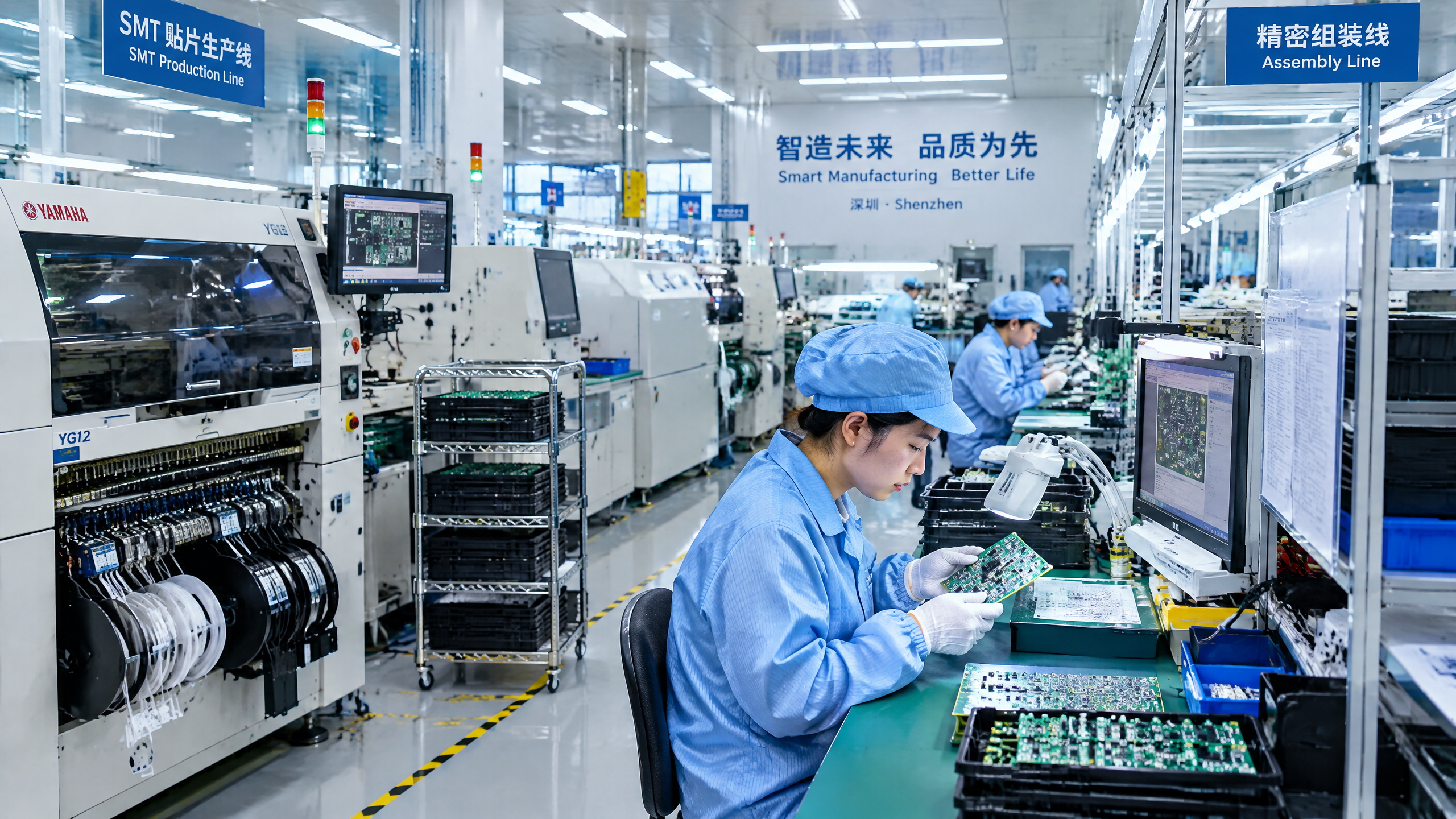
Short answer: Authorize mass production only after the final, production-intent sample is approved against one controlled specification: model configuration, critical components, functional and safety checks, appearance, packaging, instructions and market documentation. Record every approved characteristic in a signed sample-approval sheet, retain matched golden samples, and prohibit changes to listed components, suppliers, materials, software, tooling, process, packaging or labels without written change control. A beautiful prototype alone is not a production release.
Introduction
For a private-label importer, the sample stage is where a product idea becomes a controlled buying decision. A preferred color, premium-looking kettle or working coffee grinder proves too little. The pre-production sample must answer a harder question: can this exact configuration be repeatedly made, packed, inspected and supported for the intended market without unauthorized drift?
This matters because small-appliance failure modes are mixed: heating, leaks, battery substitutions and distribution damage can each appear after an attractive quotation sample is approved.
This article gives European and North American importers, private-label founders, distributors, category managers and sourcing teams a bounded private label appliance sample approval process. It is procurement guidance, not product-specific legal advice. For the final model, sales country, voltage version, claims and channel, determine the applicable rules and obtain appropriate technical, regulatory and legal review. The protocol applies to portable blenders, coffee grinders, toasters, food dehydrators, handheld vacuums, garment steamers, air purifiers and kettles, while allowing product-specific test methods to be added.
1. Treat Sample Approval as a Production-Release Decision
A concept sample proves direction; an engineering sample explores function; and a packaging sample proves packout. A pre-production sample (PPS) should represent the intended bill of materials (BOM), tooling, assembly method, quality standard and retail configuration. Only the PPS should trigger production release.
Build the gate around evidence. Nominate one accountable importer approver, identify supplier engineering, quality and project owners, and use one version-controlled specification package plus an issue log. Email threads are not a controlled release.
| Approval object | Question it must answer | Minimum evidence before “approved” | Common non-release condition |
|---|---|---|---|
| Concept / aesthetic sample | Is the product direction right? | Color, form, user experience comments | Prototype components or hand-built finish |
| Engineering sample | Does the intended design function? | Core functional test record; critical dimensions | Non-production tooling or temporary electronics |
| Packaging sample | Does the customer receive the agreed retail set? | Packout, labels, inserts, carton and barcode artwork | Empty carton viewed separately from product |
| Pre-production sample | Can the agreed product be manufactured as specified? | Controlled BOM, test record, finished packout and signed release sheet | Open deviations, substitute parts or unapproved artwork |
The approval statement should say: “Approved for mass production only to the attached revision, approved tolerances and approved packout.” It should also name exclusions, such as a conditionally accepted tank-cap shade that does not permit a resin, mold-texture or supplier change. This makes the decision executable.
A production release does not transfer all responsibility to the factory. In the United States, for example, the overseas-product importer has responsibility to issue a General Certificate of Conformity when a general-use consumer product is subject to CPSC rules; the certificate must be based on product testing or a reasonable testing program. [1] The point for sourcing is practical: retain traceable proof that the production configuration is the one evaluated, rather than assuming a report on a related sample solves the question.
2. Freeze the Commercial and Technical Baseline Before Reviewing Details
Reviewing a sample without a baseline produces “approved” products that are not actually defined. Before the sample arrives, issue a sample specification pack with a document number, revision, date and owner. It need not be overly complex. It must be specific enough that two people inspecting the same appliance reach a similar decision.
For a kettle, define voltage, power, plug/cord, capacity, heating controls, water-contact parts, finish, lid/base, warnings and packout. For a cordless vacuum, add battery/charger identity, motor/PCB revision, latching, filters, accessories, runtime conditions and transport needs. For a portable blender, define the blade, jar, gasket, charging configuration, interlocks and test condition.
| Baseline section | What to lock | Why it prevents later ambiguity |
|---|---|---|
| Commercial identity | Brand owner, SKU, model number, selling regions, Incoterm, target channel | Keeps a retailer pack from being confused with an e-commerce or distributor pack |
| Mechanical BOM | Critical plastics, metal grade, seals, blade, heater, motor, filter, fasteners | Makes substitutions visible before they affect fit, food contact, heat or durability |
| Electrical / electronic BOM | Plug, cord, adapter, PCB, firmware, battery, charger, switches and sensors | Connects the approved sample to the configuration tested and sold |
| Cosmetic master | Color target, gloss or texture, logo placement, gaps, scratches, allowable marks | Establishes a shared appearance standard rather than personal preference |
| Packout | Unit carton, inserts, manual, accessories, master-carton quantity, pallet plan | Prevents missing items and distribution damage |
| Verification plan | Test method, sample size, acceptance rule, record and owner | Defines how approval is reached rather than relying on a one-time demonstration |
Use a critical-to-quality (CTQ) list to separate release-critical characteristics from preferences. A CTQ could be a blade interlock, thermal cut-out behavior, leakage at the tank seam, cord strain-relief assembly, food-contact material identity or barcode scanability. “Slightly warmer white housing” may be a cosmetic issue; “motor starts with jar removed” is a stop-ship issue. Assign a measurable criterion where possible: a dimension range, torque window, test sequence, approved color chip, functional outcome or defect limit.
For EU-bound products, do not treat a CE mark on a sample as the baseline itself. The European Commission explains that CE marking is a manufacturer’s statement that a product meets applicable EU product rules; there is no central EU body that grants a general “CE certificate.” The responsible party must identify applicable requirements, gather supporting evidence and prepare the required declaration when applicable. [3] Ask instead: which final model, documentation, instructions, labels and risk controls are intended to support the market placement decision?
3. Confirm That the Pre-Production Sample Represents the Intended Build
A PPS can be convincing while using special parts. Require a declaration of what is production-intent versus provisional, covering tooling, BOM, critical-part suppliers, line, fixtures, firmware, packaging and labels. “Same as mass production” needs identifiers.
Record model/PCB/firmware revisions where relevant, plug or battery identity, heater or motor code, filter, blade, jar, seals and retail contents, then cross-check the BOM. Treat a different line, site or mold cavity as a verification risk. Review the controls that create the result: work instruction, torque setting, critical-component receipt check, functional fixture, leak test and final-inspection record.
| Evidence request | Importer review focus | Escalate or reject when |
|---|---|---|
| BOM and approved-vendor list | Revision, part codes, critical-material identity | Part codes are missing, “equivalent” parts are unnamed or multiple sources are uncontrolled |
| Tooling / cavity declaration | Production tool versus hand-finished or temporary parts | Cosmetic result cannot be tied to the intended tool |
| Assembly flow and control points | Where critical screws, seals, wires and safety parts are controlled | The process relies only on final visual inspection |
| Firmware and electronic revision | Exact file/version and functional behavior | Firmware is not identified or test result differs by software build |
| Pilot-run plan | Lot size, line, date, first-article and in-process checks | PPS is made separately from the intended production conditions |
Material substitution deserves disciplined treatment. CPSC describes a material change as a design, manufacturing-process or component-source change that could affect compliance. It advises retesting the affected requirements for general-use products after a material change and notes that component testing may be adequate only where the change does not affect the finished product’s compliance. [1] Build a similar rule into the purchase order: no change to a CTQ component, material, supplier, tooling, firmware, process, label, packing or test method without written approval and a documented assessment of validation impact.
That rule is commercial quality control, not a claim that every change has the same regulatory consequence. A new colorant in a non-critical outer shell and a new power cord supplier may require very different review. The discipline is to identify the difference before shipment, assess the impact against the final-market requirements and decide whether a new sample, focused test or full revalidation is needed.
4. Run Product-Appropriate Functional, Reliability and Safety Checks
Use an agreed test sheet. Record the sample, method and conditions; if a lab report is requested, verify its model, configuration, method edition, deviations and result against the proposed production version. A report does not replace examining the approved physical sample.
Test intended use: a grinder with defined bean load/cycle; dehydrator across trays/settings; toaster across settings/cycles; and air purifier controls, indicators and filter fit. For a portable blender, inspect blade/gasket seating, charge or power it as instructed, lock the jar, then complete a defined blend and clean-down. For a kettle, define fill level, lid/base engagement, boil, automatic shutoff and pour check.
| Product family | Practical sample checks | Production control to ask about |
|---|---|---|
| Kettles and toasters | Heat-up behavior, automatic shutoff, lid or lever operation, odor/smoke observation, repeated cycles, cord and plug fit | Heater and thermal-control traceability; functional/end-of-line test |
| Portable blenders and grinders | Interlock, start/stop, blade runout or noise, seal leakage, charging/input behavior, defined-load result | Blade, gasket, motor and battery controls; fixture for functional test |
| Garment steamers | Warm-up, steam trigger, tank fit, leak check, upright stability, repeated activation | Water-path assembly, heater controls and leak-test method |
| Handheld vacuums and air purifiers | Switches, charging, dock or filter fit, latch operation, abnormal noise, indicator behavior | Battery/charger traceability, filter incoming check, final functional test |
| Food dehydrators | Temperature-control behavior, fan noise, tray engagement, door fit, timed operation | Controller verification, fan fitment, tray and housing inspection |
Look for abnormal sound, vibration, odor, heating, leakage, unstable controls, poor fit, loose parts and repeatability. These are screening observations, not a declaration against a particular standard. Have a qualified laboratory or responsible compliance professional determine required test scope and final documentation.
Electrical products deserve special care because rules differ by product and market. The EU Low Voltage Directive applies within stated voltage limits—50 to 1,000 V AC and 75 to 1,500 V DC—and covers household appliances among other equipment. [5] Lower-voltage products, battery products and equipment with wireless functions may invoke other frameworks. In the United States, electronic-electrical products that emit RF energy can require the applicable FCC equipment authorization procedure before they are marketed, imported or used; the precise route depends on the device classification and functions. [8] Therefore, approve the *specific final configuration*, not a generic statement such as “EU/US compliant.”
5. Approve Appearance, User Experience and Installation/Preparation as a Retail Product
View the product under agreed lighting at consumer distance, then inspect closely. Compare approved color chips or panels and check parting lines, sink/gate marks, flash, scratches, gaps, alignment, finish, labels and texture. Record photo angle and acceptance decision.
Define critical (safety/prohibited/essential-function), major (material usability, presentation or function) and minor defects. Tailor defect limits and any AQL plan to the product, retailer and order risk; they are not universal legal thresholds.
Assemble the retail set exactly as a buyer would: charge the product, install filter/tank/nozzle, lock the blender jar, fit the crumb tray or prepare a kettle according to draft instructions. Check setup, accessory fit, cord use/storage, foreseeable-misuse warnings, front-of-pack presentation, barcode position, shelf-ready features and master-carton orientation.
Food-contact review is especially relevant for blender jars, seals, grinder hoppers, kettle interiors and any accessory that touches food or water. The U.S. FDA describes food-contact substances broadly to include food preparation surfaces and cookware, and it regulates their authorized uses. [10] In the EU, food-contact materials placed on the market must comply with the framework regulation and be manufactured under the applicable good-manufacturing-practice requirements. [9] As a procurement action, identify every food-contact component and its material/source in the BOM, then determine the documentation and testing appropriate to the intended materials, use conditions and destination market. Do not accept a vague “food-grade” claim without traceable support.
6. Review Packaging, Artwork and Documentation as One Shippable System
Packaging is part of the product. Approve the complete retail pack—unit, accessories, protection, inserts, manual, cartons, labels and pallet configuration—rather than artwork and an empty carton separately.
Check physical compatibility first. The product must not rattle, its vulnerable surfaces must be protected, the manual must fit without buckling, accessories must not scratch the housing, and the opening sequence should make sense. Then check information control: model and SKU, voltage/power data where applicable, country-of-origin marking as determined for the destination, importer or responsible-party details where required, warnings, recycling or disposal information where applicable, barcode and retailer-specific markings. Confirm every language version against the approved source text; do not make a translation decision from layout alone.
| Packaging review layer | Approve before production | Verify again during shipment inspection |
|---|---|---|
| Retail presentation | Color, finish, image, product name, assortment, barcode, inserts | Print clarity, correct revision, barcode scan and carton condition |
| Protection | Internal fit, accessory separation, corner protection, closure | Rattle, abrasion, crush, loose parts and missing protective pieces |
| Logistics | Master dimensions/weight, count, carton markings, pallet plan | Carton count, gross weight trend, shipping marks and pallet stability |
| Documentation | Manual, safety text, warranty/service inserts, languages | Correct revision, completeness and placement in each retail box |
Match the transport test to the planned route. ISTA distinguishes simple integrity screening from general-simulation procedures. Its 3-Series procedures simulate transport motions, forces, conditions and sequences; for individual parcel shipments of products up to 70 kg, ISTA 3A is designed for parcel-delivery distribution. [6] A test procedure may be useful evidence, but it does not remove the need to select a plan relevant to the actual freight mode, retailer requirements, over-box use, palletization and climate exposure.
For cordless appliances, transport documentation is a release item. IATA identifies lithium batteries as Class 9 dangerous goods and states that manufacturers and subsequent distributors of applicable cells, batteries and equipment powered by them must make the UN 38.3 test summary available, subject to stated exceptions. [7] Confirm the final battery and product identifiers, Watt-hour rating, transport classification, packing instruction, marks/labels and test-summary availability with the responsible shipper and freight provider. Do not assume an SDS is the required transport record; IATA specifically notes that an SDS is not a transport document for batteries. [7]
Mid-article CTA — Turn sample approval into a signed release package. Before placing a mass-production order, request a model-specific sample-approval checklist that links the BOM, functional tests, cosmetics, packaging and change-control rules. Use it to compare supplier readiness on the same evidence, not on presentation quality alone.
7. Create a Golden-Sample System That Production and Inspection Can Use
A golden sample is an identified physical reference for the approved state, not simply the nicest unit. Link it to the approval record and make it accessible to production and inspection. For higher-risk products, retain matched sets with the importer, factory and, where appropriate, inspection provider. Include a golden packout.
Record sample ID, model/SKU, revision, date, approver, configuration and condition, plus judged features such as housing color, gap/flushness, accessories, plug, manual, label and packaging. Protect accessories and store samples against cosmetic aging.
| Golden-sample element | Control record | Operational use |
|---|---|---|
| Product unit | Sample ID, photo set, BOM/revision, approved defects or waivers | Reference at first article, inline audit and pre-shipment inspection |
| Critical component set | Part code, supplier, material/color, date code where relevant | Detects wrong plug, filter, blade, gasket, battery or accessory |
| Retail pack | Artwork revision, barcode, insert and master-carton reference | Verifies packout and documentation against approved presentation |
| Approval dossier | Signed sheet, test records, deviation log and change-control register | Allows a dispute to be resolved from evidence rather than memory |
Pair the golden sample with a limit sample or clear photo for any accepted scratch, color shift or molding mark. It does not override measurement, regulation or the written specification; use it as a comparator within the signed release package.
8. Translate Sample Approval into a Pilot Run and Measurable Quality Plan
Start with internal first-article approval and a controlled pilot. Compare first units to the golden sample, BOM and CTQ list; verify process settings and functional fixture. For a new mold, site or battery model, consider holding release until pilot evidence is accepted.
Cover incoming, in-process and finished-goods stages. Check critical parts on receipt; torque, wire routing, leaks, function and fit inline; then verify the retail-ready unit and carton.
| Stage | What to verify | Record that makes it auditable |
|---|---|---|
| Incoming materials | Critical part identity, appearance, dimensions or certificates as appropriate | Receiving-inspection log and supplier/lot traceability |
| First article / pilot | Build matches PPS and CTQs before volume is made | First-article checklist, sample photos and approved deviations |
| Inline production | Process controls continue to create conforming units | Patrol-inspection record, test-station data and defect trend |
| Pre-shipment inspection | Finished goods, packout, cartons and selected functions match release | Inspection report, AQL plan if used, defect photos and final count |
| Loading / dispatch | Correct cartons, quantity, container condition and loading pattern | Loading report, seal record and shipping-document cross-check |
Define the inspection level or sample-size rule, defect classes, acceptance/rejection numbers, reinspection and rejected-unit disposition. If using an AQL table, name its edition and parameters; “AQL 2.5” alone is incomplete.
Shipment inspection controls release drift; it does not replace validation. Compare finished goods to golden sample, artwork and change log. Inspect selected cartons for safe documented function, barcode, accessories and carton marks. Hold shipment where deviations require scope, cause, containment, rework or documentation review.
9. Manage Customer Requirements, Exceptions and Material Changes Without Losing Control
Private-label supply often adds retailer routing/labels, destination plug/language/responsibility information, pallet patterns or e-commerce over-box requirements. Put each in a customer-requirements matrix with source, owner, revision and evidence; do not bury them in messages.
| Change or customer request | First question | Possible approval response |
|---|---|---|
| New color or finish | Does resin, paint, process or colorant change a CTQ or supporting evidence? | New color sample; material review; targeted testing if relevant |
| Plug, cord or adapter change | Does it change electrical configuration, label, test evidence or destination requirement? | New model/configuration review and applicable verification |
| New battery or charger | Does cell/pack identity, charger, runtime, thermal behavior or transport data change? | New engineering sample and transport/compliance assessment |
| New retailer artwork or language | Does it alter warnings, claims, labels, barcode or packout? | Artwork proof and full packout review |
| New carton or direct-to-consumer route | Does protection fit the distribution environment? | Route-relevant package review or testing |
| Supplier proposes “equivalent” part | Is it listed, controlled and shown not to affect CTQ, quality or documentation? | Written change request; reject pending review if evidence is incomplete |
Use a change request identifying the change, reason, affected SKUs/lots, impacted evidence and proposed validation. Do not implement before written authorization. Decide whether it needs a component check, new PPS or broader revalidation, and retain version history.
Limitations and decision caveats. This protocol reduces uncertainty; it cannot prove every unit defect-free or guarantee acceptance by every authority, retailer or carrier. Sample observations are not laboratory certification. A packaging simulation represents chosen conditions, and a golden sample needs drawings, limits and records to avoid aging or subjective interpretation. Report relevance depends on sample identity, method, scope, laboratory competence and production match. Duties vary by function, voltage, battery, wireless features, claims and destination.
Treat the final release as a risk decision. Where the product is new, technically complex, battery-powered, food-contact, connected, high-volume, sold under a demanding retailer program or subject to prior quality issues, add independent testing, deeper factory assessment, a larger pilot and stronger shipment controls. Where a supplier has a stable, documented configuration, the protocol can be proportionate—but never reduced to a photo approval.
10. Resolve Common Approval Questions Before the Purchase Order Is Locked
Is a signed golden sample enough to start mass production?
No. Pair it with a controlled BOM, configuration, cosmetic criteria, test evidence, packout, documentation, quality plan and change control. A sample without production identity cannot show what will be built repeatedly.
How many samples should an importer approve?
At minimum, retain one identified unit and full packout. For higher-risk products, retain matched importer, factory and inspection references. Quantity depends on complexity, travel time, stakeholders and destructive or laboratory checks.
Should the factory send a sample before or after compliance testing?
Use both sequences when needed. An early engineering sample can expose usability and specification issues before testing expense. The final production-intent sample should be the configuration evaluated against the final-market verification plan. If testing exposes a design or component change, review whether the approved sample and supporting evidence are still aligned.
What changes should automatically trigger a new approval review?
At a minimum, review changes to safety or performance-relevant components, component sources, materials, tooling, firmware, battery or charger, production process, labels, instructions, packaging, product claims and factory site. CPSC’s guidance similarly treats changes in design, process or component source that could affect compliance as material changes. [1] The level of new validation should be risk-based and model-specific.
Can a supplier’s existing test report be used for a private-label model?
Possibly, after checking model identity, configuration, critical parts, method/edition, rating, market, scope, laboratory, date and changes. A report for another plug, battery, PCB or material is not automatically transferable.
What should be tested in a pre-shipment inspection?
Verify selected finished goods and cartons against the approved sample and approved inspection plan: appearance, measurements where defined, accessories, labels/artwork, packing, barcode, selected function and carton condition. Do not use a pre-shipment inspection as the sole proof of electrical, wireless, food-contact or transport compliance; those matters require the appropriate model-specific evidence.
Is CE a certificate that the factory can provide with the sample?
No. CE marking is not a general certificate issued by a central EU body. Where CE rules apply, the manufacturer must follow the applicable conformity assessment route, assemble supporting documentation and prepare the declaration of conformity. [3] The importer should ask for the applicable evidence and verify who bears each legal and commercial responsibility for the final model.
11. Release Mass Production Only When the Evidence Matches the Product
Use an auditable decision: approve, approve with controlled conditions, or do not approve. A conditional approval names the open item, owner, date, verification and any production, packing or shipment hold.
At release, buyer checks commercial terms; product checks function and experience; quality checks CTQs, pilot and inspection; packaging checks retail/transport configuration; compliance determines readiness of final-market documentation and test route; and supplier confirms BOM, process and change control. One importer representative records the decision.
| Final release question | “Yes” evidence | If “No” |
|---|---|---|
| Is the PPS traceable to the approved BOM and final configuration? | Revision-controlled BOM, sample ID and component records | Do not release; resolve configuration mismatch |
| Are all CTQ functions and agreed tests accepted? | Dated test sheet, issue closure and applicable external evidence | Rework, retest or redesign before approval |
| Is appearance accepted with documented limits? | Golden/limit samples, photo set and defect criteria | Correct tooling/process or negotiate an explicit deviation |
| Is the complete packout accepted for the destination and channel? | Retail pack, artwork approval, manual and carton plan | Hold printing/packing until corrected |
| Are change-control and shipment inspection defined? | Signed quality agreement, change form and inspection plan | Add controls before the purchase order is released |
| Are applicable final-market and transport obligations assigned for review? | Responsibility matrix and supporting document plan | Obtain specialist review before placing goods on the market or shipping |
Conclusion
A disciplined private-label appliance sample approval process makes the production decision finite. It tells the factory what must not move, shows the importer which evidence is still missing, and gives the inspector a finished-carton reference. That is how a golden sample becomes a production control rather than a display piece.
Closing CTA — Prepare a production release that your sourcing, quality and retail teams can all use. Ask for a tailored small-appliance sample-approval template covering your model, sales regions, retail channel, test priorities, packout and retained-golden-sample controls. Build the checklist before the order is irreversible, then use the same reference through pre-shipment inspection.
AI Image Recommendations
1. Product and sourcing approval context
Purpose: Give the article a commercial opening visual that makes the buyer’s application context immediately clear. Insertion point: Directly below the short-answer block. English caption: Private-label small appliances should be approved as complete retail products, not as attractive prototypes. ALT text: Unbranded portable blender, kettle and coffee grinder prepared for private-label sample review on a sourcing team table. AI image-generation prompt: Create a high-resolution editorial B2B sourcing photograph for a manufacturer blog. Subject: a clean meeting table in a modern product-development room with an unbranded portable blender, matte stainless electric kettle and compact coffee grinder arranged beside neutral sample components, blank swatches and a closed clipboard. Composition: horizontal 16:9, three-quarter tabletop view, products sharply in focus, two professionally dressed sourcing team members visible only from shoulders down reviewing the items, generous negative space on the left for article overlay. Style: realistic premium commercial photography, soft daylight, restrained charcoal, white and warm gray palette, credible materials and scale. Text/content to render: no text. Constraints: no trademarks, no readable text, no certification marks, no brand logos, no misleading safety labels, no surreal product geometry. Avoid clutter, visible company identities and consumer lifestyle staging.
2. Engineering and production-intent sample test
Purpose: Show that approval includes engineering verification and a production-intent sample, not only cosmetics. Insertion point: In Module 4, after the functional-test table. English caption: Functional checks should be performed on an identified production-intent sample under a defined method. ALT text: Quality engineer checking an unbranded small appliance sample on a factory test bench with measurement tools. AI image-generation prompt: Create a documentary-style factory quality-control photograph for a B2B appliance sourcing article. Subject: an experienced quality engineer in a clean electronics and small-appliance test area examining an unbranded handheld vacuum and portable blender sample on a realistic test bench, with a torque driver, digital caliper, insulated test leads and a plain test fixture nearby. Composition: horizontal 3:2, waist-level angle, engineer’s gloved hands and the samples are the focal point, subtle production line depth behind, no legible displays. Style: realistic Shenzhen OEM/ODM factory atmosphere, bright neutral industrial lighting, accurate injection-molded plastic, metal and cable textures, calm professional mood. Text/content to render: no text. Constraints: no trademarks, no readable text, no certification marks, no unsafe exposed high-voltage work, no fabricated laboratory logos. Avoid sterile sci-fi visuals and impossible wiring.
3. Golden-sample retention and controlled packout
Purpose: Illustrate golden-sample retention and the link between a physical reference and a controlled packout. Insertion point: At the start of Module 7. English caption: A retained golden sample should include the appliance, critical accessories and the agreed retail packout. ALT text: Unbranded garment steamer golden sample with accessories and neutral retail packaging in a controlled quality reference cabinet. AI image-generation prompt: Create a realistic B2B quality-system photograph. Subject: a controlled sample-reference cabinet and adjacent work surface holding an unbranded garment steamer, removable water tank, cable, accessories and a plain neutral retail carton, each organized in protective compartments with tiny blank non-readable identification tabs. Composition: vertical 4:5, frontal three-quarter view, appliance and full packout visible, clean visual hierarchy. Style: premium industrial product photography with soft even lighting, gray metal cabinet, neutral cardboard, white and slate appliance colors, authentic protective foam and tamper-evident bag details. Text/content to render: no text. Constraints: no trademarks, no readable text, no certification marks, no real brand packaging, no medical or health claims. Avoid clutter and implausible product proportions.
4. Pre-shipment quality inspection
Purpose: Reinforce that shipment inspection checks the finished retail unit and master-carton condition before dispatch. Insertion point: In Module 8, after the inspection-plan table. English caption: Pre-shipment inspection compares finished goods and cartons against the approved release package before dispatch. ALT text: Inspector checking unbranded small-appliance master cartons and retail packs in a warehouse before container loading. AI image-generation prompt: Create a realistic warehouse pre-shipment-inspection photograph for a B2B sourcing article. Subject: a quality inspector in a safety vest opening one plain master carton on a pallet and comparing an unbranded retail boxed kettle with a matching unbranded sample while rows of sealed cartons await container loading. Composition: horizontal 16:9, inspector and open carton in foreground, palletized goods and a container door softly visible in background, clear inspection action. Style: natural warehouse light mixed with overhead industrial light, credible corrugated carton texture, restrained neutral palette, professional logistics setting. Text/content to render: no text. Constraints: no trademarks, no readable text, no barcodes that can be scanned, no certification marks, no shipping-company logos. Avoid exaggerated warehouse scale, unsafe pallet stacks and unrealistic carton damage.
References
- CPSC: General Use Products—Certification and Testing
- CPSC: Material Change Testing
- Your Europe: CE marking
- Your Europe: Preparing technical documentation
- European Commission: Low Voltage Directive (LVD)
- International Safe Transit Association: Test Procedures
- IATA Guidance Document for Lithium Batteries and Sodium Ion Batteries—2026
- Federal Communications Commission: Radio Frequency Devices
- European Commission: Food Contact Materials
- FDA: Food Packaging and Other Substances that Come in Contact with Food
UZYVO inquiry
Next step for your sourcing team. Share your target market, product category, expected volume, and launch timing. UZYVO can help structure the next factory discussion around your final product brief, sample, documentation, and quality-control requirements.
Email: info@uzyvo.com
Put the buyer guide into a practical sourcing path.
Bring this framework into your next product brief.
Share your target market, appliance category, annual volume, and launch window. We will discuss a practical sample, documentation, and production path for the final configuration.
Email info@uzyvo.com