Short answer: Use a burr platform where repeatable settings, brew positioning and a premium or enthusiast proposition matter. Use a blade platform for an entry-price, compact, pulse-operated utility grinder whose promise is limited to simple dry grinding. Make the intended use testable—bean/dose, setting, particle method, retention, cycle, noise, temperature, cleaning and endurance—and approve claims only for the final BOM, firmware and market version.
Private-label coffee-grinder selection is a portfolio, cost-to-serve, claim-evidence and service-risk decision, not a generic “which product is best?” review. Burr grinders use two abrasive surfaces separated by an adjustable gap; blade grinders use a high-speed rotating blade and a timed or user-controlled pulse in one chamber. The burr architecture gives a buyer more geometry to specify, while blade output is more sensitive to dose and pulse pattern. That changes the test burden for the same claim.
This guide gives importers, category managers, distributors and private-label founders a route from use case to approved sample, production inspection and responsible marketing. It is procurement guidance, not product-specific legal advice. Determine requirements for the final model, destination, sales channel and electrical configuration with the responsible importer, laboratory and regulatory advisers.
1. Start with the retail job, not the grinder mechanism
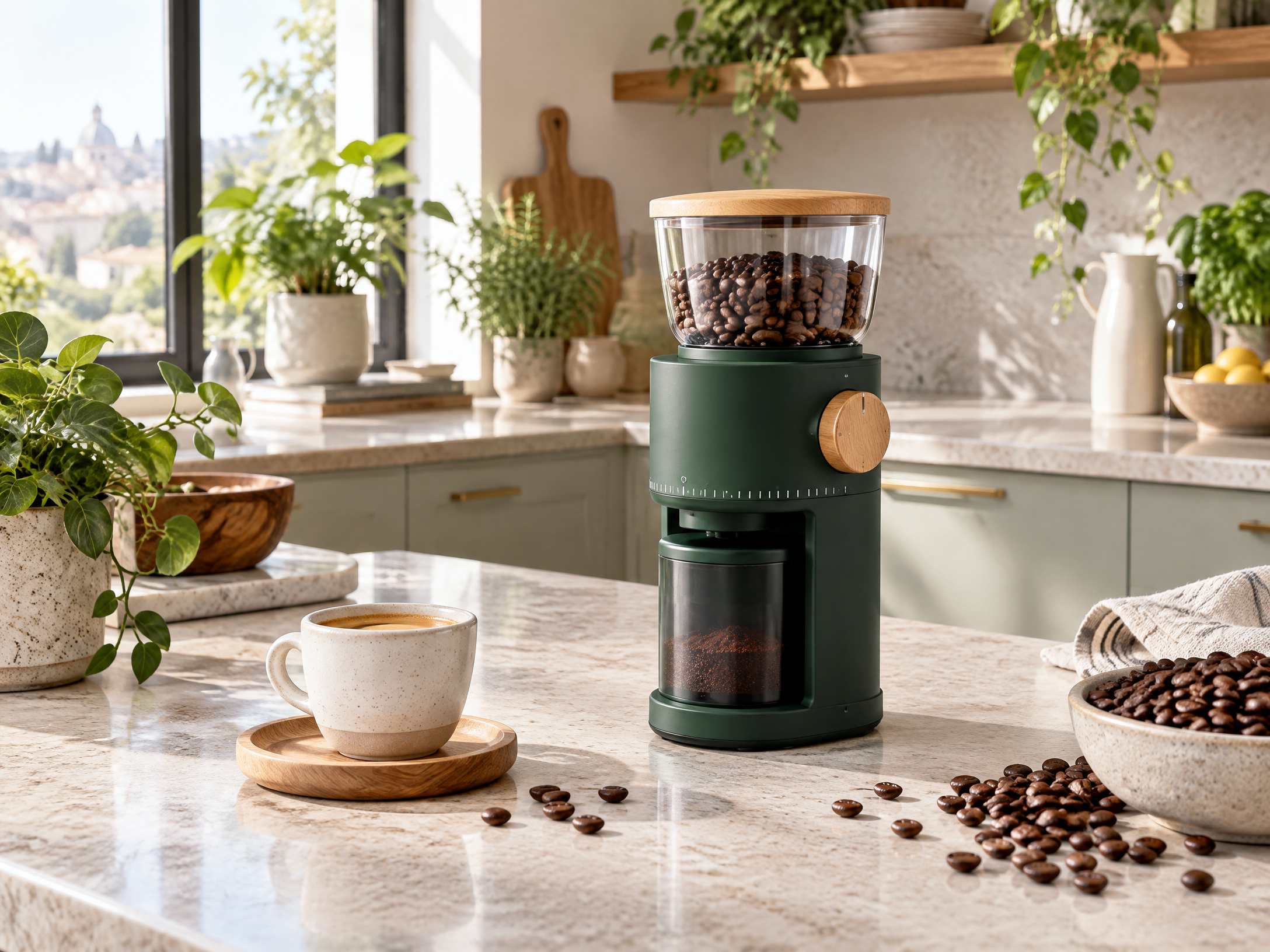
The first sourcing brief should describe the job to be done. An entry model may serve occasional drip coffee, spices or travel; a burr model may serve a customer who changes between filter coffee and espresso-style preparation and expects settings to mean something from one use to the next. These are different propositions, not merely price points.
Write the range role before issuing RFQs: channel, shelf-price target, expected volume, voltage version, form factor, coffee-only or multi-purpose use, and permitted packaging claims. “Premium coffee grinder” is too vague. A specific burr brief should name intended preparation, dose window, removable parts, electrical variants and the rule that only production-representative test results support claims.
| Range role | Customer context | Starting platform | Do not promise before test |
|---|---|---|---|
| Opening-price utility | Occasional dry grinding, low storage, price-led retail | Blade | Uniform particles, espresso suitability, hands-free dosing |
| Everyday filter coffee | Repeatable drip, pour-over or French press | Burr | Exact micron output or universal brew perfection |
| Specialty/enthusiast | Multiple brew styles; adjustment and cleaning access expected | Burr | Café-grade or espresso capability without a defined protocol |
| Travel/rechargeable | Small single-serve use away from mains power | Burr or blade | Throughput/runtime without the stated battery and bean test |
The portfolio can contain both platforms. Do not place a blade grinder beside a burr grinder with identical coffee-quality language. Give the blade item a convenience role and the burr item a repeatability role supported by its settings and tests.
2. Compare burr and blade platforms on controllable variables
The useful comparison is not “burr equals good.” It is which variables can be held constant, measured and maintained. Burr configuration, alignment, adjustment geometry, motor behavior, bean feed and grounds path influence output. Blade models have fewer adjustment controls and rely more on time, fill level and pulsing. Either platform still depends on tolerances, assembly and production control.
Burr configurations: conical or flat, manual or powered adjustment
Conical burrs use a cone-and-ring geometry; flat burrs use opposing discs. Either can be well or poorly implemented. Request material, nominal size, adjustment range, retention path, upper-burr removal procedure and zero-point control. Freeze and control firmware where a timer or digital adjustment is used.
Blade configurations: a timed grinder, not a setting grinder
In a basic blade platform, the user largely determines output through pulse duration and chamber loading. Lid, pulse button, safety interlock and practical cleaning access often matter more than cosmetic metal accents. A dose guide and “pulse to preference” instruction are more defensible than a claim that one button produces a defined brew grind.
| Criterion | Burr platform | Blade platform | Sourcing implication |
|---|---|---|---|
| Adjustment | Mechanical/electronic gap control | Time and user pulses | Burr enables setting checks; blade needs dose/time rules |
| Particle output | Profiled at specified settings | Strongly protocol dependent | Compare only with identical bean, dose, method and sampling |
| Retention/cleaning | Path may retain grounds; removable parts need correct reseating | Bowl is exposed; blade/residue need clear instructions | Define weigh-in/out, cleaning and reassembly checks |
| Commercial role | Higher BOM and claim burden | Simpler entry proposition | Model landed cost, warranty risk and shelf language |
Traditional sieving and laser diffraction are established methods for coffee particle-size distribution, but comparable results need an identified sampling and preparation protocol.[2] Equipment alone does not prove a claim; a defined method does.
3. Translate use contexts into a platform-selection matrix
A platform decision becomes clearer when the team defines preparation. Press-style, filter and espresso-style workflows demand different adjustment, particle output, dose and customer expectation. The buyer need not publish internal particle targets, but should decide which preparations retail copy will name.
| Intended use | Expectation | Platform | Specification decision |
|---|---|---|---|
| Occasional drip | Convenient fresh grinding | Blade can fit | State dose, pulse routine and maximum cycle time |
| Pour-over/batch filter | Repeatable medium/coarse output | Burr preferred | Evaluate settings and repeatability after adjustment cycles |
| French press | Coarse output; low visible dust | Burr preferred | Define particle metric, dose and bean |
| Espresso-style setup | Fine adjustment and repeatability | Burr starting point | Test against the named machine and recipe |
| Mixed dry ingredients | Flexibility and cleanup | Blade may fit | Confirm material, instructions and odor-transfer scope |
Make the final selection against a use-case protocol, not a product photo. Use the designated beans, supplier instructions, dose and sequence across candidates. SCA standards establish shared terminology, consistency and technical guidance across coffee equipment and testing contexts.[1] They are not proof that an untested private-label product meets an SCA specification.
4. Build an RFQ that makes suppliers quote the same product
A vague RFQ produces a comparison based on appearance and nominal wattage. Define a configuration baseline so quotations expose differences in components, evidence and process. Send a version-controlled document to every candidate and require a line-by-line response.
RFQ fields that change the commercial outcome
| RFQ control | What to state | Why it matters |
|---|---|---|
| Platform and mechanism | Burr type/nominal dimensions/material, or blade geometry/material; adjustment architecture | Prevents a substitution that looks similar but changes output |
| Electrical version | Rated voltage/frequency, plug, cord length, adapter policy, battery pack and charger where relevant | Electrical parts and approvals cannot be assumed transferable across markets |
| Use and limits | Coffee-only or approved alternative dry use; max dose; maximum continuous run; cooldown language | Aligns product, manual and overload expectations |
| Measured claims | Exact claim wording, test method, sample quantity, beans, setting and acceptance rule | Converts a marketing idea into an approvable validation task |
| Materials and finish | Food-contact parts, resin/metal grades, color masterbatch, coatings and odor requirements | Supports traceability and material-change control |
| Serviceability | Cleaning steps, removable parts, spare-part expectations and prohibited disassembly | Helps prevent avoidable returns and unsafe user behavior |
| Packaging | Retail box drop expectation, accessories, languages, barcode position, master-carton limits | Avoids late artwork and cube-cost surprises |
| Evidence package | BOM, drawings, test plan, change-control process and destination-relevant documents | Allows an evidence-based supplier comparison |
Ask suppliers to identify assumptions and exclusions: whether “stainless steel burr” covers both burrs, whether a report matches the voltage, motor, cord, board and SKU, and whether setting count means detents or calibrated positions.
For EU-bound electrical equipment within relevant voltage limits, the Low Voltage Directive assigns responsibilities to manufacturers, importers and distributors and addresses conformity work, technical documentation, user information and traceability.[5] For the United States, an importer of an overseas general-use product subject to applicable CPSC rules has certificate responsibilities supported by testing or a reasonable program.[6] Determine scope for the actual model.
5. Turn desirable features into testable performance claims
A claim is testable when the sample, condition, method, metric and pass rule are known. “Professional grinding,” “ultra-consistent,” “zero retention” and “perfect for every brew” lack a threshold or imply untestable breadth.
Retain the protocol, raw results, sample ID and approved wording in the technical file. Assess revalidation when a burr supplier, motor, board, chamber resin, lid, adjustment carrier or firmware changes. CPSC guidance notes that material changes may affect compliance and call for retesting.[6]
| Claim area | Defensible claim style | Example validation protocol | Red flag wording |
|---|---|---|---|
| Adjustability | “Adjustable grind selector” | Photograph settings; verify detent count, label durability and repeatable movement on a defined sample set | “Precision calibrated” without a calibration tolerance |
| Grind output | “Designed for filter and coarse-brew settings” | Approved beans, defined dose, defined settings; record particle distribution by agreed sieve stack or validated laboratory method | “Uniform grind” without metric, method or sample scope |
| Capacity | “Hopper holds up to X g” | Weigh specified bean type into assembled, level hopper under stated fill condition | “Large capacity” |
| Cycle time | “Grinds X g in up to Y seconds” | Defined roast/bean, dose, setting, start condition and timing method; repeat across samples | “Fast grinding” |
| Retention | “Measured retained grounds under X g after defined test” | Tare collection, weigh dose in/out, define tap/purge/brush sequence and number of runs | “Zero retention” |
| Sound | “Measured sound level under defined conditions” | Specify meter, distance, background condition, dose, setting and reporting statistic | “Quiet” or “silent” |
| Cleaning | “Removable upper burr for cleaning” | Observe removal/reassembly; confirm no tools or identify tools and instructions | “Easy to clean” if inaccessible residue remains |
For particle distribution, state the method, roast/blend, age, dose, setting, preconditioning, runs, collection and calculation. A chart without this context is not decision evidence. The finished-product test must be repeatable and suitable for the claim.[2]
Mid-article CTA: move from concept comparison to an approval plan
6. Plan realistic factory and laboratory testing
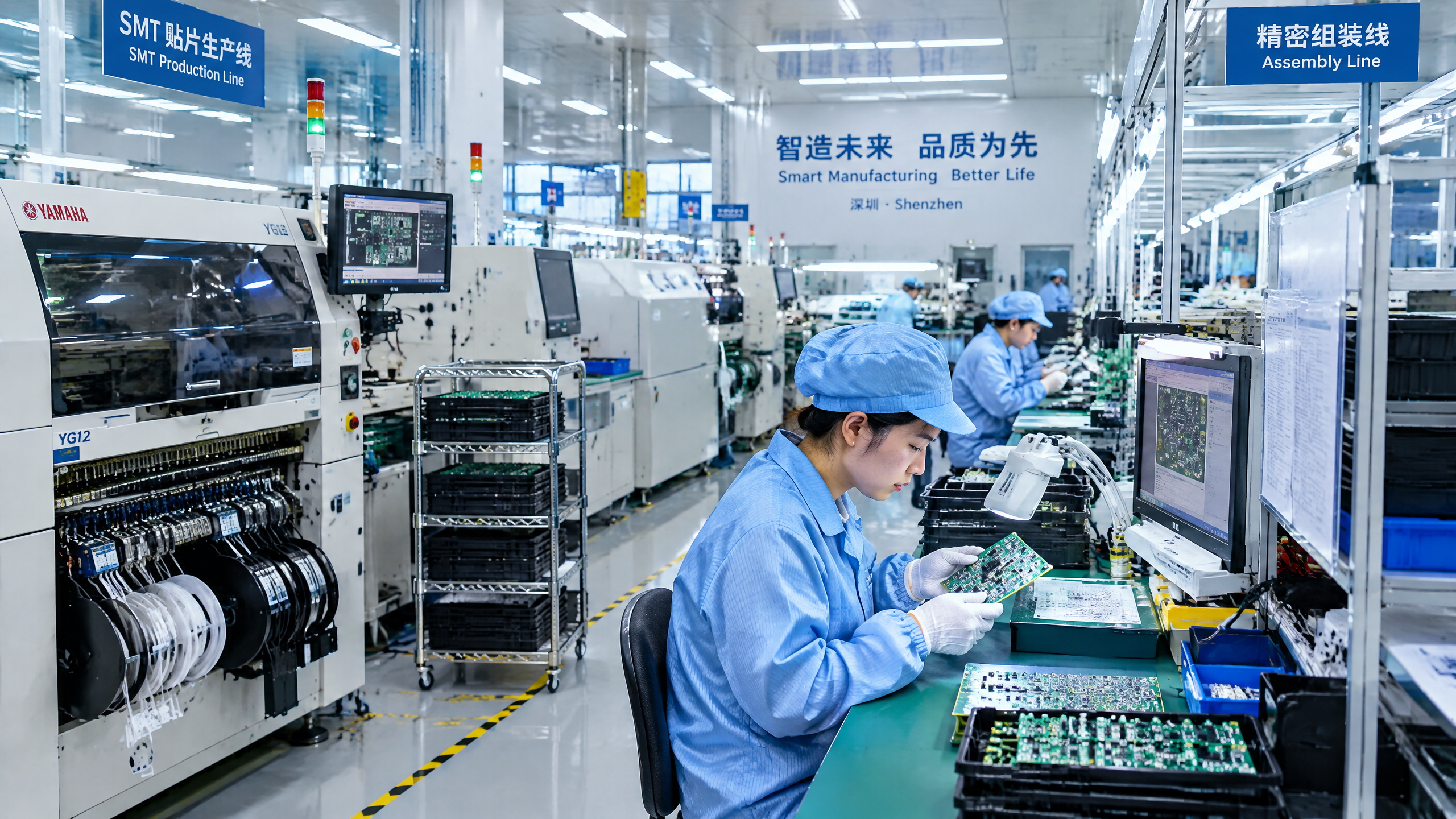
Factory testing and independent laboratory testing serve different decisions. Factory checks can detect assembly variation in switches, interlocks, motor response, appearance and selected grinding trials. Use a competent laboratory where defined safety, materials, electromagnetic or claim validation is needed. An in-process check is not a market-access assessment.
A practical development test sequence
| Gate | Focus | Evidence | If result differs |
|---|---|---|---|
| Engineering sample | Mechanism, fit, preliminary output | Photos, BOM revision, test log | Correct design; do not approve claims |
| Golden sample | Approved performance/user experience | Signed specification, claim matrix, sample ID | Freeze baseline/change-control triggers |
| Pilot run | Production repeatability | First-article results, line checks, traceability plan | Hold scale-up or change controls |
| Pre-shipment | Lot and packaging conformity | Inspection/functional results, carton checks | Rework, sort, hold or release |
| Revalidation | Drift/material changes | Trend data, revised BOM | Assess claim/compliance impact |
For a burr model, check adjustment sweep, secure burr seating, abnormal noise, loaded operation, grounds collection and permitted cleaning/reassembly. For a blade model, check lid/interlock behavior, pulse consistency, stability, blade fastening, chamber-access safety and timed grinding at stated doses. Measure heat only with defined run/rest cycles and a stated location.
Treat digital-control firmware as a controlled component. The FCC notes that products with digital logic may be unintentional radiators while basic non-digital motors may be incidental radiators; determine the U.S. authorization path for the actual model before marketing or import.[7] A mechanical and a digital grinder should not be assumed to share evidence.
7. Run sample review as a cross-functional approval, not a showroom check
A sample can look ready before it is commercially ready. Use a review sheet across procurement, quality, packaging, engineering, customer service and regulatory owners; require a common sample identity and documented deviations. Store the approved “golden sample” as a controlled reference, not simply the best-looking supplier unit.
Sample review checklist
| Owner | Approval question |
|---|---|
| Brand | Does the product earn its place without unsupported premium language? |
| Engineering | Do mechanism, controls and critical dimensions match BOM/drawing? |
| Quality | Are visual limits, functional checks and defect classes measurable? |
| Packaging | Do packaging, accessories, artwork and languages match the order? |
| Compliance | Are final-model rules, documents, labeling and instructions determined? |
| Customer service | Can a consumer use and maintain it safely from the manual? |
Include installation and preparation in sample review. Check destination plug and voltage label; stable dry placement; hopper, catcher, lid and safety-part fit; transit protection removal; and any approved first-use cleaning/discard step. For rechargeable models, check charger/cable, indicator behavior and instructions. Validate the final manual rather than assuming universal first-use steps.
Run the daily workflow: fill, select, start/stop, remove grounds, clean and reassemble. Record pinch points, poor lid seating, spillage, static, unclear icons, sharp edges and ambiguous warnings. Output performance alone does not prevent returns.
8. Control materials, electrical configuration and market evidence
A grinder’s risk profile extends beyond its mechanism. Map food-contact parts, electrical safety, electromagnetic behavior, chemical restrictions, marking, instructions, packaging and traceability to each destination; do not copy them from a previous SKU.
The EU food-contact framework addresses safety/inertness, documentation, traceability and good manufacturing practice; plastic food-contact materials have additional rules and should be assessed against current applicable requirements.[3] Request a map covering each food-contact component, colorant/additive context, source document and intended use. “Food grade” alone is insufficient without part, material, temperature/use condition and market scope.
| Evidence | Supplier request | Buyer check |
|---|---|---|
| Final configuration | BOM, drawings, product label, firmware ID | Reviewed unit matches market unit |
| Food contact | Material map, declarations, relevant test scope | Parts/colors/use conditions match model and destination |
| Electrical | Input, cord/plug, critical components, instructions | Evidence covers every voltage, plug and board version |
| Chemical/change control | Declarations, lot coding, change process | Scope/dates are clear; changes trigger review |
In the EU, in-scope EEE is subject to RoHS substance restrictions; verify scope for the final product.[9] CE marking is not a certificate or government safety approval. Where applicable, it is the manufacturer’s declaration under the relevant CE-marking legislation, not a mark for products outside that framework.[4]
9. Design shipment inspection around the actual failure modes
Pre-shipment inspection is a decision tool, not a substitute for process control. It should verify the lot against agreed identity, appearance, function, accessories, packaging, carton marks and selected measurements. Set the lot definition, sample plan, defect taxonomy, functional tests, approved samples and disposition rules before production.
ISO 2859-1 describes attribute acceptance sampling indexed by acceptance quality limit (AQL) and distinguishes a sampling plan’s sample size and acceptance/rejection criteria.[8] Use an agreed current scheme; AQL is not a guarantee that every unit is defect-free.
Grinder-specific shipment-inspection points
| Check | Example test | Classification to agree |
|---|---|---|
| Identity | Model, plug, voltage, platform and accessories match PO | Critical if unsafe/wrong electrical version; otherwise agreed major/minor |
| Safety function | Interlock, start/stop, cord strain-relief check | Critical or major by risk assessment |
| Grinding function | Defined dose, setting/time, collection and noise check | Major if intended operation fails |
| Assembly/finish | Selector, part seating, loose parts, appearance | Major if performance/safety affected; otherwise agreed minor |
| Packaging | Box, insert, manual, barcode, quantity and shipping marks | Major if protection, label or instruction fails |
Tie photos and video to the lot, date and unit ID. For a failure, record dose, bean, setting, run time, power version, part state and result; “noise fail” cannot guide correction. Require root cause, containment, reinspection scope and closure evidence before release.
Packaging is part of the product. U.S. package-label obligations can vary by product and jurisdiction, so check the final format.[10] Confirm language, responsible-party details, electrical ratings, warnings, recycling/producer obligations and retailer data rather than mechanically reusing artwork.
10. Limitations and decision caveats: where comparison can mislead
A comparison is unreliable when it removes the conditions that create a result. A weak burr design can disappoint; a blade unit can fulfill a bounded convenience role. Platform is a screen, not a guarantee.
Do not compare particle data across different beans, roast, dose, cleaning conditions, instruments or calculations; an engineering sample is not a production lot. Setting count is not useful adjustment range. Do not translate grinder output automatically into taste superiority, extraction, health, shelf life or universal machine compatibility.
| Shortcut | Better decision rule |
|---|---|
| Select by wattage | Evaluate output, heat, cycle, noise and endurance under a defined method |
| Copy an “espresso” claim | Define intended machine/use and validate only supported language |
| Reuse another SKU’s report | Match report scope/sample to final BOM and market version |
| Accept “food grade” without a map | Review food-contact material/component traceability |
| Treat passed AQL as full assurance | Combine it with process controls, function checks and corrective action |
Requirements evolve, and national measures may apply where no specific EU food-contact measure exists.[3] Determine applicability at project stage, assign an importer/compliance owner, obtain current destination advice and reassess changes. No article can make a model compliant or predict an authority’s conclusion.
11. Make the final range decision and prepare the launch handover
The best choice carries a clear retail promise repeatedly at the chosen price. Use a weighted scorecard. Opening-price items may emphasize safety, simplicity and landed cost; specialty models may emphasize measured output, adjustment, serviceability and evidence depth.
| Final decision criterion | Blade entry model | Burr everyday model | Burr enthusiast model |
|---|---|---|---|
| Range-role fit | High when convenience/price is primary | High for repeatable daily coffee | High for feature-led coffee positioning |
| Claim headroom | Intentionally narrow | Moderate; evidence needed by setting | Highest potential, with the highest validation burden |
| User-error sensitivity | Higher for output because pulsing varies | Moderate | Moderate; setting and calibration expectations rise |
| Development focus | Interlock, pulse guide, chamber cleanup, stability | Adjustment, retention, cleaning, output consistency | Adjustment resolution, service access, controlled configuration |
| Launch gate | Honest instruction and functional safety evidence | Claim matrix plus stable production sample results | Strong claim protocol, change control and after-sales readiness |
Before the purchase order, consolidate the specification, golden-sample ID, BOM revision, artwork, instructions, claim matrix, quality/inspection plans, destination-evidence checklist, carton configuration and change-notification process. This prevents unassigned assumptions.
Frequently asked questions
#### 1. Should a private-label coffee-grinder range use burr or blade grinders?
Use a burr platform when the range promises adjustable, repeatable coffee preparation across named use contexts. Use a blade platform when the item is intentionally positioned as a compact, simple pulse-operated dry grinder with conservative output claims. A two-tier range can use both if each has distinct messaging and acceptance criteria.
#### 2. Can a blade grinder claim “consistent grind”?
Only if the buyer defines exactly what consistency means and validates it under a stated dose, bean, pulse routine, sample set and measurement method. In most private-label programs, more limited language about pulse control or dry grinding is safer and more useful than an unqualified consistency claim.
#### 4. Do burr materials alone determine grinder quality?
No. Material is one input. Burr geometry, alignment, carrier rigidity, motor behavior, adjustment design, feed path, assembly and production controls all influence the finished product. Ask for finished-product evidence, not material names alone.
#### 5. Is an AQL inspection enough before shipment?
No. Attribute sampling is a structured lot-acceptance tool, not a promise that all units are perfect.[8] Pair it with pre-production approval, in-process controls, functional checks, packaging review and corrective-action follow-up.
#### 6. Does a CE mark prove that a coffee grinder is safe or approved by the EU?
No. The European Commission states that CE marking is not an indication that a product has been approved as safe by the EU or another authority.[4] Determine whether CE marking applies to the final model and ensure the responsible economic operator completes the applicable conformity work and documentation.
#### 7. When should a coffee-grinder model be retested?
Review and retest where a material change could affect requirements or a validated claim, including motor, PCB, burr, food-contact resin, plug/cord, assembly or firmware changes.[6]
Conclusion and closing CTA
Burr versus blade is best treated as a platform and proof decision. A burr grinder usually gives a private-label coffee line a stronger basis for adjustable, repeatable coffee-use positioning, provided its final configuration is tested and controlled. A blade grinder can be a commercially sound entry product when the product brief values compact pulse-operated convenience and does not overstate grind uniformity or brew versatility.
Start with the retail job, define the use protocol, compare like-for-like samples, freeze a claim matrix and inspect against written criteria. That workflow protects the customer promise as much as it protects the purchase order.
AI Image Recommendations
1. Private-label platform-selection scene
Purpose: Establish that the article is a B2B range-selection guide rather than a consumer product review. Insertion point: After the introduction, before Module 1. English caption: A sourcing team compares burr and blade coffee-grinder platforms against a private-label range brief. ALT text: B2B sourcing team reviewing unbranded burr and blade coffee grinders on a meeting table. AI image-generation prompt: Photorealistic editorial B2B sourcing meeting in a modern European-style product showroom, three diverse procurement professionals examining two unbranded countertop coffee grinders side by side, one with a transparent bean hopper and adjustment collar suggesting a burr grinder, one compact pulse-operated blade grinder with a clear lid, neutral matte black and brushed steel finishes, product specification sheets shown only as blank diagrams with no readable text, coffee beans in small dishes, soft daylight, clean premium commercial photography, horizontal 16:9 composition, no logos, no trademarks, no readable text, no certification marks, no brand colors.
2. Application and use-context image
Purpose: Show that platform choice follows preparation context and customer use. Insertion point: In Module 3, after the use-position matrix. English caption: Coffee-grinder platform selection starts with the intended preparation and customer workflow. ALT text: Unbranded burr coffee grinder preparing grounds beside filter, pour-over and French press equipment. AI image-generation prompt: Photorealistic premium kitchen application scene for B2B product catalog use, unbranded conical-burr countertop coffee grinder dispensing grounds into a removable catcher beside a pour-over dripper, paper filter, glass French press and plain ceramic cups, small bowl of roasted coffee beans, realistic home countertop, hands of an adult user adjusting a numbered but unreadable dial, warm morning window light, sharp product focus, natural coffee grounds texture, horizontal 3:2 composition, no logos, no trademarks, no readable words, no certification marks.
3. Factory sample and performance-test image
Purpose: Illustrate evidence-led sample validation and particle-size testing. Insertion point: In Module 6, after the development test sequence table. English caption: A production-representative grinder sample is evaluated against a documented grind-output protocol. ALT text: Quality technician testing an unbranded coffee grinder sample with coffee grounds and laboratory sieves. AI image-generation prompt: Photorealistic small-appliance quality laboratory inside a modern factory, technician wearing neutral lab coat and safety glasses operating an unbranded burr coffee grinder sample next to stacked stainless laboratory sieves, precision scale and trays of ground coffee, clipboard displays blank unlabeled charts with no readable text, clean industrial bench, other unbranded samples softly blurred in background, realistic task lighting, documentary manufacturing photography, horizontal 16:9 composition, no logos, no trademarks, no readable text, no certification marks.
4. Shipment quality-inspection image
Purpose: Support the pre-shipment inspection and packaging-control section. Insertion point: In Module 9, after the grinder-specific shipment-inspection table. English caption: Pre-shipment inspection checks product identity, function, protective packaging and carton readiness. ALT text: Inspector examining unbranded coffee grinder cartons and a sample unit before shipment. AI image-generation prompt: Photorealistic pre-shipment quality inspection in an orderly export warehouse, inspector in plain neutral workwear checking an unbranded coffee grinder and protective retail packaging beside open corrugated master cartons on a pallet, handheld barcode scanner with blank screen, checklist page with no readable writing, visible foam or molded-pulp insert, sealed cartons stacked in background, bright industrial lighting, crisp commercial documentary style, horizontal 16:9 composition, no logos, no trademarks, no readable text, no certification marks.
References
- SCA Standards
- Coffee Particle Size and Shape Analysis
- Legislation on Food Contact Materials
- CE Marking
- Electrical Safety: Low-Voltage Electrical Equipment
- General Use Products: Certification and Testing
- Equipment Authorization – RF Device
- ISO 2859-1:1999 Sampling Procedures for Inspection by Attributes
- RoHS Directive
- Packaging and Labeling
UZYVO inquiry
Next step for your sourcing team. Share your target market, product category, expected volume, and launch timing. UZYVO can help structure the next factory discussion around your final product brief, sample, documentation, and quality-control requirements.
Email: info@uzyvo.com
Put the buyer guide into a practical sourcing path.
Bring this framework into your next product brief.
Share your target market, appliance category, annual volume, and launch window. We will discuss a practical sample, documentation, and production path for the final configuration.
Email info@uzyvo.com