Short answer: Confirm the destination-specific electrical version, protective temperature-control design, water-contact material evidence, laboratory and documentation trail, markings, and shipment controls before purchase-order release. For EU sales, a conventional mains kettle ordinarily needs assessment under applicable CE-marking legislation, including electrical safety and potentially EMC and RoHS, alongside food-contact and country-level WEEE work. For U.S. sales, there is no CE equivalent: assess electrical safety/listing expectations, FCC status for electronic or wireless functions, and FDA food-contact status separately. Every conclusion should be model-, revision- and destination-specific.
Introduction: buy the evidence trail, not a catalogue promise
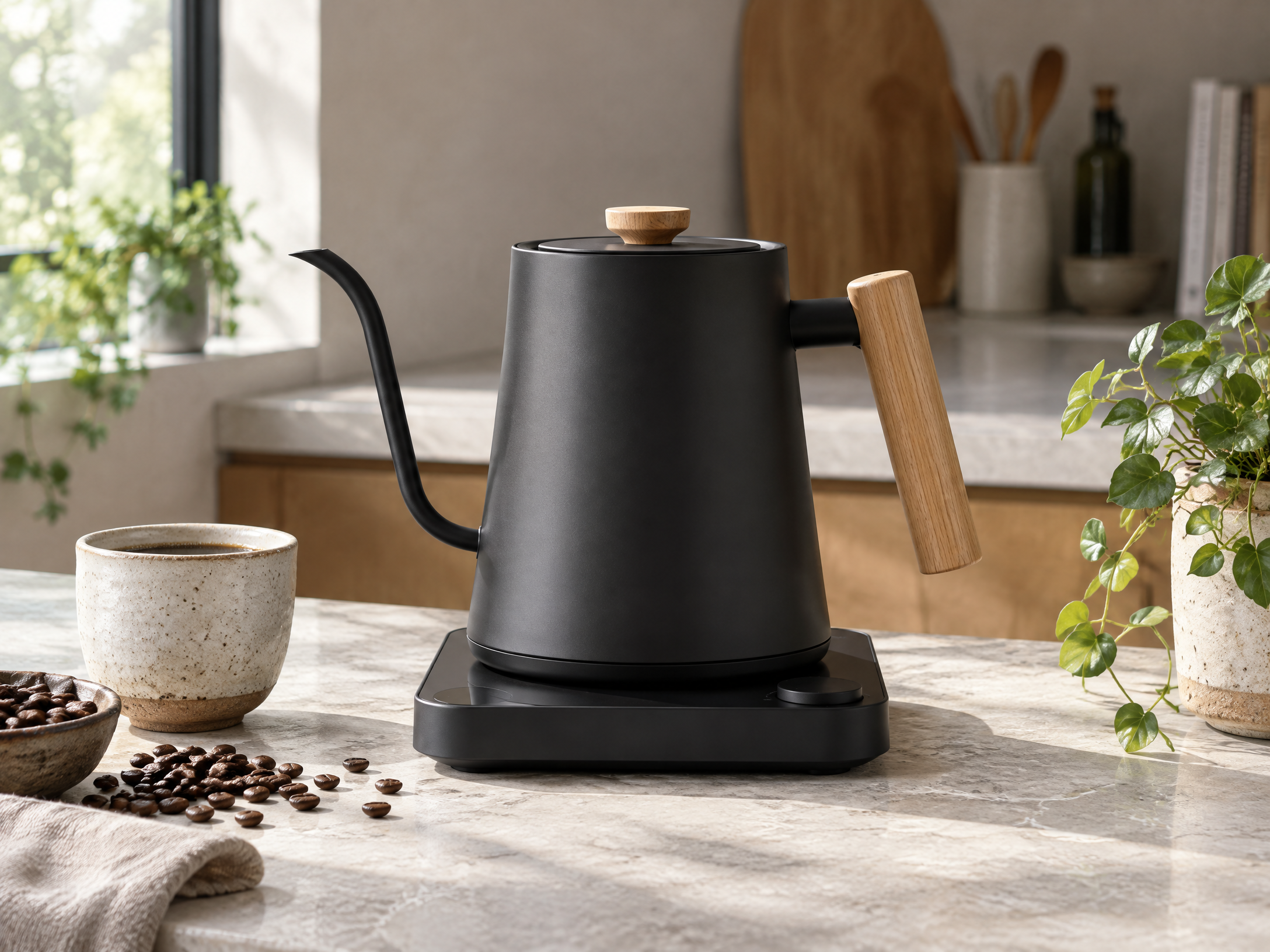
A variable-temperature kettle may add a sensor, control board, keep-warm programme, selectable setpoints, display and sometimes wireless connectivity. That changes the sourcing question from “Does this kettle have a temperature button?” to “Can this exact configuration be placed on our intended market with evidence that matches production?”
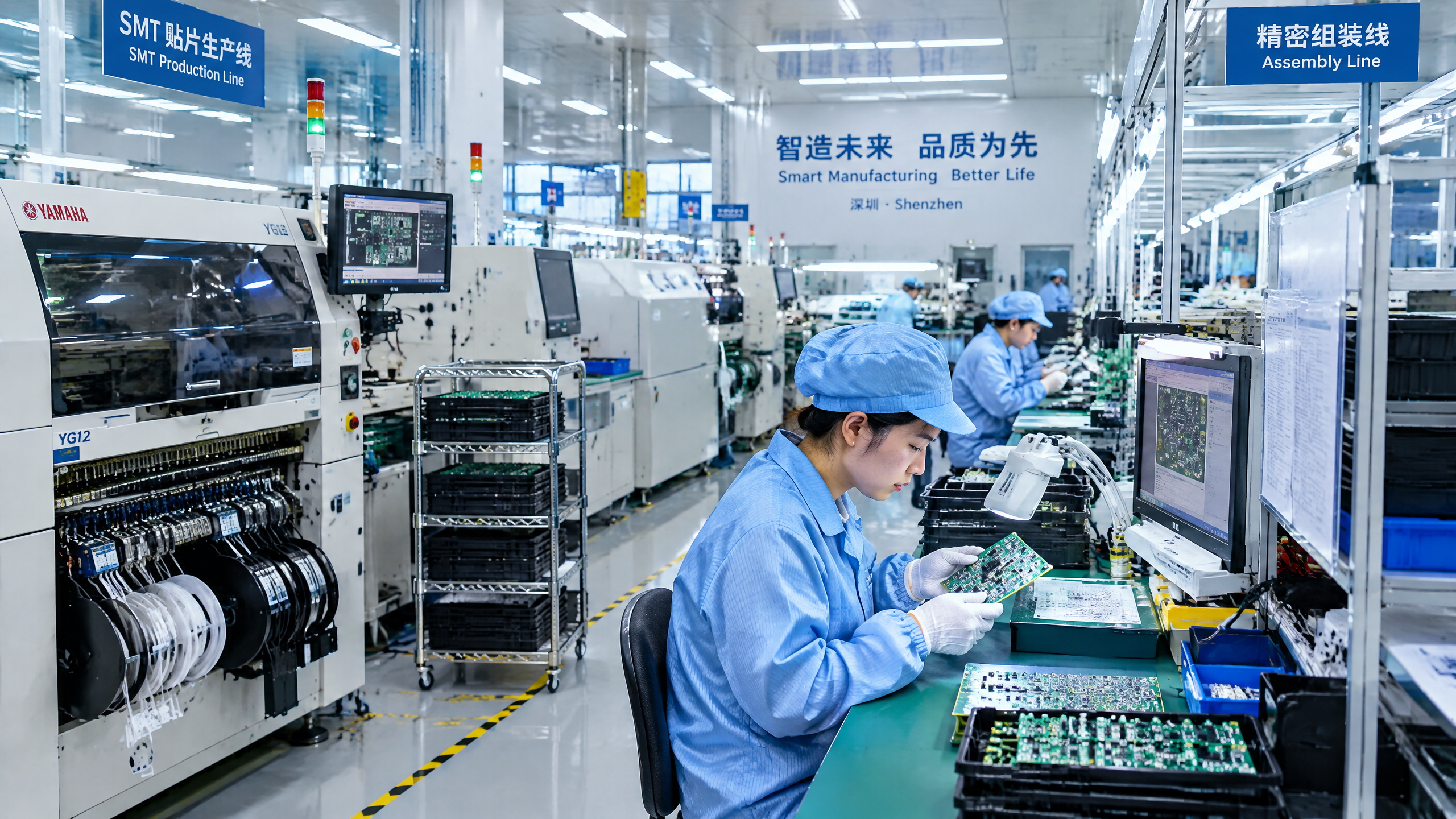
This 11-module procurement guide is for European and North American importers, private-label founders, distributors and retail category teams buying from a Shenzhen OEM/ODM factory. It turns a broad compliance discussion into purchase-order gates: define the configuration, collect a document pack, approve a golden sample and inspect the packed shipment against both.
This is general commercial guidance, not legal advice, a test certificate or a statement that UZYVO—or any other supplier’s model—complies. Country rules, sales channels, component changes and standards editions can alter the answer. Obtain qualified, current advice for the final SKU and market.
Module 1 — Freeze the import decision sheet first
Answer: A model name is not a specification. Start with a destination-and-configuration sheet that prevents an EU report from being used to support a U.S. variant.
A private-label importer puts the product into commerce under its own name or trademark. The factory may supply engineering data, but the buyer must identify the product and retain its evidence. Lock the fields below before tooling, artwork or laboratory booking.
| Field to freeze | Buyer decision | Why it changes the file |
|---|---|---|
| Destination | Name each EU country and/or the United States; list future markets separately | Plugs, languages, WEEE registration, labels and national overlays can differ. |
| Electrical version | Voltage, frequency, rated input, cord/plug, base and heater part numbers | A 220–240 V design is not automatically supported by 120 V evidence. |
| Features | Setpoints, keep-warm logic, display, touch controls, Wi-Fi/Bluetooth/app | New modes and radio functions can change the technical assessment. |
| Wetted BOM | Vessel, lid underside, filter, seals, level window, coatings and adhesives | Water and steam can contact more than the inner vessel. |
| Identity | Brand, SKU, factory model, revision, importer data and batch format | Labels, declarations, reports and cartons must identify the same item. |
Treat the approved kettle as a controlled configuration. A substituted thermal cut-out, controller, firmware, silicone grade, coating or masterbatch can change the buyer’s compliance analysis even when the kettle looks unchanged.
Module 2 — Select voltage, power and plug before design release
Answer: Specify an electrical platform for the intended mains supply. Do not treat an adapter or cosmetic plug change as a market conversion.
For many continental EU channels, the starting design is 220–240 V, 50 Hz, with the plug selected for named countries. The United States normally needs 120 V, 60 Hz and an appropriate North American cord/plug. The UK, Switzerland, Canada and other markets need separate review; “Europe” and “North America” are not single technical destinations.
Wattage affects heating time, conductor current, connector temperature and protective-device ratings. A 230 V platform cannot simply be relabelled for 120 V. State rated input, supply tolerance, cord length, fill volume, intended domestic use and any multi-voltage switching method.
| Check | EU-oriented unit | U.S.-oriented unit | Buyer evidence |
|---|---|---|---|
| Supply rating | 220–240 V AC, 50 Hz, exact nameplate value | 120 V AC, 60 Hz, exact nameplate value | Nameplate, manual, wiring diagram and sample agree. |
| Cord/plug | Country-selected arrangement | Correct North American arrangement | Part number, plug markings and strain relief are inspected. |
| Heating/control | Components rated for the declared EU input | Separately engineered 120 V platform | BOM identifies element, relay/triac and protectors. |
The EU Low Voltage Directive (LVD) covers AC equipment from 50 to 1,000 V, including typical mains household appliances. The Commission says LVD conformity assessment does not require a notified body; the manufacturer performs the applicable assessment. [1] This is why a buyer should request a configuration-specific evidence pack, not a generic “CE certificate.”
Module 3 — Specify a safety architecture, not just temperature presets
Answer: Temperature control must include defined normal and fault behaviour, not only a display showing 70°C, 80°C or 90°C.
A temperature-control kettle measures or infers water temperature and controls energy to reach a selected setpoint, sometimes holding it. State the response at setpoint, boil, under-fill, sensor drift and end of keep-warm. Identify primary control, independent protections, sensing method, firmware revision, fault response and reset conditions.
Relevant design issues include boil shut-off, dry-boil response, over-temperature limitation, stable base contact, steam management, lid retention and cord strain relief. The test programme depends on final construction, market, intended use and current standards; do not borrow it from a similar-looking kettle.
| Function or risk | Specification requirement | Evidence request |
|---|---|---|
| Setpoint/keep-warm | Setpoints, duration, cycling, indication and power-off logic defined | Function specification, firmware revision and sample record. |
| Boil/dry-boil | Protective response under defined normal and abnormal conditions | Applicable safety evidence, component data and line-test method. |
| Sensor/control fault | Defined fail-safe behaviour rather than a marketing assurance | Fault analysis and safety-circuit description. |
| Steam/lid/hot surfaces | Intended pouring, lid and handle use reviewed | Drawings, sample-review notes and relevant assessment. |
Avoid claims such as “never overheats.” A defensible requirement is: “The finished configuration shall be assessed and tested against applicable safety requirements for normal and relevant abnormal operating conditions.”
Module 4 — Build the EU file around the finished product
Answer: For EU placement, assess applicable rules as one finished-product file. CE marking is the manufacturer’s declaration under applicable legislation; it is not an approval certificate issued by the EU.
For a conventional mains kettle, the LVD is central. Electronic control may bring EMC considerations; Directive 2014/30/EU requires conformity assessment and technical documentation for apparatus within scope. [3] RoHS restricts specified hazardous substances in electrical and electronic equipment. [11]
The Commission explains CE marking may be affixed after required assessment and does not mean EU or authority safety approval. [2] Harmonised standards can support presumption of conformity when published in the Official Journal, but never replace correct design or change control. [1]
| EU workstream | Buyer question | Pre-launch deliverable |
|---|---|---|
| LVD / electrical safety | Is the exact 220–240 V configuration assessed for household heating risks? | Model-linked safety evidence, risk file and draft EU DoC. |
| EMC / RoHS | Does the control board require EMC evidence, and is the EEE BOM controlled? | Applicability assessment and supporting records tied to the BOM. |
| CE / product information | Do marks, ratings, warnings, traceability and languages match every market? | Approved labels/manual and a document-retention owner. |
| WEEE | Who holds the producer role in each selling country? | Country-by-country registration and financing plan. |
WEEE is not merely a symbol printed by the factory. EU guidance says a business must register in every EU country where it sells equipment, report quantities and contribute to collection and treatment. [6] Confirm the responsible producer and scheme approach before shipment.
Module 5 — Map the U.S. route separately
Answer: The United States has no universal CE equivalent. Plan electrical safety/listing expectations, FCC applicability and food-contact support separately for the exact U.S. SKU.
A buyer should determine which safety standard, mark or listing is expected by the retailer, insurer, local authority and use case. OSHA’s NRTL programme recognises laboratories to certify certain products; an NRTL mark signifies testing and certification to applicable standards in that programme. [9] Do not infer a universal federal NRTL mandate for every domestic kettle.
FCC analysis is feature-specific. FCC says digital circuitry may use Supplier’s Declaration of Conformity (SDoC), while intentional transmitters generally require Certification. The SDoC responsible party must be in the United States and provide evidence on request. [10] A Wi-Fi/Bluetooth kettle is not the same project as a display-only kettle.
| U.S. topic | Buyer decision | Evidence/action |
|---|---|---|
| Electrical safety | What does the target channel require? | Model-specific safety/listing plan and mark-authorization verification where relevant. |
| 120 V platform | Is the heater, cord, plug and protection system designed for 120 V/60 Hz? | Controlled BOM, sample review and applicable test evidence. |
| FCC | Is the product a digital device only or does it transmit radio signals? | Feature-specific FCC analysis, reports and responsible-party details. |
| Market overlays | Do retailer, state, marketplace or packaging requirements apply? | Launch checklist refreshed before sale. |
Canada is a separate destination with separate electrical, bilingual and provincial considerations. Do not assume a U.S. file covers Canadian sales.
Module 6 — Treat water-contact parts as a material system
Answer: “Food grade” is not sufficient evidence. Ask what the material is, who made it, where it sits, and under which temperature and contact conditions it is supported.
A food-contact material (FCM) is intended to contact food or beverage. For a kettle, consider the vessel, heating plate, lid underside, filter, gasket, level window, coatings, adhesives and steam-condensate-contacted parts. EU kitchenware FCMs must comply with Regulation (EC) No 1935/2004 and FCM good manufacturing practice. [4]
For plastics covered by Regulation (EU) No 10/2011, a written declaration of compliance is required at non-retail stages and must be renewed after relevant migration-affecting change. Supporting documents must be available on request. [5] Material-specific and national considerations still need review.
In the United States, FDA includes food-preparation surfaces and cookware as food-contact substances. Food-additive FCS must be authorized for the intended use, subject to the applicable pathway. [7] Food Contact Notifications are notifier- and use-specific, not blanket finished-product endorsements. [8]
| Component | Required traceability | Review focus |
|---|---|---|
| Metal vessel/heating plate | Grade, supplier, surface treatment, weld/coating details | Exact wetted construction, not exterior appearance. |
| Plastics | Polymer, colourant, additives, supplier statement and use limit | Hot-water/steam exposure and repeat use. |
| Silicone/elastomers | Compound, pigment, curing system and use conditions | Gasket and lid contact; lot control. |
| Windows, filters, coatings, adhesives | Part number, location and formulation/grade | Direct water or steam-condensate contact. |
Module 7 — Create a technical file that survives change
Answer: A credible file identifies the exact production version and links its BOM to every report, declaration, label and manual.
For an EU product, technical documentation typically brings together product description, design, risk assessment, applicable requirements, reports, labels, DoC and change-control records. The LVD makes the manufacturer responsible for conformity assessment, while EMC rules also set documentation responsibilities. [1] [3]
| Document | Minimum identity check | Failure to prevent |
|---|---|---|
| Specification/BOM | Model, revision, voltage platform and critical parts | A report for a similar-looking, different variant. |
| Safety/EMC records | Lab, standard edition, configuration, photos and deviations | A cover page without scope or annexes. |
| FCM pack | Every wetted part, supplier and intended use | One generic letter for the entire kettle. |
| DoC, label and manual | Issuer, ratings, brand/SKU, warnings and market language | Final artwork changed after assessment. |
| Change agreement | Notification threshold, approval owner and retest trigger | Silent replacement of controller, cord or gasket. |
Maintain a simple status index: requested / received / reviewed / accepted / superseded. Hold PO release if a required item is neither configuration-matched nor reviewed.
Module 8 — Connect factory testing to golden-sample approval
Answer: A sample is approved only when the physical unit, controlled BOM, artwork and factory controls match.
In engineering review, inspect the heat path, sensor behaviour, lid/steam geometry and controls. In compliance-sample review, compare the electrical platform and wet-part BOM to evidence. Before production, lock a golden sample: signed physical reference, photos, labels, pack-out and controlled parts list.
At an OEM/ODM factory, compare controller, thermal protector, heater, cord, base connector and wet parts with the BOM; record part codes; run requested modes; and ask how firmware and substitutions are blocked on the line. Assign owners and dates to open actions.
| Stage | Required gate |
|---|---|
| Engineering sample | Safety/material route and feature intent are defined before claims are released. |
| Compliance sample | Evidence demonstrably matches the electrical, control and wet-part configuration. |
| Golden sample | Product, artwork and pack-out are signed and revision controlled. |
| Pilot run | Line instructions, incoming controls and functional-test records are ready. |
If a correction changes a critical part or construction, reopen the evidence review. A fast sample fix is not necessarily a valid mass-production fix.
Module 9 — Inspect the shipment against the approved configuration
Answer: Pre-shipment inspection checks identity and consistency. It does not replace accredited testing, conformity assessment or listing work.
Write the inspection protocol before production. Inspectors should compare selected units with the golden sample and BOM, review line records, check cartons and manuals, and run agreed non-destructive functional checks. Only competent personnel using calibrated equipment and a validated process should perform electrical safety tests.
| Checkpoint | Verify | Escalate when |
|---|---|---|
| Identity | SKU, batch/date code, nameplate, lot and carton | A U.S. carton contains 230 V product or batch control is missing. |
| Construction | Cord/plug, base, lid, handle, seals, filter and wet parts | Unapproved part number, poor fit, leakage or material mismatch. |
| Function | Power-up, UI, selected setpoint, shut-off and keep-warm exit | Behaviour differs from the approved sample. |
| Pack-out/records | Manual, warnings, accessories, test/calibration and rework records | Artwork is obsolete or rework has no reinspection trail. |
Include a hold-and-notify clause for electrical, control, FCM or marking changes. Release should consider documents, inspection and corrective-action closure—not cosmetic inspection alone.
Module 10 — Write instructions for real installation and use
Answer: Kettles are normally plug-and-play, but instructions and pack-out must still support the declared electrical version and foreseeable use.
The manual should cover rated supply, correct base, fill guidance, lid/steam precautions, stable placement, cord routing, cleaning, damage response and no-immersion limits where applicable. It should identify household use and avoid claims unsupported by the evidence file.
Describe temperature settings as a practical preference, not a medical, sterilization or infant-feed outcome. Prevent EU/U.S. inventory mixing, plug-obscuring carton imagery and incompatible-base interchange. Code returns by cause to guide improvement.
Module 11 — Award on risk-adjusted cost, not ex-works price
Answer: A cheaper quote can be more expensive if it omits a destination-specific platform, evidence pack, component controls or corrective-action capacity.
| Decision area | Low-cost shortcut | Better buyer requirement |
|---|---|---|
| Platform | One “global” kettle with a plug change | Controlled regional electrical versions where needed. |
| Wet parts | Generic food-grade statement | Component-level evidence and change notifications. |
| Testing | Reuse an unrelated customer report | Gap assessment and model-linked plan. |
| Quality | Final cosmetic inspection only | Golden sample, line records and pre-shipment verification. |
| Compliance ownership | Leave everything to the factory | Name the importer, document owner, WEEE owner and channel contacts. |
Score finalists on configuration fit, evidence completeness, change discipline, traceability, test-plan credibility, delivery risk and landed cost. Ask which quotation costs cover samples, tooling, laboratory coordination, label plates, translations, inspection and cord/plug changes.
Decision caveats and limits
This guide does not determine the legal route, standards edition, test method, marking, registration or retailer requirement for a SKU. Connectivity, detachable bases, commercial use, materials, marketplaces and multi-country distribution can change the assessment. National, state and retailer rules may add obligations. Recheck current sources and use qualified advisers before manufacture, import or sale.
FAQ: temperature-control kettle compliance requirements for EU and U.S. buyers
Is CE a certificate for an electric kettle?
No. CE marking is the manufacturer’s declaration under applicable CE legislation, not EU or authority approval of safety. Request the applicable assessment, technical documentation and EU DoC for the exact model. [2]
Can a 220–240 V kettle be sold in the United States with a plug adapter?
Normally no. An adapter does not convert voltage or demonstrate that the heater, cord and protective system are suitable for 120 V/60 Hz. Specify a U.S. electrical configuration.
Does “FDA approved material” prove a finished kettle is compliant?
No. FDA regulates food-contact substances according to intended use and conditions. Food Contact Notifications are company- and use-specific. Obtain traceable component evidence and specialist review for the final use. [8]
Do food-contact documents apply only to the stainless-steel vessel?
No. Evaluate components contacting water, beverage or steam condensate, including seals, filters, level windows, coatings and adhesives. Build the evidence pack at part level.
Is an NRTL mark always federally required for a U.S. consumer kettle?
Do not assume a universal answer. OSHA describes NRTL certification for certain products in its programme, while retailers, insurers, local authorities and use context can determine the evidence expected. [9]
Does a digital display automatically require FCC Certification?
Not necessarily. FCC authorization depends on the functions and rules involved. Digital circuitry may use SDoC, while intentional transmitters generally require Certification. Obtain a feature-specific FCC analysis. [10]
What should trigger a new evidence review?
Review meaningful changes to voltage platform, heater, thermal protector, control board/firmware, radio module, cord/plug, wetted material, supplier formulation, enclosure, ratings, claims or intended use.
Conclusion: make the final model traceable from quote to container
The right import question is not “Does the factory have compliance documents?” It is “Do the documents, controls and shipped goods match our final EU or U.S. configuration?” Lock destination, mains platform, temperature-control safety behaviour, wetted BOM and product identity first. Then require model-linked evidence, golden-sample discipline and pre-shipment verification.
For EU launch, bring LVD, EMC, RoHS, food-contact and country-level WEEE work into one controlled file. For U.S. launch, separately plan electrical-safety expectations, FCC applicability and FDA food-contact support. This framework does not promise an outcome; it helps buyers ask the right questions before cost, schedule and product changes become expensive.
---
Image Plan — Exactly Four AI-Generation Recommendations
Image 1: Product-configuration hero
Purpose: Establish the cross-market sourcing context. Insertion point: Below the Introduction. Caption: A buyer should lock destination, electrical configuration and water-contact construction before approving a kettle. ALT text: Unbranded temperature-control kettles with European and U.S. electrical configurations on a procurement table. Generation prompt: *Wide, photorealistic B2B editorial product scene in a bright small-appliance sourcing studio: two unbranded stainless-steel temperature-control kettles on a clean table, one with a European-style detachable base and one with a North American-style cord and plug placed separately; nearby are calipers, silicone gasket samples, a lid and a neutral engineering sheet with abstract unreadable lines. No trademarks, brand names, readable labels, flags, certification marks or watermark. Natural daylight, premium trade-publication styling, accurate materials, 16:9.*
Image 2: Factory safety and sample review
Purpose: Show how golden-sample review connects components and the BOM. Insertion point: Module 8, before the stage table. Caption: Golden-sample review compares the physical kettle and safety-critical components with a controlled parts list. ALT text: Engineers reviewing an unbranded temperature-control kettle and internal components in a factory laboratory. Generation prompt: *Photorealistic Shenzhen small-appliance factory quality-lab scene: two engineers in practical clean workwear inspect an unbranded temperature-control kettle with the base opened beside visible control board, thermal cut-out, heating element and silicone seals in unlabeled trays; calipers and a bench fixture in background; a clipboard contains only abstract unreadable lines. No logos, trademarks, readable text, certification marks or watermark. Documentary editorial lighting, safe neat workshop, high detail, 3:2.*
Image 3: Food-contact component traceability
Purpose: Explain why evidence must cover every wetted component. Insertion point: Module 6, after the opening answer. Caption: Water-contact evidence should identify the material and supplier for every wetted component, not only the vessel. ALT text: Exploded arrangement of unbranded kettle water-contact parts including steel vessel, lid, filter and silicone gasket. Generation prompt: *High-end realistic technical still life, exploded arrangement of unbranded electric-kettle water-contact components: polished stainless-steel inner vessel, lid underside, fine-mesh spout filter, clear level window, silicone gasket, heating plate and neutral plastic insert, neatly positioned over a pale gray surface with subtle unlabeled callout lines. No logos, brands, readable labels, certification marks or watermark. Laboratory-inspired lighting, accurate textures, B2B compliance article illustration, 4:3.*
Image 4: Pre-shipment inspection
Purpose: Support the shipment identity and pack-out checklist. Insertion point: Module 9, before the checkpoint table. Caption: Pre-shipment inspection confirms that packed production matches the approved electrical version and golden sample. ALT text: Inspector checking unbranded kettle cartons and product labels at a small-appliance shipping area. Generation prompt: *Realistic documentary factory shipping inspection: an inspector with clipboard and handheld barcode scanner checks open plain kraft cartons containing unbranded temperature-control kettles with protective packaging; a North American-style plug and a European-style plug are visibly segregated in separate cartons; labels show only abstract unreadable markings. No logos, readable text, trademarks, certification marks or watermark. Neat warehouse, professional B2B quality-control aesthetic, daylight, 16:9.*
References
- European Commission: Low Voltage Directive (LVD)
- European Commission: CE marking
- EUR-Lex: Reducing interference between electrical and electronic devices
- European Commission: Food Contact Materials
- EUR-Lex: Commission Regulation (EU) No 10/2011 on plastic food contact materials and articles
- Your Europe: WEEE responsibilities
- FDA: Food Packaging and Other Substances that Come in Contact with Food
- FDA: Understanding How FDA Regulates Substances that Come into Contact with Food
- OSHA: Nationally Recognized Testing Laboratory Program
- FCC: Equipment Authorization Procedures
- European Commission: RoHS Directive
UZYVO inquiry
Next step for your sourcing team. Share your target market, product category, expected volume, and launch timing. UZYVO can help structure the next factory discussion around your final product brief, sample, documentation, and quality-control requirements.
Email: info@uzyvo.com
Put the buyer guide into a practical sourcing path.
Bring this framework into your next product brief.
Share your target market, appliance category, annual volume, and launch window. We will discuss a practical sample, documentation, and production path for the final configuration.
Email info@uzyvo.com