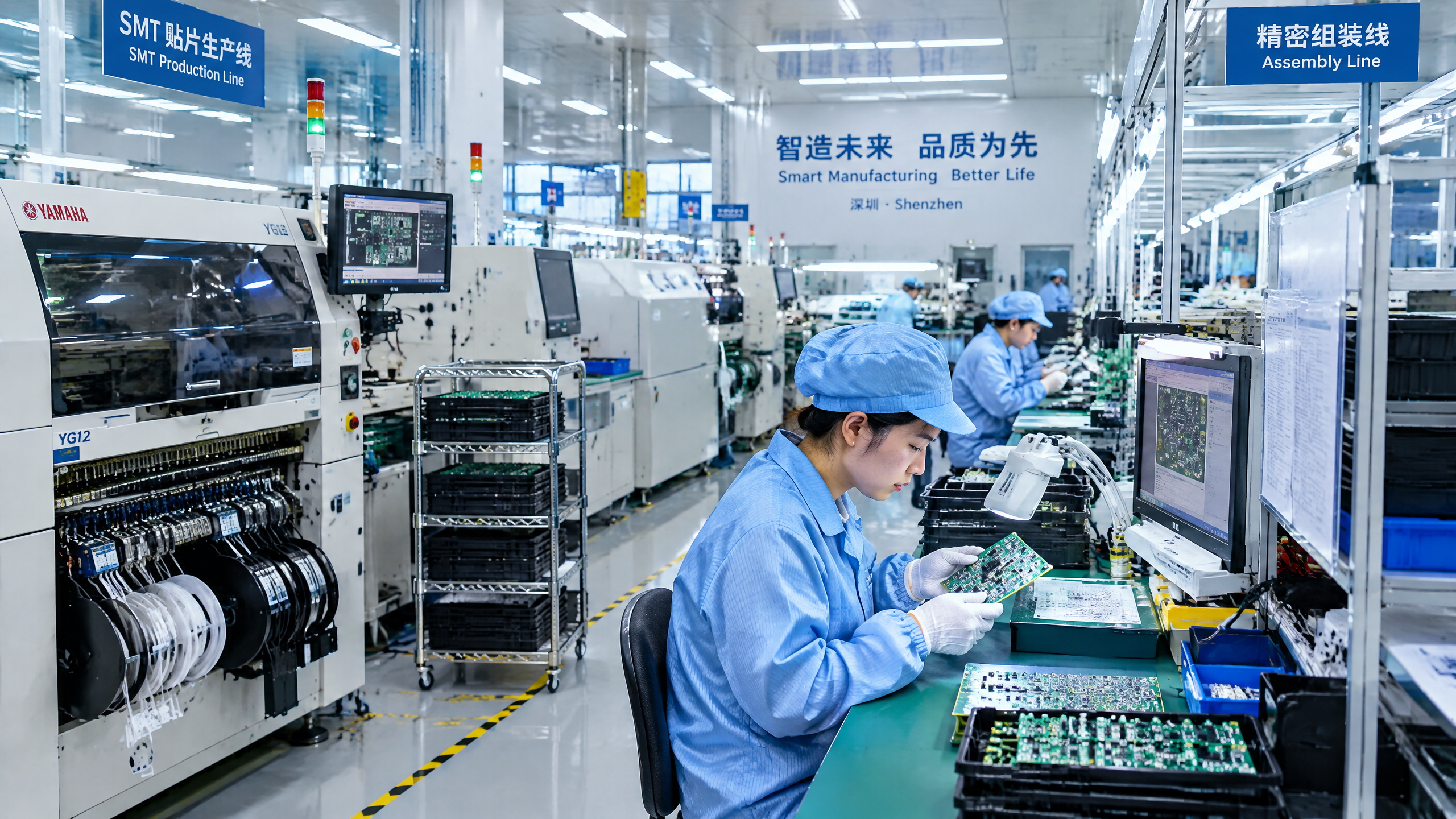

A small appliance MOQ is not just the fewest units a buyer can order. For a European or North American private-label programme, it is the lowest workable volume for a defined product, market configuration, packaging plan, quality process, and commercial commitment.
That distinction matters. A standard platform with a branded carton is a very different project from a new housing, a revised heating system, a changed motor, or a regional electrical configuration. Each can affect materials, tooling, evidence, inspection, inventory, and launch risk. This guide explains how buyers can plan those trade-offs before comparing quotes.
This article is for general information, not legal, product-safety, customs, or financial advice. Requirements and responsibilities vary by product, sales channel, country, voltage, intended use, and each party’s role. Obtain qualified advice for the actual appliance and market before release or import.
1. Concise answer: what small appliance MOQ means
Small appliance MOQ is the minimum order quantity a supplier will accept for a specific configuration under agreed commercial conditions. It is not a universal number, a safety requirement, or a guarantee that the same minimum applies to another colour, plug, packaging format, or destination.
Ask for MOQ at both the finished-goods and component levels. A useful quotation separates:
- Finished-goods MOQ — the minimum for the completed retail SKU.
- Component/material MOQ — minimums for items such as cord sets, printed cartons, colour resin, displays, heating parts, or gift boxes.
- Tooling/NRE commitment — new moulds, fixtures, engineering, prototypes, artwork preparation, or validation activities. NRE means non-recurring engineering and should be itemised, not assumed to be a tool.
- Logistics MOQ — the quantity that suits the buyer’s freight, warehouse, and replenishment model.
These limits may not match. A factory may be able to assemble a smaller lot, while a custom carton or a specialised component requires a larger purchase. The buyer’s job is to identify the real constraint, then change the product, variant plan, launch structure, or commercial terms deliberately.
A pilot order should also be distinguished from a scalable programme. It can validate demand, handling, packaging, and production repeatability. It does not automatically prove that a later order will be identical unless the bill of materials (BOM), process, approvals, and change control remain stable.
AI image suggestion 1 — MOQ decision map
- Purpose: Show that MOQ is a system decision rather than one number.
- Placement: After this concise answer.
- Caption: “Product, components, tooling, evidence, and logistics together shape a small appliance MOQ.”
- Alt text: “Flow diagram connecting appliance configuration, components, tooling, testing, finished goods, and launch inventory.”
- English generation prompt: “Premium editorial B2B infographic for small home appliance sourcing, five connected stages: product configuration, components, tooling and validation, finished goods, logistics and launch; neutral white and charcoal palette with restrained teal accents, isometric appliance silhouettes, generous negative space, no text, no logos.”
2. Why small appliance MOQ matters to private-label buyers
MOQ is where product strategy meets cash exposure. Too little volume can make customised materials, production preparation, testing, and supplier attention hard to support. Too much can lock a new brand into ageing inventory, incorrect regional packaging, or an unproven specification. The objective is not the lowest headline quantity; it is an intentional, affordable commitment.
The largest exposure is often not the unit price. It is the cost of stock that cannot be sold or cannot be changed quickly. A wrong-language manual, unsuitable cord set, inconsistent finish, or unapproved carton can turn a low-cost first order into a difficult launch. Requesting a clear configuration and market plan before the quote improves the quality of the MOQ discussion.
Build demand as a range rather than a single forecast:
- a conservative rate-of-sale case;
- a planning case tied to the launch channel and promotion calendar; and
- an upside case that signals when replenishment or capacity discussions should start.
Test the proposed MOQ against the conservative case. If it creates too much stock, reduce unnecessary variation before simply asking for a lower figure. A launch may be less risky with an established platform, fewer colours, shared components, or deferred non-essential features. A credible forecast does not promise every future unit; it gives the supplier enough context to explain what moves the MOQ and what needs early material release.
Compliance is another reason to plan volume carefully. In the EU, the Low Voltage Directive covers electrical equipment within stated voltage limits, including household appliances, while the EMC Directive addresses electromagnetic emissions and immunity. [1][2] Applicability depends on the actual product and destination; it should not be inferred from a generic certificate or a similar-looking model.
Private-label ownership needs early attention too. Under the EU General Product Safety Regulation (GPSR), a party placing a product on the market under its own name or trademark can be treated as the manufacturer, and manufacturers must perform an internal risk analysis and prepare technical documentation. [4] Product-specific legal advice is essential, but the sourcing lesson is clear: treat compliance, traceability, and market information as launch inputs, not last-minute artwork tasks.
3. Scope and definitions: put every MOQ conversation on the same page
Clear definitions prevent a buyer from approving an apparently low MOQ that excludes tooling, artwork, samples, or a variant-specific carton run.
A platform product is an existing design offered with limited approved changes. It can reduce design uncertainty, but it must still be reviewed for the intended voltage, plug, language, claims, sales channel, and market. A standard appliance is not automatically suitable everywhere.
ODM commonly describes a supplier-developed product adapted for a buyer’s brand. OEM commonly describes manufacture to the buyer’s design or specification. These labels do not decide product-safety, importer, design-rights, warranty, or documentation responsibilities; the parties must define those in writing.
The BOM is the controlled list of parts and materials for a revision. It should identify versions, approved alternatives, and the components unique to each SKU. The golden sample is a controlled physical reference for appearance, assembly, labels, packaging, and agreed functional expectations. It supports inspection, but it does not replace a written specification, applicable evidence, or a quality plan.
Tooling can include moulds, dies, fixtures, gauges, and test fixtures. Agree ownership, maintenance, storage, access, modification approval, and end-of-programme treatment. NRE may cover design adaptation, prototypes, fixtures, firmware, artwork work, and validation support. Itemise it and state whether it is refundable, creditable, buyer-owned, or supplier-retained.
Define each sample stage by purpose: an engineering sample may prove a concept; a pre-production sample may confirm the intended production method; a retained production sample may become the inspection reference. “Sample approved” is incomplete unless the approved revision, criteria, test conditions, and outstanding changes are recorded.
Finally, separate order quantity, forecast, and release. An order is a binding commitment under the contract. A forecast is a planning signal under agreed rules. A release may be an instruction to make or ship within a framework. Confusing them creates disputes around purchased materials, finished stock, and cancellation exposure.
4. Evaluation framework: decide volume before negotiating it
Treat MOQ as a decision output. A short cross-functional brief can test realistic launch structures before price negotiations become entrenched.
1. Fix the market and use scenario. Name the sales countries, retail channels, intended user, electrical environment, claims, and launch window. List relevant assumptions: rated voltage, plug and cord, heat, moving parts, moisture, food contact where relevant, and accessibility to children. This is the starting point for competent compliance and risk review, not a substitute for it.
2. Classify every change. Sort requests into brand application, packaging/localisation, functional configuration, and structural redesign. Ask the supplier to identify the BOM, process, tooling, quality, and evidence effects of each. A cosmetic change can alter a material, fit, heat behaviour, or assembly process.
3. Map demand to inventory. For conservative, planning, and upside demand cases, define initial allocation, replenishment trigger, safety-stock approach, and cost of an incorrect reorder. Separate sellable goods from committed components, packaging, and work in process. Many buyers can hold a common base unit more safely than a destination-specific carton.
4. Map the commitment ladder. Record the points at which standard labels, shared components, custom packaging, unique components, tooling, work in process, and finished goods become irreversible. For every point, agree cancellation, rework, scrap, storage, ownership, and approval treatment. Put it in the agreement rather than relying on emails.
5. Compare structures, not only quantities. Options may include fewer launch variants, phased artwork, a common-component plan, buyer-owned packaging, or a forecast with defined material-release gates. Each shifts risk. Holding cartons can reduce a repeat-order hurdle while increasing obsolescence exposure.
6. Set decision gates. Identify the owner, evidence, deadline, and consequence for specification sign-off, artwork approval, sample acceptance, documentation review, pre-production readiness, inspection, and shipping-document approval. Many launches slip because an approval has no accountable owner.
Use one quote schedule for all shortlisted suppliers: revision, inclusions/exclusions, MOQ by SKU and component, tooling/NRE, samples, packaging, quality plan, delivery term, payment, quote validity, and document deliverables. A number that cannot be explained is not ready for a purchase decision.
In the U.S., CPSC guidance states that manufacturers and importers of general-use products subject to applicable consumer-product safety rules must issue a written General Certificate of Conformity (GCC), based on testing of each product or a reasonable testing program; for overseas-made products, the importer issues the GCC. [6] Whether a specific appliance is covered and which additional requirements apply need product-specific analysis. Budget that work early instead of treating it as a percentage of unit cost.
5. Compliance and launch risk: build evidence before volume
MOQ cannot repair missing evidence. Launching fewer units with incomplete product, market, or entry preparation still creates avoidable risk.
For EU-bound electrical appliances, begin with the exact configuration and applicable legislation. The Low Voltage Directive applies to electrical equipment within its stated voltage limits; the EMC Directive governs emissions and immunity. [1][2] The Commission notes that LVD harmonised standards whose references are published in the Official Journal provide a presumption of conformity with its safety objectives. It also warns that unregulated voluntary certificates are not recognised proof of compliance for market-surveillance or customs checks. [1] Request product-relevant technical evidence, not only a logo or certificate image.
RoHS is another frequent workstream. The European Commission says electrical and electronic equipment, unless specifically excluded, must comply with restrictions on ten listed substances. [3] Link material declarations, supplier controls, any test rationale, and relevant records to the exact BOM revision. Reassess where a resin, coating, cable, solder, component source, or supplier changes.
End-of-life duties require a market map. EU guidance says businesses that manufacture, distribute, or sell electrical and electronic equipment may need to register in each country where they sell, report quantities, and organise or finance collection, treatment, recycling, and recovery. [5] The responsible party and national route depend on the selling model and local implementation. Establish this before launch; do not assume a factory quotation covers it.
GPSR makes traceability and documentation commercial prerequisites. Its text says manufacturers must carry out an internal risk analysis and draw up technical documentation containing the information needed to assess safety, in proportion to complexity and risk. [4] A buyer selling under its own brand should obtain specialist advice on its role and keep a complete revision-controlled file.
In the U.S., a material change that could affect compliance can require retesting and a new GCC, according to CPSC guidance. [6] This is a practical reason to freeze the approved BOM and adopt written change control before scaling. Import planning is separate: CBP says importers should understand commodity-specific entry requirements and remain responsible for correct entry documentation and applicable duties, taxes, and fees even when they use a broker. [7] Confirm classification, valuation, origin marking, and shipment data with qualified customs advisers.
Maintain a simple risk register: risk, trigger, evidence, owner, fallback. Typical triggers are a part substitution, late artwork change, failed test, missing declaration, carton damage, demand shortfall, or inspection finding. The fallback may be a shipment hold, controlled rework, revised allocation, alternate-component assessment, or cancellation decision. Decide it before cargo is moving.
6. Decision table: select the right MOQ path for the product
The table is a planning aid, not a promise of what a supplier will accept. The right path depends on the appliance, target market, contract, and evidence requirements.
| MOQ path | Best fit | Advantage | Main risk | Buyer controls |
|---|---|---|---|---|
| Existing platform with brand and packaging changes | New line with limited differentiation | Lower design uncertainty | Assuming the platform suits the market | Revision-controlled specification, market review, approved artwork |
| Platform with regional configuration | Defined country or region | Aligns plug, voltage, language, and labels | Variant-specific materials fragment demand | SKU/BOM matrix, component minimums, localisation checklist |
| Feature adaptation without exterior tooling | Focused functional need | Differentiation without a full redesign | Change may affect safety, EMC, heat, endurance, or process | Change-impact review, prototype and validation plan |
| New housing or structural customisation | Established brand with a clear design brief | Greater brand distinction | Tooling, validation, ownership, and obsolescence exposure | Tooling agreement, DFM review, design freeze, tool-trial criteria |
| Multi-SKU or multi-colour launch | Coordinated retail range | Broader shelf proposition | Hidden MOQ and slow-moving variant stock | Common-part strategy, variant forecast, allocation rules |
| Phased launch and replenishment | Uncertain demand | Limits first-wave stock risk | Later availability or component changes | Forecast cadence, material-release gates, approved-substitute policy |
For the selected path, prepare a one-page MOQ basis statement: intended SKUs, markets, shared and unique components, commitments, evidence gates, ownership points, and repeat-order rule. Give the same statement to internal stakeholders and competing suppliers so trade-offs are comparable.
7. Sourcing and quality workflow: convert the brief into controlled production
A controlled workflow keeps buyers from committing volume before the product definition and evidence are ready.
1. RFQ and discovery. Issue the product brief, destinations, forecast range, brand requirements, claims, packaging needs, delivery terms, and quote format. Ask suppliers to state assumptions.
2. Technical and compliance scope. Review architecture, intended use, hazards, electrical configuration, materials, labels, instructions, and proposed testing or standards path with competent advisers. Define what must exist before material release and shipment.
3. Configuration control. Create the part number, revision, BOM, specification, artwork, manual and label revisions, and golden-sample record. No component, source, process, or artwork change that could affect requirements should proceed without documented review and buyer approval.
4. Samples and readiness. Set sample purpose and acceptance criteria. Before production, verify materials, work instructions, inspection points, measurement capability, and packaging components against approved records.
5. Process controls and traceability. Determine the appropriate in-process checks for safety-relevant assembly, electrical performance, functional operation, appearance, labels, and packing. Require lot identification that can link a field issue to materials, process, date, and shipment.
6. Inspection and release. Agree the inspection specification before production. ISO 2859-1:2026 describes AQL-indexed single, double, and multiple acceptance-sampling schemes for lot-by-lot inspection by attributes. [8] It can inform a sampling plan, but it does not define critical defects, functional tests, safety decisions, or corrective action for your appliance. Those must be agreed separately.
7. Shipment and learning loop. Reconcile product revision, quantity, carton marks, labels, and shipping documents. Monitor retailer feedback, returns, and complaints by lot, then feed lessons into the next forecast and quality plan. A repeat order should be a controlled continuation, not a fresh discovery process.
AI image suggestion 2 — controlled sourcing workflow
- Purpose: Illustrate gated progress from RFQ to feedback.
- Placement: After the workflow.
- Caption: “Gates let buyers commit volume as product definition and evidence become ready.”
- Alt text: “Horizontal workflow from RFQ through review, sampling, production, inspection, shipment, and feedback.”
- English generation prompt: “Sophisticated editorial workflow infographic for small appliance OEM and ODM sourcing, seven-stage horizontal process from RFQ to post-launch feedback, document folder, appliance prototype, quality gauge, carton, container and feedback-loop icons, clean white background, graphite and restrained blue-green palette, no words, no logos.”
AI image suggestion 3 — private-label configuration board
- Purpose: Show how regional variations create distinct MOQ decisions.
- Placement: Before the decision table.
- Caption: “Control shared and regional components before approving a multi-market launch.”
- Alt text: “One small kitchen appliance base connected to regional cord, label, manual, carton, and colour components.”
- English generation prompt: “Premium B2B editorial illustration of a small kitchen appliance configuration board, shared appliance base linked to regional SKU cards for cord set, rating label, manual, carton and colour finish, technical yet approachable, soft studio lighting, white background, no readable text, no brands, no logos.”
8. Buyer question checklist: ask these before signing the PO
Capture answers in writing. The goal is to remove ambiguity, not to make a supplier meeting longer.
Product and variants
- What exact revision and documents define the product?
- Which parts are shared, and which are unique by market, colour, or retailer?
- What component and packaging minimums sit behind the finished-goods MOQ?
- Which substitutions are allowed and who approves them?
Tooling and engineering
- Is new tooling or NRE required, and what is included in each line?
- Who owns, stores, maintains, and may modify each tool or fixture?
- What happens to tools, materials, and records if the programme pauses or ends?
Compliance and quality
- Which markets and exact configuration do the documents and evidence cover?
- What change triggers reassessment, retesting, artwork revision, or new documentation?
- What are the approved sample, measurable acceptance criteria, defect classifications, and traceability method?
- Who completes market-specific responsibilities such as WEEE/EPR where applicable, product certificates, and import entry tasks?
Commercial and logistics
- What does unit price include and exclude?
- When do components, packaging, tooling, work in process, and finished goods become committed?
- What are payment, cancellation, storage, rework, scrap, and ownership terms?
- Which Incoterm version and named place apply, and what repeat-order assumptions could change?
9. Common mistakes buyers make when planning MOQ
Treating MOQ as a unit-price contest. A low figure can conceal unpriced engineering, a large carton commitment, or weak controls. Compare total commitment and conditions, not one number.
Customising before deciding what matters. Every change should earn its place through consumer value, market need, or portfolio logic. Reduce decorative complexity; do not remove safety or evidence work to meet a launch deadline.
Using the approved sample as the whole specification. A sample does not fully define BOM, tolerance, test method, language version, defect limits, and change history. Pair it with controlled documents.
Assuming a certificate image resolves compliance. Evidence must be relevant to the actual configuration and market. The Commission warns that voluntary certificates alone are not recognised proof of compliance for relevant checks. [1]
Leaving ownership or change control vague. Tooling, packaging stock, rejected goods, unused components, and test fixtures need clear terms. A later component or process substitution should trigger documented impact assessment and approval.
Planning only the first shipment. Set a replenishment rule, forecast-update cycle, complaint loop, and obsolete-inventory decision before the launch. A manageable first MOQ can otherwise become an unmanageable repeat order.
10. FAQ: five buyer questions about small appliance MOQ
1. Is there one normal small appliance MOQ?
No. Appliance type, configuration, components, packaging, tooling, validation, market, and commercial terms differ. Request a written MOQ basis that separates finished goods, variants, materials, and non-recurring commitments.
2. Can an existing platform lower MOQ?
It may reduce design and tooling uncertainty, but it does not automatically remove packaging, configuration, component, or compliance constraints. Verify the exact revision and target market before assuming it is lower risk.
3. Does paying for a mould mean the buyer owns everything connected with it?
No. Payment, legal ownership, possession, access, maintenance, design rights, modification authority, and end-of-life treatment are separate matters. Define each in the tooling and purchase agreements.
4. Can a passing sample or pre-shipment inspection replace compliance work?
No. Samples and inspections are valuable controls, but they do not alone establish all market requirements. Inspections normally assess a sample of a lot; documentation, testing, and supply-chain responsibilities require separate evaluation.
5. When should buyers involve customs and product-safety advisers?
Before commitments become hard to reverse. CBP recommends that importers understand commodity-specific requirements and says the importer of record remains responsible even when a broker is used. [7] Early advice is especially useful for electrically powered, changed, private-label, or multi-market products.
11. Conclusion and a UZYVO CTA: plan commitment, not just quantity
The best small appliance MOQ is the volume and commercial structure that match a controlled configuration, credible demand range, appropriate evidence, explicit ownership terms, and workable replenishment plan. It is not automatically the smallest batch a supplier will accept.
Start with the intended market and use case. Separate common parts from variant-specific commitments. Make tooling and NRE visible. Build product-safety, end-of-life, and import responsibilities into the plan before materials are released. Then use gated approvals, traceability, and a written quality plan to ensure the product approved is the product produced.
To discuss a private-label small-appliance brief, configuration questions, or an MOQ-planning framework with UZYVO, email info@uzyvo.com.
References
- https://single-market-economy.ec.europa.eu/sectors/electrical-and-electronic-engineering-industries-eei/low-voltage-directive-lvd_en
- https://single-market-economy.ec.europa.eu/sectors/electrical-and-electronic-engineering-industries-eei/electromagnetic-compatibility-emc-directive_en
- https://environment.ec.europa.eu/topics/waste-and-recycling/rohs-directive_en
- https://eur-lex.europa.eu/eli/reg/2023/988/oj/eng
- https://europa.eu/youreurope/business/product-rules-compliance/recycling-waste-management/weee-responsibilities/index_en.htm
- https://www.cpsc.gov/Business--Manufacturing/Testing-Certification/General-Use-Products-Certification-and-Testing
- https://www.cbp.gov/trade/basic-import-export/importer-exporter-tips
- https://www.iso.org/standard/2859-1
AI Image Recommendations
*These are publication-planning prompts only. No new AI images have been generated or added to the website.*
1. MOQ and launch planning
Purpose: Establish the practical B2B sourcing context at the opening of this guide.
Insertion point: After the introduction.
English caption: Buyer and factory team planning small appliance moq and component allocation.
ALT text: Buyer and factory team planning small appliance moq and component allocation in a controlled small-appliance manufacturing environment.
AI image-generation prompt: Photorealistic premium B2B manufacturing photograph of an unbranded appliance collection, component trays, packaging choices, and a demand-planning worksheet, clean modern Shenzhen-style OEM setting, natural daylight, neutral professional clothing, realistic materials and safe working practices, no trademarks, no readable text, no certification marks, no logos, no visible brand names, 16:9 landscape, documentary sourcing-guide aesthetic.
2. Sample and evidence control
Purpose: Show how a buyer connects the physical product to a controlled requirement and review record.
Insertion point: Beside the sourcing and quality workflow section.
English caption: A controlled product review links the approved sample to the documented buyer requirements.
ALT text: Buyer and quality engineer reviewing an unbranded small appliance sample with a controlled specification sheet.
AI image-generation prompt: High-detail photorealistic factory quality-review scene, buyer and quality engineer examining an unbranded small home appliance sample on a clean workbench with a generic specification sheet, calipers, color chips, packaging components and a sealed reference sample, no readable documents, no logos, no trademarks, no fake test certificates, soft neutral lighting, 3:2 landscape, credible B2B documentation style.
3. Pre-shipment verification
Purpose: Reinforce that shipment checks confirm product identity, packaging, and traceability before release.
Insertion point: Before the conclusion or buyer FAQ.
English caption: Pre-shipment verification checks finished goods against the agreed product and packaging baseline.
ALT text: Inspector checking unbranded small appliance cartons and finished units at a factory shipping area.
AI image-generation prompt: Photorealistic export-quality-control scene in a small-home-appliance factory, inspector checking unbranded finished appliances, instruction leaflets, accessory sets, date-code labels without readable numbers, and closed retail cartons at a clean shipping area, realistic pallet and carton handling, no logos, no readable text, no brand marks, 16:9 landscape, professional B2B factory photography.
Put the buyer guide into a practical sourcing path.
Bring this framework into your next product brief.
Share your target market, appliance category, annual volume, and launch window. We will discuss a practical sample, documentation, and production path for the final configuration.
Email info@uzyvo.com