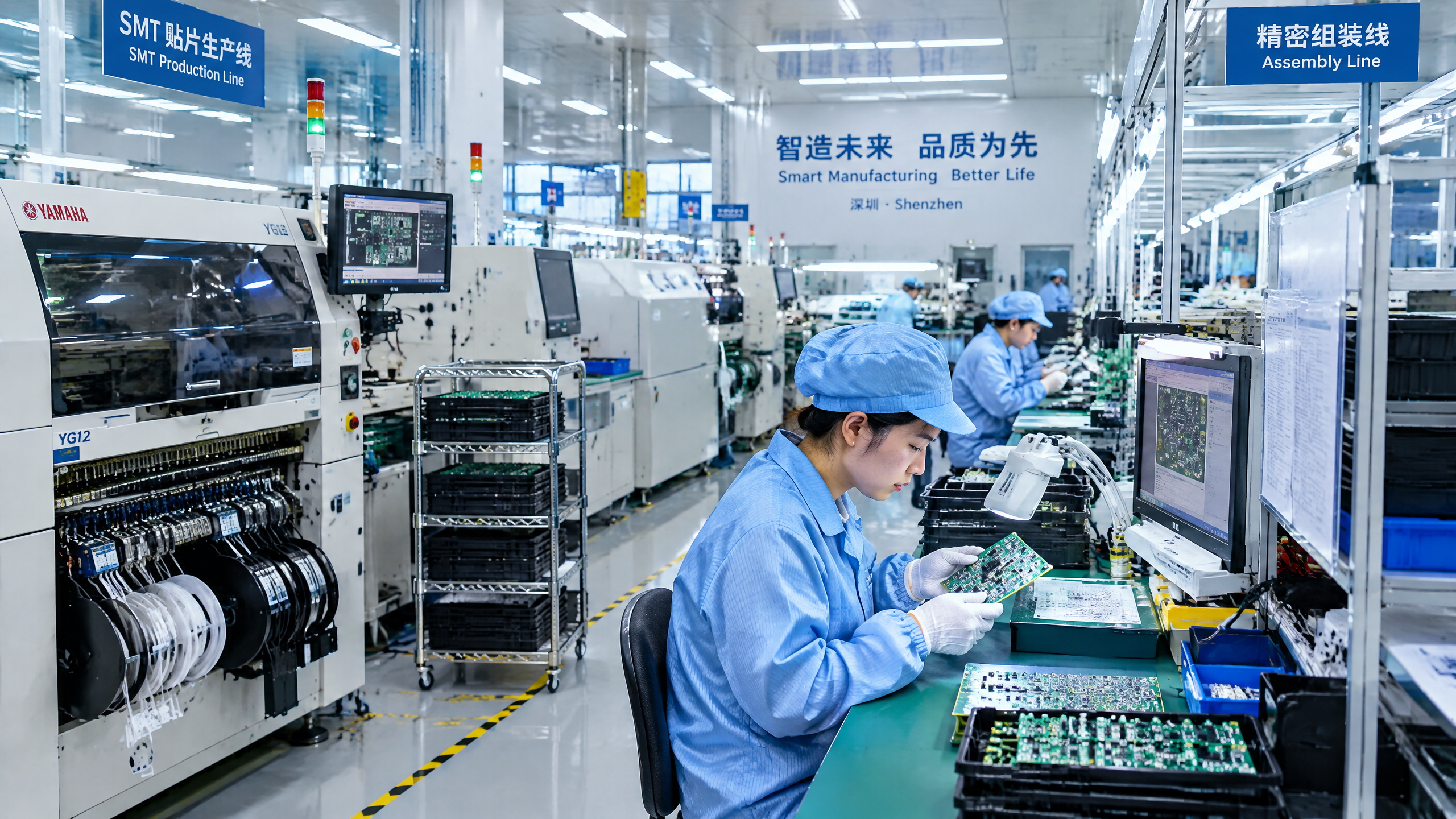
1. The direct answer: choose the model that matches your uncertainty
For most first private-label launches, ODM is the lower-risk starting point when the buyer needs a proven product platform, a faster route to a market-ready configuration, and room to differentiate through brand, color, accessories, packaging, instructions, and selected features. It is a good fit when the commercial question is still being tested: *Will this category sell through under our brand?*
Choose OEM when the product itself must express a differentiated proposition that an existing platform cannot credibly deliver. That can mean a new functional architecture, a distinctive user interface, a different form factor, a proprietary accessory system, a target performance profile, or a construction designed around a specific channel need. OEM can create a more defensible offer, but it also moves more decisions, validation work, change control, and commercial exposure onto the buyer.
The useful distinction in OEM vs ODM small appliances is not “custom versus non-custom.” Both models need disciplined specifications, safety review, samples, inspection, and documented change control. The real difference is where the starting design comes from and who carries the work of turning a concept into a repeatable production configuration. With ODM, the manufacturer begins with its own platform. With OEM, the buyer supplies, commissions, or substantially directs the product design and requirements.
A simple decision rule is this: if your advantage comes primarily from brand execution and merchandising, start with ODM and reserve your budget for the launch system around the product. If your advantage depends on product architecture that competitors cannot simply select from a catalog, evaluate OEM—but only after the buyer can write and govern a stable technical brief. In either case, verify the current rules for every intended country and product configuration before placing goods on the market. A brand owner that has products made for it and sells them under its own name or trademark can be treated as the manufacturer for EU CE-marking purposes. [1]
2. Why this decision matters to a private-label buyer
The OEM/ODM choice shapes much more than the product-development calendar. It determines how early the buyer must lock requirements, what evidence must be reviewed when a detail changes, how much of the supply chain is visible, and whether a late commercial decision becomes a tooling, packaging, component, or compliance problem. It also changes the kind of internal team needed. An ODM launch needs strong product selection, commercial judgment, artwork control, and acceptance criteria. An OEM launch additionally needs product management and technical decision-making capable of resolving trade-offs quickly.
Small appliances make these differences unusually consequential. A visual change that seems minor to marketing may alter the enclosure, printing process, cooling path, assembly method, label location, or packaging. A new power input, digital control board, motor, heater, battery, wireless module, food-contact item, or market-specific plug can introduce a different technical question. The buyer should not assume that a generic report, a sample approval, or a catalogue image automatically supports the final selling configuration.
The model also affects financial risk. A platform-based ODM program normally concentrates cost in product selection, branding execution, samples, market adaptation, documentation review, and purchase commitments. A true OEM program can add engineering iterations, development tooling, non-recurring expenses, prototype rounds, specialized components, and longer decision paths. Neither route is inherently cheaper. A poorly specified ODM adaptation can consume the same attention as a modest OEM project, while a carefully bounded OEM project may provide strategic value. The key is to compare total launch exposure, not only the unit quotation.
Responsibility does not disappear because a supplier developed the base design. In the EU, the party that has equipment made and markets it under its own name or trade mark is a manufacturer under the Low Voltage Directive definition. That manufacturer must maintain technical documentation and an EU declaration of conformity for ten years after the product is placed on the market, while series production must remain conforming as designs, standards, or technical specifications change. [2] The practical implication is important: a private-label buyer needs access to relevant evidence and a system for approving changes, whether the commercial model is OEM or ODM.
Market reputation is another reason to decide deliberately. Customers experience the branded product, not the procurement model behind it. If a product generates a complaint pattern, the buyer needs a traceable model identifier, batch information, an evidence file, a disciplined response path, and a known contact inside the supply chain. In the United States, manufacturers, importers, distributors, and retailers have a duty to report certain defects, unreasonable risks, and failures to comply with applicable CPSC rules; CPSC says a report is generally due within 24 hours after obtaining reportable information. [8] A launch model that leaves the buyer without product records or escalation rights is therefore a commercial weakness as well as a quality weakness.
3. Scope and definitions: use the labels precisely
ODM (original design manufacturer) describes a supply model in which a manufacturer offers a product design or platform that it has developed. The buyer selects that platform and specifies the permitted market-facing or functional variations. The degree of adaptation can range from a logo and carton through a finish, plug, accessory, control-panel treatment, or a defined option set. “ODM” should never be taken to mean “no engineering.” The buyer still needs a final, unambiguous configuration record.
OEM (original equipment manufacturer) is used inconsistently in everyday sourcing. For this guide, it means a program where the buyer owns or directs the requirements for a product that is designed or manufactured for the buyer’s brand, rather than simply selecting a supplier’s standard platform. The buyer may provide an industrial design, performance brief, drawings, critical components, or a product-development specification. The supplier may still contribute engineering for manufacturability, tooling, component selection, assembly, and production validation. The commercial agreement should describe ownership and use rights rather than relying on the three-letter label.
Private label means the finished consumer product carries the buyer’s brand. It is a branding and market role, not a guarantee of design ownership. A private-label brand can sell a lightly adapted ODM appliance or a wholly buyer-directed OEM appliance. In US product-safety administration, a brand or trademark licensor may be a “private labeler,” and CPSC advises businesses using their brands on products made by others to register for relevant product reports. [12]
A platform is the controlled baseline configuration from which variants are created. It should be described by model, bill of materials, drawings, software or firmware version if relevant, approved component list, packaging specification, labeling, and market version. A platform is not merely a photograph or a model name. This distinction protects buyers from buying a sample while receiving a different production build.
Customization should be separated into four levels. Cosmetic customization includes colors, finishes, logo placement, and artwork. Commercial customization includes carton design, bundle composition, manuals, warranties, and retailer-specific labeling. Configurational customization includes plug, voltage version, accessory, control panel, or approved component option. Architectural customization changes functional principles, enclosure structure, thermal path, motor or heating system, electronics, software, safety construction, or tooling. The first two commonly suit ODM. The last category is usually OEM territory, even if the factory calls it “ODM plus.”
Finally, do not confuse a third-party test report, a certification mark, or a supplier declaration with an all-purpose product passport. Their relevance depends on the exact product, configuration, scope, jurisdiction, and applicable procedure. The European Commission explicitly warns that unregulated “voluntary certificates” are not a recognized means of proving compliance under EU harmonisation legislation, and CE marking follows the conformity assessment prescribed by the applicable law. [3] Ask what a document covers, not simply whether a document exists.
4. A technical and commercial evaluation framework
A buyer can make the OEM/ODM decision more reliable by scoring both routes against six practical dimensions. Score the intended launch rather than the category in the abstract. A compact kettle with a fixed electrical and mechanical platform has different decision dynamics from a connected, battery-powered countertop appliance.
Product differentiation and buyer-owned requirements
Start with the customer promise. Write one sentence that states why a shopper should choose this product over a credible alternative. Then identify what must be true physically for that promise to be real. If the answer is brand identity, bundled content, finish, availability, or a familiar function performed well, an ODM platform may support it. If the answer relies on a unique workflow, capacity, ergonomic structure, control logic, interface, or accessory ecosystem, OEM may be justified.
Do not label every preference as a differentiator. A buyer should divide requirements into must-have, important, and optional. A must-have should be measurable or observable: for example, the required functions, interface language, plug region, included accessory, external dimensions, or approved packaging format. Avoid subjective requirements such as “premium,” “quiet,” “strong,” or “easy to clean” unless they are translated into testable acceptance criteria. This discipline makes ODM selection faster and makes an OEM brief buildable.
Control, intellectual property, and reuse boundaries
Ask what must be exclusive and for how long. It may be the outer appearance, a colorway, a decorative treatment, a tooling insert, a control-panel graphic, an accessory, a retail bundle, or an entire technical design. Then state whether the buyer needs territorial exclusivity, channel exclusivity, or no exclusivity at all. ODM often works well when the desired exclusivity is commercial presentation rather than the underlying appliance platform. OEM makes more sense when the buyer needs clear control over a buyer-funded design or tool—but contract language, not product terminology, establishes those rights.
The agreement should separately address pre-existing supplier intellectual property, buyer-created artwork and brand assets, newly developed design output, tooling ownership or custody, permitted reuse, confidentiality, approvals for factory changes, spare-parts obligations, and exit or transfer conditions. These are commercial negotiations, not claims that any one model automatically grants ownership. A buyer that funds a mold without defining drawing access, maintenance, use, and removal conditions may discover that “tooling ownership” is too vague to operate.
Engineering maturity and change tolerance
ODM has an advantage when the buyer accepts a controlled baseline. It reduces the number of early unknowns. The buyer’s main task is to select the correct base model and constrain changes to those the supplier can define and document. OEM has an advantage when a standard baseline cannot meet the commercial requirement, but it demands a stable decision-maker. Each unresolved decision—surface finish, button geometry, cord arrangement, material, component source, thermal protection, packing insert, or user interface—can affect cost, timing, manufacturability, or validation.
Before choosing OEM, ask whether the buyer can nominate one person with authority to freeze the product requirements. If not, choose a narrower ODM project or complete the product-definition work before requesting development. A manufacturer cannot efficiently validate a target that is repeatedly redefined. The better question is not “Can we customize this?” but “Can we freeze the configuration we need to validate?”
Economics beyond unit price
Build a comparison that includes non-recurring development, sampling, tools, specialized components, testing or assessment work, packaging, quality assurance, expected scrap or rework risk, inventory exposure, spares, warranty provisioning, and the internal cost of delay. Keep these as buyer-specific estimate fields; do not assume that an OEM or ODM program has a universal cost profile.
ODM is usually economically attractive when the buyer can pool demand around an existing component and assembly system. OEM can be economically attractive when the differentiated design supports a sustainable retail price, lowers a meaningful operating cost, fits a protected channel opportunity, or prevents direct product comparison. The decision should be based on a business case that makes its assumptions visible. A low nominal unit cost is not a winning outcome if the product cannot be supported by evidence, packaging, instructions, or a viable reorder plan.
Speed, but only after configuration freeze
It is tempting to call ODM “fast” and OEM “slow.” That comparison is only true when the ODM configuration is within an established option set and the buyer responds promptly. An ODM program can stall because artwork, translations, retailer requirements, label details, or evidence review are not ready. OEM can move in a controlled way if the brief is mature, decisions are timely, and the stages are planned. Use gates rather than date promises: concept freeze, technical review, sample approval, packaging approval, pilot approval, production release, and shipment authorization.
A useful sourcing discipline is to treat each gate as a decision, not a meeting. At the product freeze, the buyer signs the final configuration record. At the sample gate, the buyer records any deviations. At the production-release gate, the buyer confirms the approved golden sample, inspection plan, documentation set, and labeling. This makes later conversations about “what was agreed” far less ambiguous.
Supply-chain resilience and serviceability
A product that launches successfully must be reorderable. Assess whether the chosen model depends on constrained components, custom finishes, single-source electronics, dedicated tools, or unusual packaging materials. For an OEM program, identify which components are buyer-directed and which can be substituted only with buyer approval. For an ODM program, determine whether the platform is active, whether the factory controls version changes, and how it will notify the buyer about material or component substitutions.
Service is part of the model choice. Ask how the product can be identified in the field, which parts might be needed, how faults will be recorded, and what information will be available for a complaint investigation. In the EU, product-safety rules require assessment that considers design, technical features, composition, packaging, instructions, warnings, consumer categories, and, where relevant, cybersecurity features. [5] This is why the buyer should view the product, packaging, instructions, and post-sale process as one controlled system rather than separate purchase items.
5. Compliance and risk: establish the market configuration before production
Compliance is not a box to “add” at the end of an OEM or ODM project. It is a workstream that begins when the buyer defines the product and destination markets. Rules vary by product category, technical features, voltage, radio functions, energy-related features, intended users, claims, and jurisdiction. Confirm the current applicable requirements with competent regulatory, legal, and testing advisers for each market before the product is placed on the market.
For the EU, CE marking is required only for products covered by EU rules that require it; it is not a central certificate issued by an EU body. Before affixing it, the manufacturer identifies applicable requirements, follows the appropriate conformity assessment procedure, assembles technical documentation, and signs an EU declaration of conformity. The Commission also notes that a product may fall under several EU requirements at once. [1] For electrical equipment in the Low Voltage Directive’s voltage scope, the directive covers equipment designed for 50–1,000 V alternating current and 75–1,500 V direct current, subject to its exclusions. [2] Whether and how that directive applies to a particular appliance must be checked, not assumed from the product category name.
Many electrical and electronic appliances also need an electromagnetic compatibility assessment. The EU EMC Directive aims to limit electromagnetic emissions and ensure adequate immunity so equipment does not disturb, or become unduly disturbed by, other equipment when used as intended. [3] EU RoHS restrictions generally apply to products with electrical and electronic components unless specifically excluded; the Commission lists ten currently restricted substances and identifies exemptions separately. [4] Product version, materials, component declarations, and any applicable exemption status should be controlled in the evidence file rather than represented by an unsupported marketing label.
EU market access also has an operational side. The General Product Safety Regulation applies to consumer products offered in the EU through all sales channels and requires a responsible economic operator in the EU for products within its scope. It provides obligations around safe products, risk analysis, technical documentation, traceability, complaint handling, and action on dangerous products. [5] Electrical and electronic equipment creates separate end-of-life responsibilities: businesses that distribute or sell such equipment must register in each EU country where they sell, report quantities, and contribute to collection and treatment arrangements, with country-specific implementation details. [6]
For North America, avoid a one-size-fits-all statement. In the United States, CPSC requirements and certification obligations depend on the product and the applicable rule. Manufacturers and importers of certain non-children’s products must provide a General Certificate of Conformity, while children’s products have separate certification requirements. [7] Household electrical products may also present category-specific hazards and rules; CPSC’s guidance, for example, separately identifies hand-supported hair dryers, seasonal lighting, and extension cords. [13] Ask the buyer’s compliance lead to identify the product-specific framework rather than treating “small appliance” as a legal category.
If a product contains digital logic, wireless functionality, or other radio-frequency features, add RF review early. The FCC says most, though not all, electronic-electrical products must be tested to demonstrate compliance for each electrical function, and the appropriate equipment authorization procedure must be used before an RF device is marketed, imported, or used in the United States. [9] A connected ODM product is therefore not just a cosmetic variation of a non-connected platform. Its final radio, software, antenna, power arrangement, and market version deserve specific review.
Claims require the same discipline. Do not make country-of-origin, safety, performance, sustainability, or certification claims merely because a component or factory statement appears to support them. The FTC states that an unqualified “Made in USA” claim requires a reasonable basis and a product that is “all or virtually all” made in the United States; the analysis covers final assembly, significant processing, and component sourcing. [11] Similar caution applies to product claims in every destination market.
6. OEM and ODM compared: a buyer decision table
| Decision factor | ODM small appliance route | OEM small appliance route | Buyer action before commitment |
|---|---|---|---|
| Starting point | A supplier-developed, controlled platform | A buyer-directed product brief or bespoke design path | Obtain a versioned configuration record, not only photos or samples. |
| Best strategic fit | Brand, bundle, finish, and retail execution are the main differentiators | The product architecture or user experience is the differentiator | Write the single customer promise and identify the physical requirements behind it. |
| Scope of customization | Most effective inside defined option boundaries | Can address structural or functional requirements if engineered and validated | Classify every requested change as cosmetic, commercial, configurational, or architectural. |
| Buyer control | Lower over the baseline design; higher over approved brand execution | Higher potential control, subject to clear contract terms | Define use rights, exclusivity, drawings, tooling, and reuse expressly. |
| Development exposure | Usually concentrated in selection, adaptation, and release control | Can include iterative engineering, prototypes, tooling, and specialized components | Build a total-launch-cost model with stated assumptions. |
| Time risk | Requirements drift, artwork delays, and unreviewed market variants | Unresolved design decisions, engineering iteration, and tooling changes | Plan decision gates and name one owner for each buyer approval. |
| Compliance evidence | Must match the final configured platform and destination market | Must be built around the final buyer-directed construction and market version | Map each intended market, function, power arrangement, and claim before production release. |
| Change control | Supplier platform updates can affect the buyer’s version | Buyer and supplier changes can affect design intent and validation | Require written approval for changes to agreed controlled items. |
| Reorder and service | Confirm platform continuity, part availability, and version notification | Confirm buyer-owned parts, tool maintenance, and controlled substitutes | Define traceability, spare-parts needs, complaint data, and end-of-life arrangements. |
The table should guide a conversation, not replace diligence. A buyer may reasonably choose ODM for one category and OEM for another. It is common for a brand to use a platform-based product for an assortment entry and reserve custom development for a high-volume hero item once market learning justifies the additional control.
7. Build the sourcing and quality workflow around evidence, not assurances
A reliable workflow begins with a launch brief. This is a commercial and technical document that lists the product category, intended markets, customer promise, required and prohibited features, power configuration, connectivity, included accessories, colors and materials, packaging format, instruction languages, target claims, planned channels, and desired service approach. The buyer should explicitly identify any retailer manual, marketplace requirement, or importer requirement that could affect the product or its records.
Next, request an evidence-led quotation package for each candidate path. For ODM, ask for the exact base model, permitted options, a current bill-of-materials summary or controlled configuration statement, product images tied to the version, proposed labeling and manual scope, and the supplier’s change-notification process. For OEM, ask for the product-development assumptions, required buyer inputs, engineering deliverables, prototype stages, tooling or component dependencies, version-control method, and proposed ownership or use-right terms. A quotation that says “same as sample” is not enough to control a multi-market appliance launch.
Then create a requirements-to-evidence matrix. Each buyer requirement should have an owner, an acceptance method, and a release status. A logo may be accepted by artwork approval. A plug and rating label may be accepted by a controlled label drawing and final sample review. A functional or safety-related requirement may require a documented assessment, test, or other evidence appropriate to the product and market. This does not prescribe a universal test plan; it makes sure that no critical requirement is left as a verbal expectation.
The sample process should distinguish appearance samples, engineering samples, packaging samples, and a golden sample if the parties use one. Record what each sample is for, its build identifiers, its deviations, and who approved it. Do not approve an attractive pre-production sample while leaving the production configuration, carton, manual, label, or accessories undefined. If a buyer chooses an existing ODM platform, the key question is whether the sample represents the exact approved market configuration. If a buyer selects OEM, the key question is whether the sample has met the frozen technical requirements before production tools and volume components are released.
Create a practical quality plan before the purchase order is released. It should identify incoming component controls where relevant, in-process checks, finished-goods inspection points, functional checks, packaging checks, sampling basis if used, defect classification, permitted rework, record retention, and escalation rules. The plan should focus on actual risks: incorrect plug or voltage marking, cosmetic damage, missing accessory, unstable control response, seal or fit issue, wrong language insert, incomplete carton content, or product/label mismatch. A generic inspection checklist does not protect a specific product promise.
Pre-shipment inspection can be useful, but it should not be treated as a substitute for product design, compliance, and production control. Inspection sees a selected production state. It cannot retroactively make an unsuitable specification suitable, or convert evidence for one configuration into evidence for another. The buyer should decide in advance what happens when an issue is found: hold, sort, rework, retest, corrective action, re-inspection, concession, or cancellation. That decision path should be commercial as well as technical.
After launch, review warranty and return data by exact model and production identifier. Keep a complaint log that preserves what happened, when, where, to which configuration, and what action was taken. Under EU product-safety rules, manufacturers must provide a contact point for complaints, investigate complaints, and keep an internal register; the regulation also establishes action and information duties for dangerous products. [5] This reinforces a sensible buyer practice: build feedback loops into the sourcing program before the first shipment.
AI image suggestions
- ODM configuration workshop: A clean, photorealistic sourcing-table scene showing an unbranded compact electric kettle in three approved colorways beside a packaging dieline, plug options, accessory tray, and a version-control sheet. Use natural factory-office lighting and no visible trademarks.
- OEM development review: A realistic cross-functional meeting with industrial-design sketches, an exploded small-appliance prototype, material chips, a labeled bill-of-materials board, and engineering sample units on a workbench. Show diverse professional hands reviewing the product; avoid fake certificates or logos.
- Private-label quality gate: A documentary-style production-line image showing inspectors comparing a finished small appliance, rating label, instruction leaflet, accessory set, and sealed retail carton against a golden sample station. Include traceability tags without readable company names or compliance marks.
8. Buyer questions to answer before requesting quotations
Use the following checklist as a decision conversation with your commercial, technical, compliance, and operations stakeholders. Answering it before contacting suppliers will make quotations comparable and prevent the supplier from guessing at your launch needs.
- What is the one customer problem this appliance must solve, and which product attributes prove that it solves it?
- Which destination countries, sales channels, and retailer or marketplace requirements apply to the first launch and likely reorders?
- Is the proposed product platform acceptable as-is, or which changes are essential? Have those changes been classified by level of technical impact?
- What are the final power, plug, connectivity, accessory, language, packaging, and labeling variants?
- Who within the buyer organization can approve product requirements, artwork, samples, evidence, and production release? What is the escalation route when those approvers disagree?
- Which claims will appear on the product page, carton, manual, and advertising? What evidence will support each claim in the relevant market?
- What compliance documentation or product information must be held by the brand, importer, EU responsible economic operator, retailer, or marketplace? Who owns each action?
- Does the buyer need design exclusivity, tool control, channel exclusivity, a custom bundle, or only branded presentation? What written rights are required to support that need?
- How will the final configuration be identified in a purchase order, sample record, inspection report, shipment record, and customer complaint?
- What service, spare-parts, return, recall, and end-of-life arrangements are needed for this category and market?
A buyer does not need to have every answer at concept stage. However, the unknowns must be visible. It is far better to ask a supplier to price two explicitly defined scenarios than to request one quote that silently assumes answers to major commercial and technical questions.
9. Common mistakes that create avoidable launch risk
Treating ODM as a commodity purchase. An existing platform reduces development uncertainty, but it does not define the buyer’s final configuration. The remedy is to document the exact model, options, labels, packaging, accessories, manuals, and approved changes. The supplier’s base model is a starting point, not the final specification.
Calling a cosmetic variant an OEM project. This can confuse negotiations and add unnecessary expectations about design ownership and engineering. Describe the requested change precisely and ask what it affects. A new color is not the same as a new enclosure. A new control panel may be more consequential than it looks if it changes electronics, interface behavior, or labeling.
Assuming a document proves everything. A laboratory report, declaration, certificate, or component statement has a scope. Confirm model identity, version, destination market, applicable requirements, issuing body, dates, test sample description, and relationship to the finished product. For EU products, CE marking is the manufacturer’s declaration of applicable conformity, not a certificate issued by a central EU authority. [1]
Leaving claims until the artwork phase. Claims affect evidence needs, translations, product pages, retailer discussions, and sometimes product design. Put every proposed claim into the launch brief early. Remove or qualify claims that cannot be supported. The same applies to flags, origin messaging, and images that may imply origin; the FTC assesses the overall impression of US-origin marketing claims, not just the presence of a particular phrase. [11]
Approving samples without a production-release protocol. A sample can look correct and still fail to define what happens when production changes. Use versioned approvals and record deviations. Make it clear whether a component, software, carton, manual, or label may change without written buyer approval.
Choosing OEM before the brief is ready. Custom development magnifies indecision. If customer insight is weak or internal approvers cannot freeze requirements, use a disciplined ODM pilot to learn what customers value. Then invest in custom architecture where the evidence supports it.
Treating the supplier as the only responsible party. The buyer’s brand, importer role, and market role can carry obligations. In the EU, an EU-based responsible economic operator is required for products within the GPSR’s scope, and WEEE obligations are handled country by country. [5] [6] In the US, certain certificates and reporting duties are tied to the applicable product and supply-chain role. [7] [8] Allocate responsibilities in writing and confirm them for the specific market.
10. FAQ: practical answers for private-label teams
Is ODM always the fastest way to launch a small appliance?
No. ODM can reduce product-development work when the buyer accepts an existing platform and selects defined options. It can still be delayed by unclear destination markets, artwork revisions, unapproved translations, incomplete documentation review, or late feature changes. It is faster only when the buyer treats the final configuration as a controlled release and makes decisions promptly.
Can an ODM product be exclusive to my brand?
Possibly, but exclusivity is a commercial right that must be defined in writing. It may cover a colorway, artwork, a bundle, a sales channel, a geography, a tooling insert, or a defined product design. Do not infer exclusivity from a supplier using the term ODM. State the product identifier, territory, channels, duration, exceptions, remedies, and what happens to remaining inventory or future versions.
Does OEM mean the buyer automatically owns the tooling and design?
No. OEM describes a sourcing arrangement, not a complete intellectual-property agreement. Ownership, custody, maintenance, access to drawings, permitted use, transfer rights, and reuse after the relationship ends should be stated expressly. The same applies to software, industrial design, packaging artwork, and custom accessories.
Can we use existing compliance evidence for a branded ODM variation?
Do not presume so. Ask a competent reviewer to determine whether the exact final model, components, markings, functions, and destination-market configuration are covered by the applicable evidence and procedure. In the EU, technical documentation and the declaration of conformity must be kept up to date when relevant product or legal changes occur. [1] [2] Treat a change as a review trigger until its effect has been assessed.
Who handles a product safety complaint after launch?
The answer should be established before shipment. The supplier can provide production facts and corrective-action support, but the brand owner, importer, distributor, retailer, and relevant EU economic operator can each have responsibilities depending on the market and role. CPSC advises reporting potentially reportable hazards promptly, while EU rules require product-safety processes, complaint handling, and action where a dangerous product is identified. [5] [8] Set a shared escalation process with named contacts and record access.
11. Conclusion: choose the smallest commitment that can prove your proposition
The right OEM versus ODM choice is the one that gives your private-label launch enough product control to deliver its promise without taking on custom-development exposure that the business case cannot support. Start with the customer proposition, destination markets, final configuration, and evidence needs. Then choose ODM when a controlled platform can meet those requirements, or choose OEM when your differentiator genuinely depends on a buyer-directed product architecture.
The important discipline is the same in both models: define the final version, control changes, align compliance review to the actual market configuration, inspect against known acceptance criteria, and preserve traceability after launch. That is how a sourcing decision becomes a repeatable product program rather than a one-off purchase.
For a practical discussion about whether an existing-platform ODM route or a custom OEM brief fits your small-home-appliance private-label launch, email [UZYVO at info@uzyvo.com](mailto:info@uzyvo.com). Share your target markets, category, intended differentiation, and first-launch configuration questions so the conversation can begin with a clear sourcing brief.
References
- European Commission: CE marking
- Directive 2014/35/EU on electrical equipment designed for use within certain voltage limits
- European Commission: Electromagnetic Compatibility Directive
- European Commission: RoHS Directive
- EUR-Lex summary: General Product Safety Regulation (EU) 2023/988
- European Commission: WEEE responsibilities
- CPSC: Retailers, product safety and responsibilities
- CPSC: Duty to report to the CPSC
- Federal Communications Commission: RF device equipment authorization
- UL Solutions: Private label services
- Federal Trade Commission: Complying with the Made in USA Standard
- SaferProducts.gov: Business FAQs for brand licensors
- CPSC: Household electrical products
AI Image Recommendations
*These are publication-planning prompts only. No new AI images have been generated or added to the website.*
1. OEM and ODM decision review
Purpose: Establish the practical B2B sourcing context at the opening of this guide.
Insertion point: After the introduction.
English caption: Factory engineers and a buyer comparing a standard odm platform with an oem development brief.
ALT text: Factory engineers and a buyer comparing a standard odm platform with an oem development brief in a controlled small-appliance manufacturing environment.
AI image-generation prompt: Photorealistic premium B2B manufacturing photograph of an unbranded appliance platform sample alongside controlled product briefs, packaging options, and material swatches, clean modern Shenzhen-style OEM setting, natural daylight, neutral professional clothing, realistic materials and safe working practices, no trademarks, no readable text, no certification marks, no logos, no visible brand names, 16:9 landscape, documentary sourcing-guide aesthetic.
2. Sample and evidence control
Purpose: Show how a buyer connects the physical product to a controlled requirement and review record.
Insertion point: Beside the sourcing and quality workflow section.
English caption: A controlled product review links the approved sample to the documented buyer requirements.
ALT text: Buyer and quality engineer reviewing an unbranded small appliance sample with a controlled specification sheet.
AI image-generation prompt: High-detail photorealistic factory quality-review scene, buyer and quality engineer examining an unbranded small home appliance sample on a clean workbench with a generic specification sheet, calipers, color chips, packaging components and a sealed reference sample, no readable documents, no logos, no trademarks, no fake test certificates, soft neutral lighting, 3:2 landscape, credible B2B documentation style.
3. Pre-shipment verification
Purpose: Reinforce that shipment checks confirm product identity, packaging, and traceability before release.
Insertion point: Before the conclusion or buyer FAQ.
English caption: Pre-shipment verification checks finished goods against the agreed product and packaging baseline.
ALT text: Inspector checking unbranded small appliance cartons and finished units at a factory shipping area.
AI image-generation prompt: Photorealistic export-quality-control scene in a small-home-appliance factory, inspector checking unbranded finished appliances, instruction leaflets, accessory sets, date-code labels without readable numbers, and closed retail cartons at a clean shipping area, realistic pallet and carton handling, no logos, no readable text, no brand marks, 16:9 landscape, professional B2B factory photography.
Put the buyer guide into a practical sourcing path.
Bring this framework into your next product brief.
Share your target market, appliance category, annual volume, and launch window. We will discuss a practical sample, documentation, and production path for the final configuration.
Email info@uzyvo.com