A clear starting point for a controlled private-label program.
A compact clean-home platform for buyers who need a responsible comparison of pressure, airflow, air-power evidence, runtime, battery, accessories, and serviceability.
Core specifications to align before quotation.
These fields provide a practical starting configuration. Confirm the exact final model, market version, and any performance claim before commercial use.
Where this product can sit in a buyer’s assortment.
Entryway and quick-clean programs
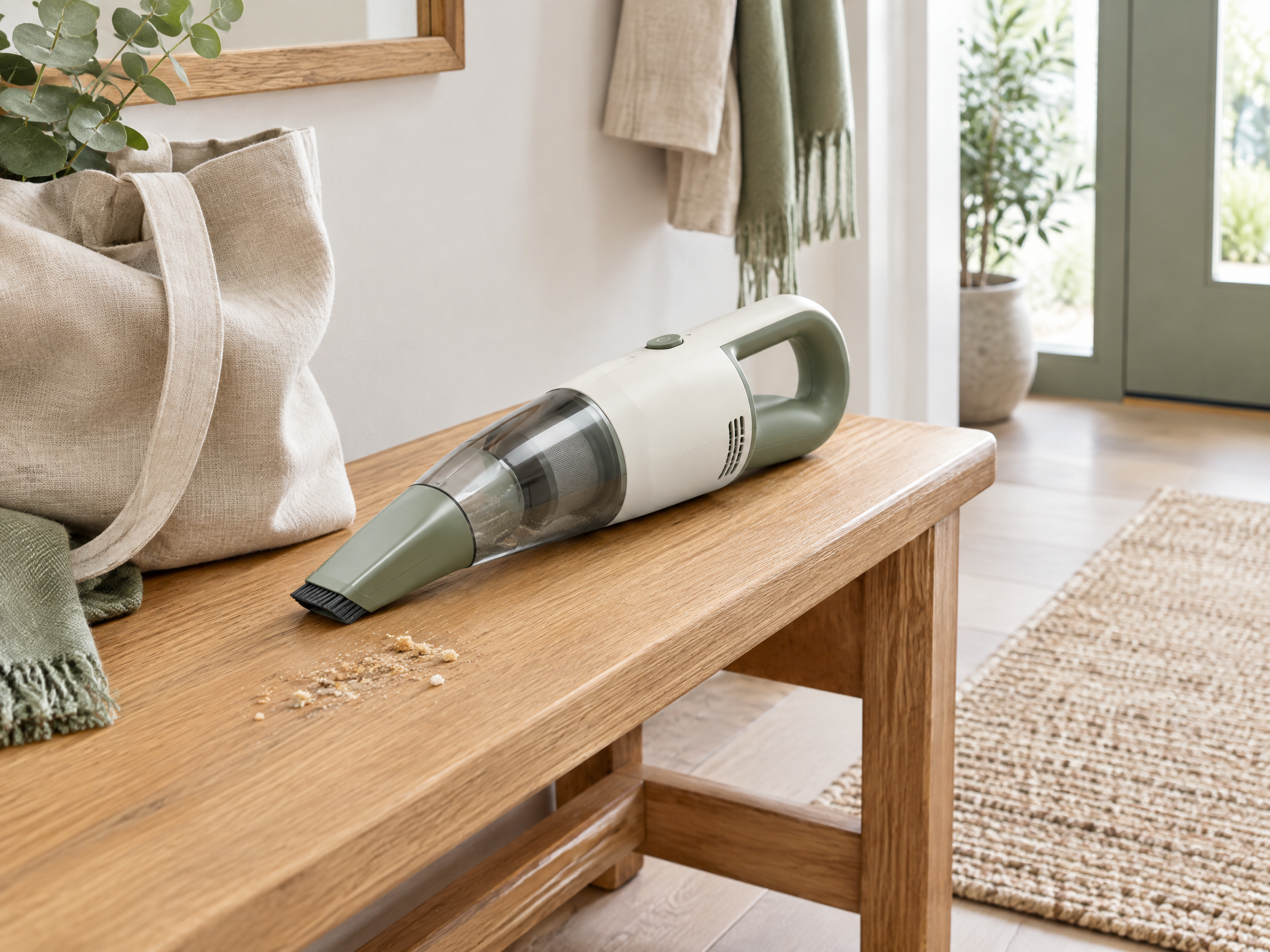
A portable cleaning tool for everyday crumbs, upholstery, and small-space cleaning positioning.
Car and travel accessory ranges
Accessory sets and portable charging formats can support vehicle and travel-oriented channels.
Home-organization collections
A clean-home product that can sit beside storage, garment-care, and wellness accessories.
Adapt the platform without losing control of the build.
Start with a defined base configuration, then scope product expression, accessory, pack-out, and regional details through an approved brief and sample process.
What should be defined before the first formal sample?
- Vacuum body, motor, filter, dust cup, and accessory reference
- Battery pack, USB-C charge configuration, and cable definition
- Target performance claim and test-condition brief
- Carton, manual, service-part, and target-market plan
Turn the approved sample into an inspection-ready production reference.
Quality control should connect the signed product configuration to incoming parts, in-process checks, functional verification, packaging, and finished-goods traceability. The final inspection plan should be agreed for the actual SKU and order.
Power, charging, suction-path, noise, and agreed functional checks
Filter, dust cup, seals, accessories, and latching inspection
Battery, PCB, charger, and product identity reconciliation to the released BOM
Carton, manual, accessory, and traceability check before shipment
Prepare the final SKU for its destination—not a generic lookalike.
Regulatory, certification, technical, claims, and channel requirements depend on the final model, component set, destination market, importer role, and selling route. This page is sourcing guidance, not a certification or legal conclusion.
Useful inputs for a faster, more comparable quotation.
Target use surfaces, dirt types, accessory list, and runtime expectations
Comparable kPa, airflow, air-power, and test-condition data for the final configuration
Battery, charging, transport, and after-sales service-part requirements
Body finish, dust-cup tint, DTC carton, and sales-channel needs
Common sourcing questions about this platform.
Is kPa enough to compare handheld-vacuum performance?+
No. Buyers should compare the complete test condition and, where relevant, airflow and air-power information alongside battery, nozzle, filter, and runtime configuration.
Can the accessory pack be customized?+
Accessory combinations, charging docks, and cartoning can be scoped for the final channel. The approved configuration should define every supplied item and its fit.
What should be checked before shipment?+
Inspect identity, battery and charger configuration, accessories, dust-cup and filter fit, function, packaging, manual, and lot traceability against the approved sample.
Request a product-specific sourcing discussion.
Send your target market, expected annual volume, preferred configuration, and launch timing. We will use the brief to structure the next sample, documentation, and production discussion.