
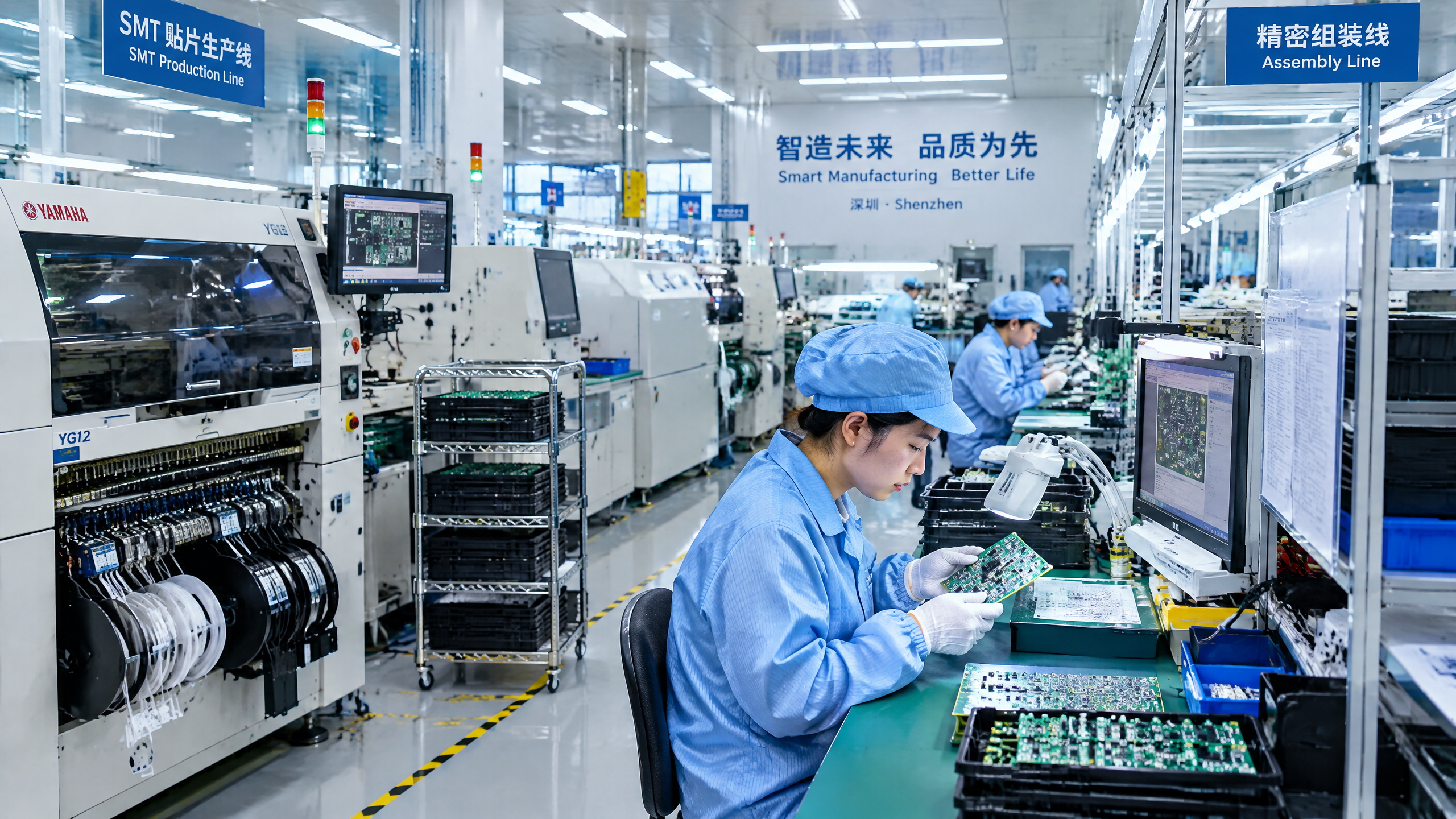
Target Keywords: appliance manufacturing country comparison; China small appliance manufacturer; Vietnam small appliance manufacturer; India small appliance manufacturer; small appliance supplier diversification; small appliance procurement strategy; small appliance market access checklist
Direct answer: Do not select China, Vietnam, or India as a universal “best” origin. Build a country portfolio around the actual appliance architecture, bill of materials, destination-market obligations, origin logic, supplier controls, and recovery options. A diversified program works when every country role is validated against the same approved configuration and evidence package—not when volume is merely split between flags on a map.
Introduction
For a brand, retailer, or distributor, country strategy is not a substitute for supplier due diligence. It is a portfolio decision: where each approved product configuration can be built, which destination markets it will enter, and what the business can do when the plan changes. Kettles, blenders, garment steamers and connected appliances can have different electrical, radio, materials, labelling, packaging and import considerations.
This guide addresses the country-portfolio question rather than repeating a factory-selection framework. Country of manufacture may influence the production network, component route, customs treatment and resilience design; it does not itself establish product safety, conformity, quality or delivery performance. The final configuration, destination market, supporting technical file and qualified review remain decisive.
1. Frame the decision as a portfolio, not a country contest
A useful appliance manufacturing country comparison begins with the job the country must do. “China versus Vietnam versus India” is too broad to produce a procurement decision. Instead, write a one-page sourcing charter for each product family and market lane. It should identify the commercial objective, the approved configuration boundary, the sell-to countries, critical components, ownership of tooling and artwork, forecast uncertainty, and the acceptable fallback route.
The aim is to decide whether a country is suitable for a defined role: primary production, a qualified alternative, final assembly, regional production or development. A country can be appropriate for one role and not another.
| Decision question | Evidence to request or create | Why it changes the country role |
|---|---|---|
| What exact product will be sold? | Controlled specification, BOM, drawings, firmware version where applicable, approved samples | A nominally similar appliance may not share the same safety-critical parts or approvals. |
| Where will it be placed on the market? | Market list, importer/brand role, local label and documentation requirements | Market access is attached to the finished product and selling entity, not to a country label alone. |
| Which supply path is realistic? | Component-origin map, approved-source list, assembly flow, packaging plan | A factory location may not determine where the controlling components or processes occur. |
| What happens if the route fails? | Contingency scenario, alternate-source qualification gate, ownership and transfer terms | Diversification only helps if the alternate configuration can be lawfully and consistently released. |
This framing converts a generic small appliance procurement strategy into linked decisions. It prevents assigning demand before confirming which configurations can be reproduced. Use the same requirement pack and scorecard across countries; country teams may offer different solutions, but acceptance criteria should not drift.
2. Compare systems of execution rather than national stereotypes
A robust comparison looks at the production system surrounding an appliance program, not a headline about labor, scale, or trade policy. Buyer teams should score observable, product-specific evidence. The exact weights belong to the buyer’s risk appetite, category, and destination markets; a score is a decision aid, not an approval.
| Comparison dimension | What to inspect | Country-neutral decision signal |
|---|---|---|
| Product and process fit | Assembly sequence, critical stations, fixtures, traceability points, rework route | The proposed route can build the approved configuration without unapproved substitutions. |
| Component ecosystem fit | Approved component availability, supplier controls, incoming inspection and change notification | Critical parts are controlled and replacements cannot silently alter the product. |
| Engineering handoff | Drawing control, sample-to-mass-production handoff, corrective-action ownership | Design, test and production versions remain aligned. |
| Compliance evidence | Product-specific test reports, declarations, material evidence, labels, manuals | Evidence maps to the exact model, variants and target market—not a near match. |
| Logistics and origin | Manufacturing flow, origin analysis, pack-out, exporter/importer responsibilities | Commercial paperwork and physical goods describe the same route. |
| Recovery capability | Documented change control, alternate-site protocol, tooling access, escalation path | A disruption can be handled without compromising approval or traceability. |
Do not infer these items from a country name or a supplier’s sales deck. Conduct a structured technical review, then validate samples, documentation, inspections and production controls as appropriate for the program. For electrical equipment within the specified voltage ranges, the EU Low Voltage Directive covers household appliances and places responsibility for conformity assessment on the manufacturer; an unsupported “certificate” does not replace the applicable process or evidence.[1] The practical implication is simple: a country option must be judged by its ability to sustain the defined compliance file and configuration.
Where an appliance has electronics, controls, motors, switching power supplies, or wireless functions, bring engineering and regulatory owners into the comparison early. The EU EMC framework concerns both emissions and immunity for equipment placed on the market, so a production transfer should not be treated as a purely commercial relocation.[2]
3. Evaluate a China small appliance manufacturer by program depth
When considering a China small appliance manufacturer, start with the product program rather than the assumption that “China” represents one sourcing condition. Ask whether the proposed factory and its controlled suppliers can support the required appliance architecture, cosmetic finish, electrical components, tooling, packaging, and technical documentation for the target configuration. The answer may vary across product families even within the same supplier group.
A China-based option may be considered where the buyer needs an integrated development-to-production discussion, a mature component interface or a qualified alternate site. Those are hypotheses to investigate, not country guarantees. Map which parts are manufactured, purchased, tested, programmed and packed at each location. Identify changes that could affect safety, EMC, food-contact suitability, energy use, radio function or consumer claims.
The buyer questions below keep the review factual:
- Can the factory identify the approved revision of every critical component and the process that prevents mixing?
- Who owns and maintains tooling, test fixtures, software, test limits, master samples, and artwork files?
- Does the proposed product-specific evidence name the same manufacturer, model family, ratings, plug, cord set, and destination-market version?
- How will a component discontinuation, factory transfer, or label change be assessed before release?
- Can the production and shipping documentation be reconciled to the actual manufacturing flow and stated origin?
For EU-bound electrical and electronic equipment, material control must be part of sourcing. The European Commission explains that RoHS restricts ten substances and generally applies to products with an electrical or electronic component unless specifically excluded.[3] Request a configuration-specific materials evidence plan rather than accept a broad statement; its sufficiency depends on the product and market.
The relevant decision is not “can this site make small appliances?” It is “can this controlled program make *our approved, market-ready configuration* and preserve its evidence through changes?”
4. Evaluate a Vietnam small appliance manufacturer by transfer readiness
A Vietnam small appliance manufacturer can be assessed as a primary, secondary or regional candidate only after the buyer traces the handoff. A final-assembly proposal may depend on imported motors, heating elements, PCBs, moulded parts, cords, controls or packaging with their own quality, availability and origin implications. The point is to know the approved route.
Begin with a transfer-readiness workshop. Put the current and proposed BOM, process flow, control plan, test procedure, packaging specification and change-control method side by side. Document what is identical, substituted and revalidated. Plug, cord, power-rating, label, test-setting, plastic-grade or firmware changes can matter.
Use a transfer gate before committing commercial volume:
- Configuration gate: the factory shows controlled drawings, BOM, specifications and approved-source status.
- Process gate: the buyer can review critical assembly, safety checks, functional checks, rework handling and traceability on the proposed route.
- Evidence gate: regulatory and quality records are mapped to the intended model/variant and market before claims or market-access decisions are made.
- Release gate: agreed inspection, nonconformance, correction and change-notification rules are documented before routine shipments.
The IECEE CB Scheme is relevant to the evidence discussion, but it should be understood precisely. IECEE describes it as an international system for mutual acceptance of test reports and certificates for electrical and electronic components, equipment and products among participating countries and certification organizations.[4] It can support a well-managed approval plan; it does not by itself prove that every product version, national requirement, label, or importing arrangement is complete. Verify scope, model coverage, differences, issuing body, and destination-market acceptance with the relevant parties.
A Vietnam route should therefore be approved on demonstrated configuration control and market-fit evidence. “Second source” is not a status created by a purchase order. It is earned when the product, process and documentation meet the predefined gate for the applicable market.
5. Evaluate an India small appliance manufacturer by market lane and control model
An India small appliance manufacturer should be evaluated through the same evidence process while the buyer defines its commercial lane: domestic distribution, named exports, a regional model or a future alternate location. The answer changes ratings, plugs, markings, manuals, importer arrangements, customs analysis and post-market responsibilities.
For an India-based proposal, ask the manufacturer to explain—not merely assert—how it controls the configuration. Review component approval, incoming controls, test records, defect containment, calibration and controlled document languages. Request a flow map identifying site and subcontract operations. This compares actual execution, not reputation.
A useful country-plan conversation also separates market entry from production location. An appliance built in India for one market may need a different evidence package, markings, rating, plug, instructions, importer identification, or registration than a comparable product destined for another. Do not transpose an approval or document from one national program to another without checking the product scope and legal framework.
For products entering the United States, CPSC publishes household electrical-product guidance and notes that its material is general information rather than legal advice or a replacement for applicable obligations.[5] Treat that limitation as good operating discipline: involve competent regulatory and legal advisers for the finished product and commercial arrangement, especially where the product class or claim creates specific requirements.
The right question is therefore not “Is India good for appliances?” It is “Does this India-based program provide a controlled, evidenced route for this SKU, its variants, and its named destination markets?” A yes should follow a documented review; a no or “not yet” can still inform a phased diversification roadmap.
6. Design small appliance supplier diversification around deliberate roles
Small appliance supplier diversification is most effective when it creates decision rights and recovery options, not duplicate quotations. Define a role for every country/site combination, a trigger for moving volume, and the exact evidence required before that trigger can be used. Avoid calling an unvalidated factory a backup supplier: it may provide false confidence precisely when the business needs speed and control.
| Portfolio role | Appropriate planning question | Precondition before use |
|---|---|---|
| Primary source | Where is the approved configuration routinely controlled today? | Current product/process evidence and a documented release process. |
| Qualified alternate | Which route could make the defined configuration if the primary path is disrupted? | Approved transfer gate, controlled BOM/process, and destination-market evidence review. |
| Regional or market-specific route | Does a market lane justify a distinct approved configuration or logistics path? | Market-access mapping, origin/label review, and clear importer responsibilities. |
| Development route | Where should a future product family be explored? | A scoped development plan, ownership terms, and no premature market claims. |
This structure turns diversification into operational resilience. It also clarifies what should remain centralized: product requirements, drawing and firmware approval, test methods, master samples, artwork control, supplier-change notifications, and market-access ownership. A buyer may decentralize manufacture but should not decentralize the definition of “approved product.”
Set escalation thresholds in advance. Examples include unapproved component proposals, differences between production and technical-file configuration, inability to trace a batch to key records, a proposed transfer of an essential process, or a mismatch between shipping papers and manufacturing flow. The remediation path should name who can stop shipment, who evaluates impact, and when an external specialist must be involved.
Portfolio review CTA: Need a country-role matrix that connects appliance configuration, evidence, and fallback routes? Email UZYVO’s team to discuss an OEM/ODM sourcing brief. You can also review UZYVO’s OEM and ODM approach before defining the responsibility split.
Contextual AI image recommendations
- Purpose: Visualize a country-portfolio workshop. Insertion point: After this module. Caption: “A sourcing portfolio starts with shared product, market and evidence requirements.” ALT text: “Procurement and engineering team comparing an appliance BOM and country sourcing map.” AI image prompt: “Editorial B2B photograph, diverse procurement and product-engineering team reviewing appliance drawings, sample components and an unlabeled Asia sourcing map, realistic documentary style, no logos or text overlays.”
- Purpose: Explain configuration transfer control. Insertion point: Module 4, after the transfer gates. Caption: “Transfer readiness depends on controlled product and process versions.” ALT text: “Technician comparing appliance components, test fixture and controlled documents.” AI image prompt: “Industrial editorial image of an appliance technician comparing a heating element, control board, wiring harness and test fixture beside engineering documents, clean quality workstation, no brand marks or certification claims.”
- Purpose: Support market-access and origin discussion. Insertion point: Module 8. Caption: “Origin, labels and conformity records should describe the same finished product route.” ALT text: “Appliance packaging, origin label artwork and compliance checklist on a desk.” AI image prompt: “Professional flat-lay editorial photograph of unbranded countertop appliance packaging artwork, a product label proof, shipping documents and a conformity checklist, neutral office setting, no legible confidential data, logos or compliance seals.”
7. Create one configuration baseline across all country options
Diversification often fails in the details: two sites build products with the same commercial name but different approved parts, test parameters, labels, or firmware. Establish a configuration baseline before comparing allocations. It should cover the model and all variants, electrical ratings, safety-critical parts, software/firmware where present, performance and claim substantiation files, product markings, packaging, instructions, and each market-specific difference.
A practical baseline has four linked controls. First, a released BOM defines the approved part number, supplier, revision, material or specification, and substitution rule. Second, a process map identifies critical operations and test stations. Third, a documentary index links evidence to the exact variant and market. Fourth, a change-control procedure requires impact assessment before any change is implemented.
| Control | Minimum buyer question | Failure the control is intended to expose |
|---|---|---|
| BOM and drawings | Is this the same released version used for the offered sample and production order? | Silent substitution or an obsolete component revision. |
| Test plan | Are test limits, fixtures and record retention defined for the proposed site? | A site passes a different test from the agreed one. |
| Artwork and manuals | Are model, ratings, warnings, language and importer details reviewed for the target market? | Packaging or instructions describe a different product or market. |
| Change control | Who assesses regulatory, safety, quality and origin impact before release? | Production changes before the buyer and relevant functions evaluate them. |
This is where country comparison becomes procurement governance. The buyer should preserve the right to approve or reject defined changes, but should not assume an email alone is a sufficient system. Verify that the relevant factory and controlled suppliers understand the requirement, have a version-controlled record, and can show how the rule operates in practice.
For tailored factory capability questions—assembly, documentation ownership, inspection interfaces, or an OEM handoff—see UZYVO’s factory capabilities. The destination market and final appliance configuration still determine which capability and evidence are applicable.
8. Build a small appliance market access checklist before allocation
A small appliance market access checklist belongs at the beginning of the country decision, not after shipment booking. It should be completed for each product/variant and destination market. It is not legal advice or a declaration that a product is compliant; it is a buyer control for identifying who must verify what.
| Checklist area | Questions to close before commercial release |
|---|---|
| Product identity | Do the model, variant, electrical rating, plug/cord, firmware, accessories and packaging match the intended market? |
| Applicable framework | Which safety, EMC, chemical, energy, radio, consumer-product, labelling, recycling or other rules may apply, and who owns the assessment? |
| Technical evidence | Which reports, declarations, risk assessment, component records and controlled documents support the final configuration? |
| Label and instructions | Are required markings, warnings, language, responsible-person/importer details and consumer instructions reviewed for that market? |
| Customs and origin | Are classification, origin basis, origin marking, customs documents and commercial descriptions reviewed by qualified parties? |
| Release and surveillance | Who authorizes shipment, retains records, monitors changes, and handles incidents or corrective action? |
For the EU, the Low Voltage Directive applies to electrical equipment within specified AC/DC voltage limits, including household appliances, while the EMC Directive addresses electromagnetic disturbance and immunity for equipment within its scope.[1][2] The exact directives, standards, documentation, language and economic-operator duties depend on the product and market. Do not treat a CE symbol, a lab report, or a supplier declaration as a portable answer to all jurisdictions.
For the United States, country-of-origin planning should be based on the actual manufacturing route. CBP states that foreign-origin articles entering the United States generally must be legibly marked with the English name of the country of origin unless an exception applies; it also notes that complex origin questions may merit a binding ruling.[6] A new final-assembly location does not automatically settle origin. Align the physical flow, origin analysis, product marking, carton artwork, commercial documents and importer records before launch.
Maintain a market-access matrix under change control. When a factory, component, material, country flow, model, label or packaging change is proposed, the matrix should prompt reassessment. Seek qualified regulatory, customs and legal advice where the result affects obligations, claims, origin or market placement.
9. Set governance, contracts and data flows that survive disruption
A portfolio is only as strong as its governing records. Build a single source of truth for the product definition and make responsibilities explicit across brand, importer, manufacturer, testing partner, freight forwarder and any distributor. This reduces the risk that a production, shipping, or commercial team acts on a different version of the product.
The buyer’s agreement and operating procedures should address, as applicable, intellectual-property and tooling ownership, confidentiality, approved sub-suppliers, change notification, audit/inspection access, nonconforming-product control, complaint support, record retention, corrective actions, packaging/artwork approval, traceability, and transition assistance. These are commercial and operational topics, so terms should be reviewed by appropriately qualified advisers for the transaction and jurisdictions involved.
Country diversification adds particular data questions. Who holds the master BOM? Can the approved test method and limits be transferred? Which party owns calibration, source code, mould data, carton files, and regulatory records? How is the final approved configuration identified when the same appliance is made at two sites? If the answer is “the factory knows,” the buyer has not yet established reliable control.
Institute a regular portfolio review, not a one-time country selection meeting. Review open changes, supplier notifications, evidence expiry or version changes, defect and complaint trends, traceability drills, current origin and market-access assumptions, and contingency readiness. The review should lead to actions with owners and dates, but should never imply that monitoring guarantees compliance or uninterrupted supply.
This governance model complements, rather than replaces, the deeper site-level framework in UZYVO’s guide to choosing an OEM small-appliance manufacturer. Keep the two decisions distinct: that framework asks whether a manufacturer is suitable; this guide asks how approved manufacturing routes should work together as a country portfolio.
10. Pilot, validate and monitor the route before treating it as resilient
A diversified route earns confidence through controlled validation. Start with a limited, defined scope and agree in writing what the pilot is intended to show. Do not describe it as proof of all future performance. The relevant checks depend on the appliance and final configuration, but commonly include document reconciliation, sample/version confirmation, critical-process observation, agreed inspection activities, packaging/label review, traceability exercise, and resolution of nonconformities.
| Pilot question | Observable output | Decision after review |
|---|---|---|
| Did the site build the released configuration? | Reconciled BOM, process records, sample identity and change log | Release, correct and repeat, or hold. |
| Are critical controls operating as specified? | Records from agreed checkpoints and any corrective actions | Confirm control, strengthen it, or disqualify the route for the role. |
| Do documents support the intended market route? | Controlled file index, label/artwork review, responsible-owner sign-off | Escalate for specialist review where gaps remain. |
| Can the team trace and contain a defined batch? | Trace exercise, lot identification and corrective-action path | Use as a governance finding, not a marketing claim. |
Keep samples, inspection records and documents tied to date, model, revision, factory and applicable market. A successful first shipment does not eliminate the need for later change control. Conversely, a finding is useful if it is documented, contained, corrected and evaluated before release.
Buyer FAQs
Q1. Should buyers split the same SKU evenly across China, Vietnam and India? Not automatically. An even split may create three different evidence, component and control problems. Allocate only after each route has a defined role and has passed the applicable configuration, market-access and governance gates.
Q2. Can a safety report from one factory be used after production moves to another country? Do not assume so. Confirm the report’s model/variant coverage, manufacturer and factory information, critical components, standards, deviations, test basis, receiving-market rules and whether the transfer changes the assessed configuration. Obtain qualified review where necessary.
Q3. Does final assembly decide country of origin? Not necessarily. CBP explains that origin can change where work in a second country constitutes a substantial transformation, and advises that complicated origin issues may warrant a binding ruling.[6] Obtain customs advice for the actual facts and relevant import program.
Q4. Is an IECEE CB certificate enough for every export market? No. The CB Scheme can facilitate mutual acceptance of relevant safety test reports and certificates among participants, but destination-market requirements and the final product configuration still need verification.[4]
11. Conclude with a reversible, evidence-led country decision
The best country strategy is usually the most explainable one. It can show why an appliance configuration belongs in a particular production role, what evidence supports that role, which market lane it serves, and what happens when a controlled change or disruption occurs. It does not rely on blanket statements that one country guarantees quality, cost, conformity, capacity, or delivery.
Use this final decision sequence:
- Define the product configuration and destination-market lanes.
- Map the proposed manufacturing, component, documentation and origin flows.
- Score each country/site against the same evidence-based criteria.
- Assign primary, alternate, regional or development roles—only where the relevant gates are met.
- Record market-access ownership, change controls and recovery triggers.
- Pilot and review the route before classifying it as an operational alternative.
Conclusion
China, Vietnam and India should be compared as potential parts of a controlled sourcing system, not as interchangeable labels. A China small appliance manufacturer, Vietnam small appliance manufacturer, or India small appliance manufacturer may fit a program when it can build the final approved configuration, maintain the supporting evidence, and operate within the destination market’s requirements. The buyer’s task is to make those conditions visible, owned and reviewable.
Closing CTA: If you are defining a multi-country appliance portfolio and want to translate requirements into an OEM/ODM sourcing brief, contact UZYVO by email. For common starting questions, visit the UZYVO FAQ.
References
Put the buyer guide into a practical sourcing path.
Bring this framework into your next product brief.
Share your target market, appliance category, annual volume, and launch window. We will discuss a practical sample, documentation, and production path for the final configuration.
Email info@uzyvo.com