A clear starting point for a controlled private-label program.
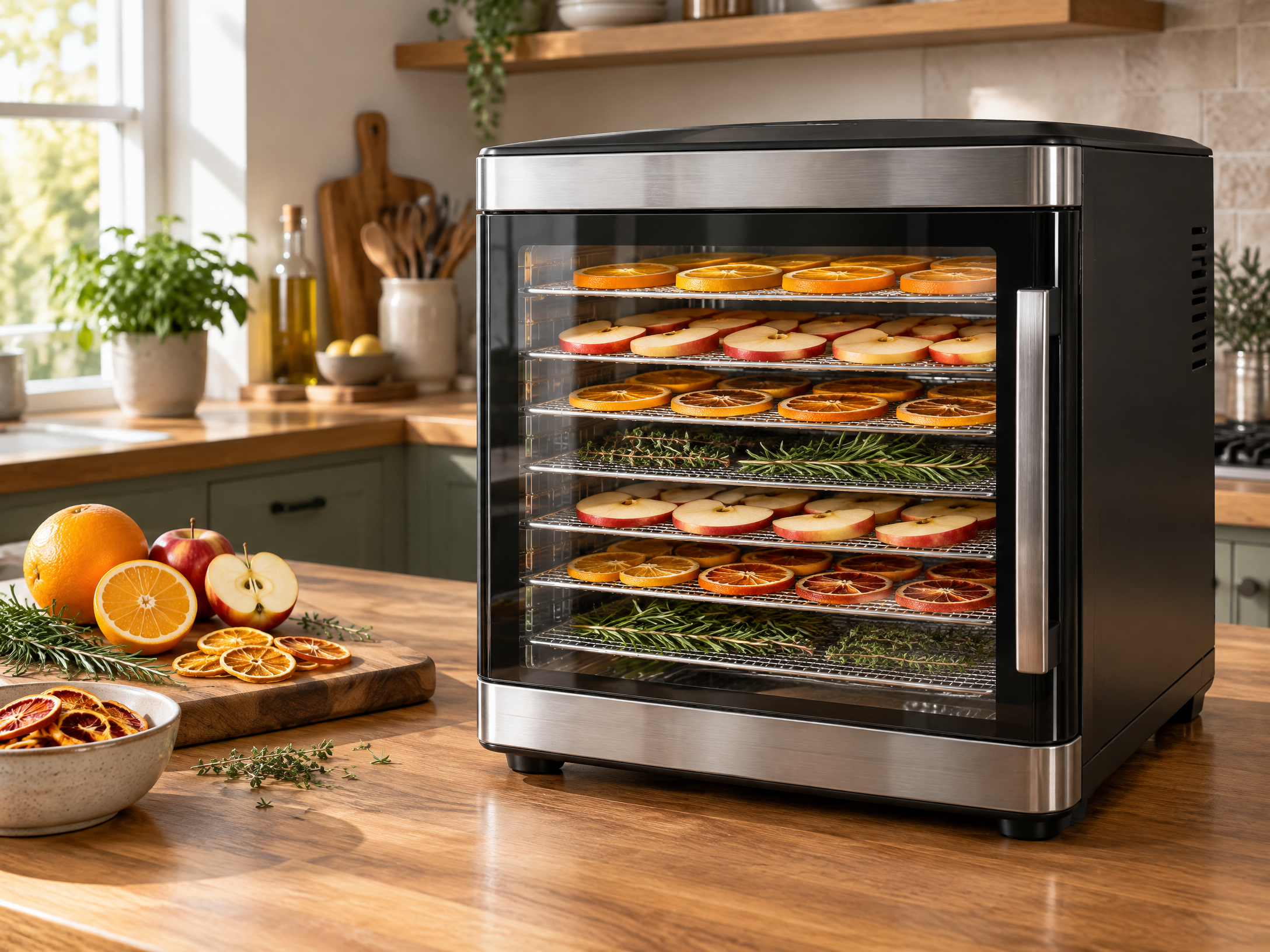
A healthy-cooking appliance platform for buyers seeking a structured temperature, timer, tray, airflow, packaging, and use-instruction brief rather than an undifferentiated countertop SKU.
Core specifications to align before quotation.
These fields provide a practical starting configuration. Confirm the exact final model, market version, and any performance claim before commercial use.
Where this product can sit in a buyer’s assortment.
Healthy-snacking collections
A category-fit product for fruit, vegetable, herb, and home-preparation merchandising.
Kitchenware and cooking retailers
A countertop appliance that can be paired with recipe, storage, or food-preparation accessories.
Gift and wellness bundles
Localized recipes, accessory packs, and product photography can support seasonal or wellness-focused programs.
Adapt the platform without losing control of the build.
Start with a defined base configuration, then scope product expression, accessory, pack-out, and regional details through an approved brief and sample process.
What should be defined before the first formal sample?
- Cabinet, tray, fan, heater, controller, and control-panel reference
- Final tray and food-contact component specification
- Use-case, temperature, timer, and instruction configuration
- Target-market electrical, carton, and accessory plan
Turn the approved sample into an inspection-ready production reference.
Quality control should connect the signed product configuration to incoming parts, in-process checks, functional verification, packaging, and finished-goods traceability. The final inspection plan should be agreed for the actual SKU and order.
Temperature and timer response at the agreed setpoints
Fan, heater, control panel, tray fit, and door alignment review
Sample use check at representative tray positions and loads
Accessory, manual, carton, and product identity verification before release
Prepare the final SKU for its destination—not a generic lookalike.
Regulatory, certification, technical, claims, and channel requirements depend on the final model, component set, destination market, importer role, and selling route. This page is sourcing guidance, not a certification or legal conclusion.
Useful inputs for a faster, more comparable quotation.
Primary use cases, including fruit, herbs, or other intended loads
Airflow, temperature range, timer behavior, and tray-load expectations
Food-contact material, cleaning, and recipe-instruction requirements
Carton drop-test, accessory, retail, and e-commerce channel needs
Common sourcing questions about this platform.
Why does airflow direction matter in an RFQ?+
Airflow design affects how the buyer defines expected tray loading, temperature checks, use instructions, and product positioning. Require a clear test and sample-review plan for the final configuration.
Can a recipe booklet be localized?+
A market-specific recipe insert and language package can be scoped, subject to final product instructions, food-safety review, and brand approval.
What should be tested before production?+
Review the final tray set, fan and heater behavior, controls, temperature and timer response, food-contact components, instructions, and packaging against the approved product build.
Request a product-specific sourcing discussion.
Send your target market, expected annual volume, preferred configuration, and launch timing. We will use the brief to structure the next sample, documentation, and production discussion.